The Renaissance A European Transformation
Late Middle Ages
The End of an Era
Before the flowering of the Renaissance, Europe was a very different place. The Late Middle Ages, roughly from 1300 to 1500, was a period of stark contrasts. It was a time of deep faith and devastating crisis, of rigid social structures and the first stirrings of radical change. To understand the world that the Renaissance remade, we first have to explore the world that came before it.
A Land of Lords and Serfs
Medieval society was built on a system of obligations known as feudalism. At the top was the king, who granted land, called fiefs, to powerful nobles. In exchange, these lords pledged loyalty and military service. The lords, in turn, granted parts of their land to knights, who served as their warriors. At the bottom of this pyramid were the vast majority of people: the serfs.
Feudalism
noun
A social, economic, and political system in medieval Europe where land was exchanged for military service and loyalty.
This social structure played out on a local level through the manorial system. The lord's estate, or manor, was the center of economic life. It included the lord's house or castle, a village for the serfs, farmland, pastures, and woodlands. Serfs were not slaves who could be bought and sold, but they weren't free either. They were legally bound to the land, working the lord's fields in exchange for a small plot of land for their own families and protection during times of conflict.
A Time of Crisis
The 14th century brought a series of devastating blows to Europe that shook the foundations of this medieval world. Famine, plague, and war tore across the continent, killing millions and transforming society in profound ways.
The most catastrophic event was the Black Death. Arriving in Europe in 1347, this terrifying plague wiped out an estimated 30-50% of the continent's population in just a few years.
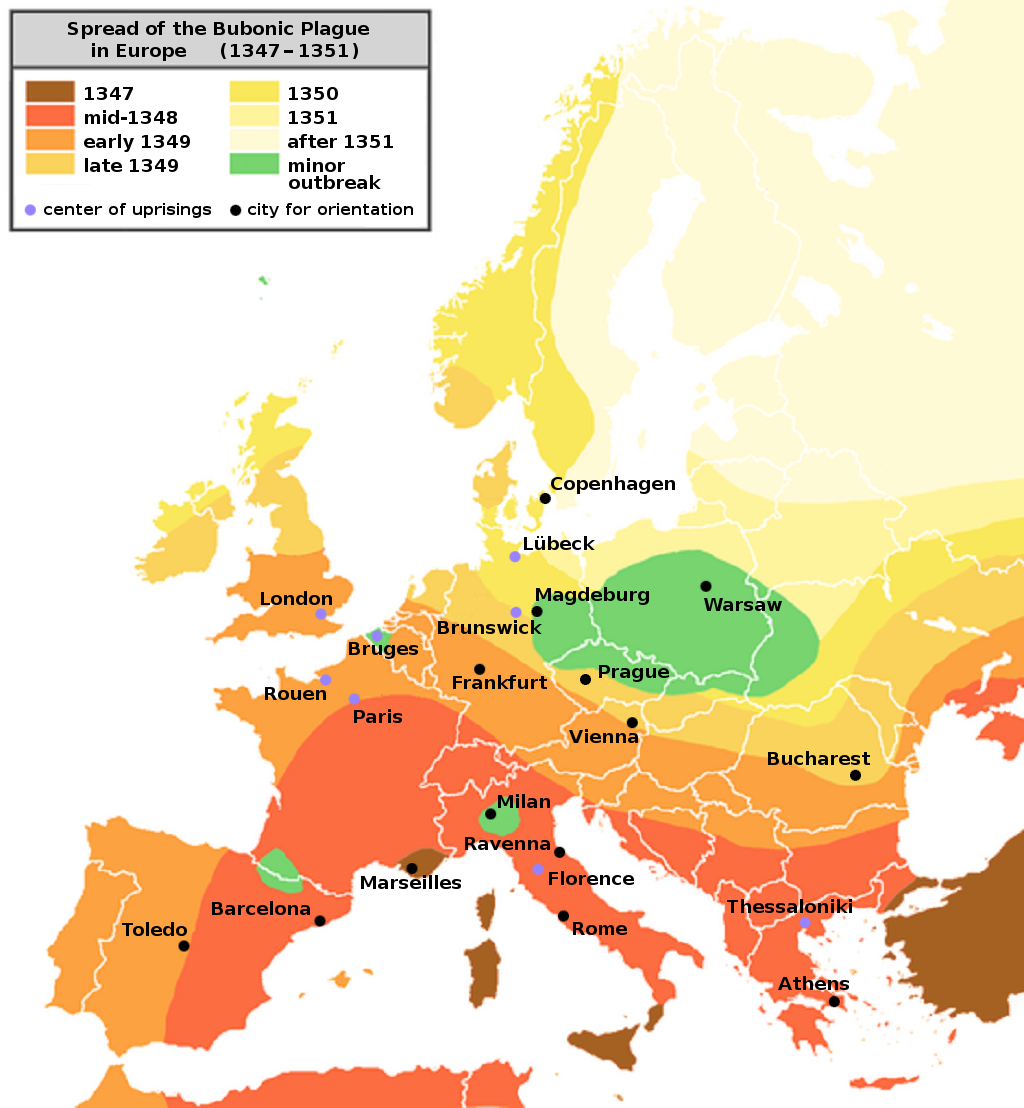
The consequences were immense. With so many dead, labor was suddenly scarce. Surviving peasants could demand better wages and more freedom, weakening the bonds of the manorial system. The sheer scale of the death toll also led many to question the power and protection of the Church, sowing seeds of doubt that would sprout in the coming centuries.
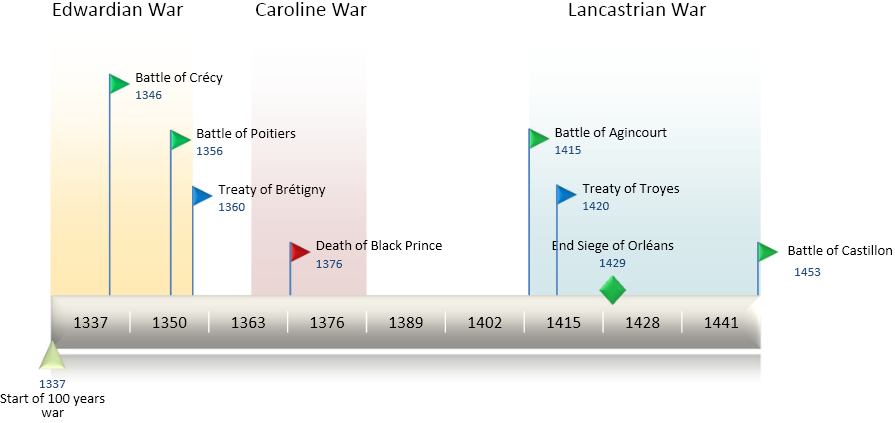
On top of the plague, England and France were locked in a grinding conflict known as the Hundred Years' War (1337-1453). This was not a single, continuous war but a series of brutal campaigns fought over land and the right to the French throne. The war introduced new military tactics and weapons, like the English longbow, which could pierce a knight's armor. The high cost of the war in both lives and money further destabilized the region.
Medieval Culture
Despite the harsh realities of life, the Late Middle Ages produced a unique and powerful culture, dominated by the Catholic Church. Art and architecture were almost entirely religious in theme. The period is famous for its Gothic cathedrals, soaring structures with pointed arches, ribbed vaults, and large stained-glass windows designed to draw the eye upward toward God.
The Middle Ages (5th-15th centuries) characterized by the rise of the Frankish Empire, feudalism, and the influence of the Catholic Church
Medieval paintings were often flat, lacking a sense of depth or realistic perspective. The focus was not on creating a lifelike image but on telling a clear religious story. Figures were stylized, with important characters like Christ or a saint often depicted as larger than others to signify their status. Gold leaf was frequently used in the background to create a heavenly, otherworldly glow.
The crises and culture of the Late Middle Ages set the stage for a dramatic transformation. The breakdown of old certainties in the face of plague and war, combined with a rigid social and cultural system, created the conditions for the explosion of new ideas, art, and science that we call the Renaissance.
In the feudal system, what did a king or high-ranking lord grant to a vassal in exchange for loyalty and military service?
Which of the following best describes the status of a serf on a medieval manor?