The Refrigeration Cycle Explained
Thermodynamic Principles
Energy in, Energy out
At its core, thermodynamics is the study of energy. The first and most fundamental rule is the First Law of Thermodynamics, which is a version of the law of conservation of energy. It states that energy cannot be created or destroyed, only changed from one form to another.
Think about a closed system, like a perfectly insulated box. If you add heat to the box, that energy has to go somewhere. It might increase the internal energy of the gas inside, making its molecules move faster. The gas might also expand, pushing on the walls of the box and doing work. The total energy change must account for both the heat you added and any work that was done.
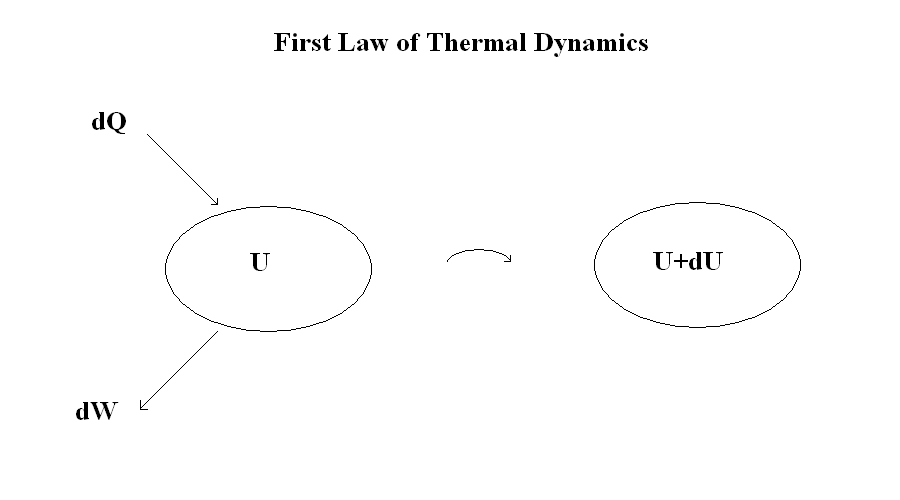
Mathematically, this relationship is expressed as:
Here, is the change in the system's internal energy, is the heat added to the system, and is the work done by the system. In refrigeration, we are constantly moving energy around, adding it to a refrigerant in one place and removing it in another, but the total energy is always conserved.
The Direction of Heat Flow
If you place a hot cup of coffee on a table, it will cool down. The table and the surrounding air will warm up slightly. You will never see a room-temperature cup of coffee spontaneously become hot by drawing heat from the cool air around it. This illustrates the Second Law of Thermodynamics.
The second law tells us the direction that energy transfer naturally happens. Heat always flows from a hotter object to a colder one. It also introduces the concept of entropy, which is a measure of disorder or randomness in a system. The total entropy of an isolated system can never decrease over time; it will always stay the same or increase.
This law is why refrigerators and air conditioners need energy to work. They are actively moving heat from a cold space (like the inside of your fridge) to a warmer space (your kitchen). This process is not spontaneous and requires work to be done on the system, which is why you have to plug your refrigerator into the wall.
The second law of thermodynamics gives a fundamental limitation to the efficiency of a heat engine and the coefficient of performance of a refrigerator.
This means there's a theoretical limit to how efficiently we can move that heat. No refrigerator can be perfectly efficient; some energy is always lost as waste heat, increasing the overall entropy of the universe.
How Heat Moves
To control temperature, we need to understand how heat gets from one place to another. There are three primary mechanisms for heat transfer.
Conduction is heat transfer through direct physical contact. When you touch a hot stove, heat conducts directly to your hand. In a refrigerator, heat from the food conducts to the cold air inside, and that heat is eventually conducted through metal coils to the refrigerant.
Convection is heat transfer through the movement of fluids, like liquids or gases. A fan blowing hot air is an example of forced convection. Inside a refrigerator, cold air circulates, transferring heat away from the food. The refrigerant itself is pumped through the system, carrying heat via convection from the inside to the outside.
Radiation is heat transfer through electromagnetic waves, like infrared radiation. You can feel the heat from a campfire even from a distance because of radiation. Every time you open your refrigerator door, heat radiates from the warmer room into the cold interior.
The Working Fluid
Refrigeration systems work by circulating a special substance called a refrigerant. This fluid is chosen for its specific thermodynamic properties, which allow it to change phase from a liquid to a gas and back again at useful temperatures and pressures.
An ideal refrigerant has several key characteristics:
- A low boiling point: It needs to evaporate (boil) at a low temperature to absorb heat from the refrigerated space.
- High heat of vaporization: This is the amount of energy required to change the refrigerant from a liquid to a gas. A higher value means it can absorb more heat for every gram that evaporates, making the cycle more efficient.
- Non-toxic and non-flammable: For safety reasons, refrigerants used in homes and businesses should not be harmful to people or pose a fire risk.
- Environmentally friendly: Early refrigerants like chlorofluorocarbons (CFCs) were found to damage the ozone layer. Modern refrigerants are designed to have a low impact on the environment.
Finding a substance that meets all these criteria is a challenge. The choice of refrigerant is a careful balancing act between thermodynamic efficiency, safety, and environmental impact.
These principles form the bedrock of refrigeration. By understanding how energy is conserved, the natural direction of heat flow, and the methods of heat transfer, we can see how a refrigerant can be used to defy nature and move heat from a cold place to a warm one.
The First Law of Thermodynamics is a statement of the conservation of energy. It means that energy cannot be created or destroyed, only...
According to the Second Law of Thermodynamics, why does a refrigerator require an external power source to function?
Now you have a solid grasp of the thermodynamic rules that govern all refrigeration systems.