The Psychology of Gambling and Addiction
Introduction to Gambling Psychology
Why We Bet
Gambling's appeal goes deeper than the chance to win money. It taps directly into how our brains perceive patterns and risk. Sometimes, our thinking gets a little skewed, creating powerful urges to keep playing, even when the odds are stacked against us. These mental shortcuts, or cognitive biases, can make gambling feel more predictable than it actually is.
The Gambler's Fallacy
Imagine flipping a coin. It has landed on heads five times in a row. What do you bet on the next flip? Many people would feel a strong pull toward betting on tails, thinking it's "due." This is the gambler's fallacy: the mistaken belief that past random events influence future ones.
In reality, each coin flip is an independent event. The coin has no memory. The probability of getting heads or tails is always 50/50, no matter what happened before. The same logic applies to a roulette wheel. If the ball has landed on red ten times straight, the chance of it landing on black on the next spin is still the same as it was on the first spin.
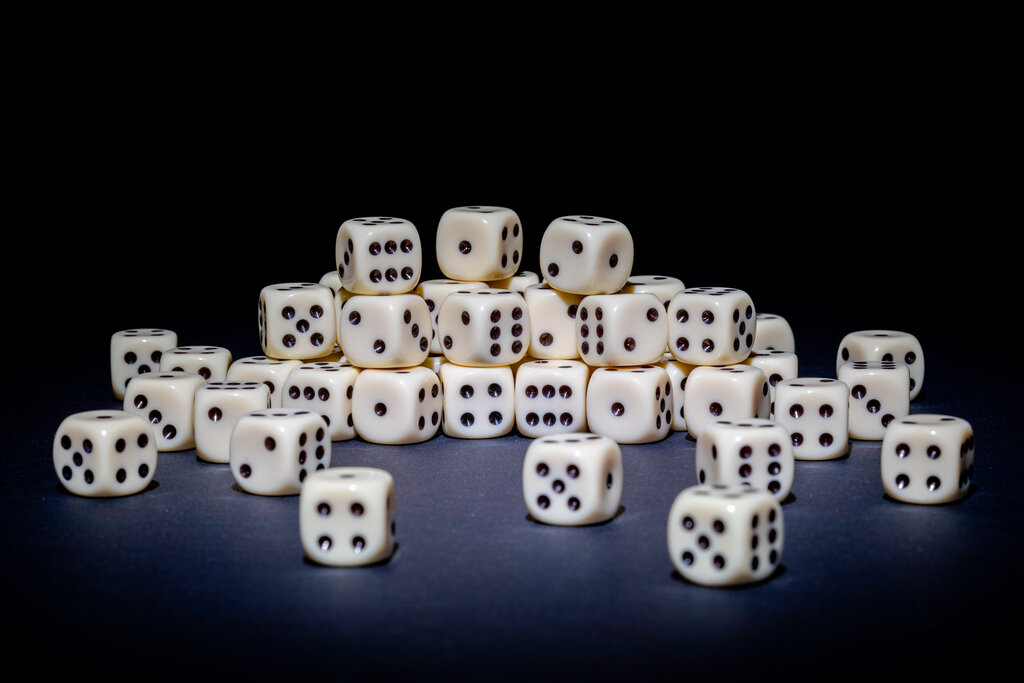
Casinos sometimes display the history of recent roulette spins or dice rolls. This information is useless for predicting the future, but it feeds directly into the gambler's fallacy, encouraging people to bet based on non-existent patterns.
The Near-Miss
Think of a slot machine. The first two reels land on a cherry, but the third stops just one position away. You didn't win, but it feels like you almost did. This is the near-miss effect. Our brains interpret a near-miss not as a loss, but as a sign that a win is just around the corner.
Neurologically, a near-miss can trigger similar brain activity to an actual win. This creates a frustrating yet encouraging feeling that makes you want to spin again. Game designers know this and often program machines to show near-misses more frequently than they would occur by pure chance, keeping players engaged.
Faulty Thinking
Beyond these specific effects, gambling behavior is often fueled by broader cognitive distortions—irrational ways of thinking.
One common distortion is the illusion of control. This is the belief that you can influence a random outcome. Someone might blow on the dice before a throw or have a "lucky" way of pressing a slot machine button. These rituals provide a sense of control over a process that is entirely random.
Another is selective memory, where gamblers vividly remember their wins but quickly forget their many losses. By magnifying wins and minimizing losses, a person can build a distorted picture of their success, convincing themselves they are winning more often than they really are.
The gambler’s fallacy and illusion of control are compelling biases that can often lead to a strong urge to place ‘just one more bet’.
These psychological traps don't mean a person is unintelligent. They are common patterns of human thinking that can affect anyone. However, in the context of gambling, they can create a powerful cycle that makes it difficult to walk away.
Let's check your understanding of these psychological principles.
A roulette wheel has landed on a black number for ten consecutive spins. Which of the following thoughts is an example of the gambler's fallacy?
A slot machine's reels stop with two cherries lined up and the third cherry just one position away from the payline. The feeling this creates, which encourages another spin, is known as:
Understanding these biases is the first step in recognizing how psychology shapes our decisions in games of chance.