The Professional Actor Blueprint
Advanced Script Analysis
Beyond the Words
You know how to find a character's objective and break a scene into beats. That’s the blueprint. Now, we build the person. The real work begins when you move past what the character does and start digging into why they do it. This is the shift from reading lines to inhabiting a life.
The first step is creating a psychological profile. Think of yourself as a detective. The script offers clues—a turn of phrase, a reaction that seems too big or small, a story they tell about their past. Your job is to assemble these clues into a coherent inner world. Don't just invent a backstory; build one that explains the person we see on the page. Why are they cynical? What past event makes them so desperate for control? This process, Psychological Profiling, transforms a character from a set of actions into a person with history and habits.
Every choice your character makes, from their coffee order to a life-altering decision, should be rooted in the backstory you've constructed.
The Unspoken Truth
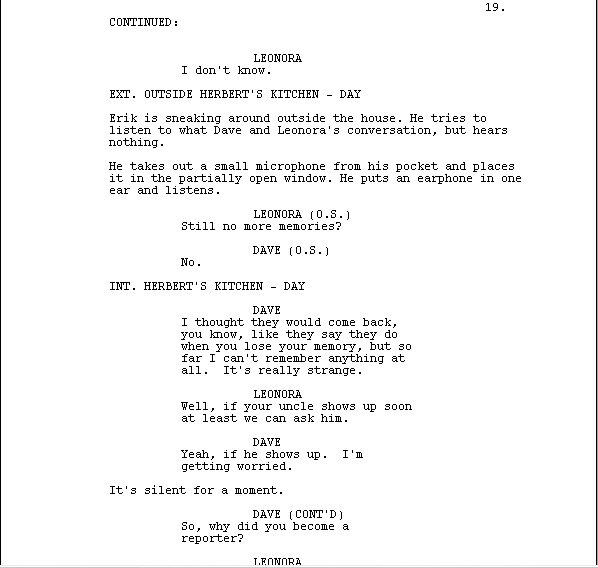
People rarely say exactly what they mean. The space between their words and their true intentions is where the most interesting acting happens. This is subtext. Your task is to identify the hidden agendas driving every conversation.
Look at a line of dialogue. Now ask: What does my character want the other person to feel, think, or do by saying this? Are they using flattery to disarm someone? Is their anger a mask for fear? Analysing subtext means treating dialogue not as information, but as a tactic. A character might say, "It's getting late," but the subtext could be, "I'm uncomfortable and I want to leave," or, "I want you to ask me to stay."
Mapping these hidden motives reveals the true conflict in a scene. It's rarely about the topic being discussed. It's about the clash of unspoken needs.
Mapping the Journey
A great performance isn't a series of disconnected emotional moments. It's a cohesive arc of change. To build this, you need to map your character's Throughline. This is the central, driving motivation that connects all their scenes and pushes them through the entire story. It's their ultimate super-objective.
To find it, ask: What is the one thing this character wants more than anything, from the beginning of the story to the end? How does that core desire manifest in Act 1 versus Act 3? A character might want 'security'. In the first act, they pursue it by hoarding money. By the end, they might realize security only comes from trusting others. Your performance must reflect that evolution.
Within this arc are crucial turning points, or pivot beats. These aren't just any beat; they are moments where a character's strategy, worldview, or emotional state fundamentally shifts. A pivot beat is when a new piece of information lands or an obstacle proves insurmountable, forcing the character to change their approach. Identifying these moments is key to making the character's journey feel earned and believable. It’s the hinge on which their transformation swings.
Once you've done the intellectual work—the profiling, the subtext analysis, the throughline mapping—you must integrate it into your performance. This isn't about mentally checking off boxes during a scene. It's about letting that deep understanding inform your instincts.
Modern digital tools can help with the technical groundwork. An application like can provide data-driven insights on character arcs and scene pacing, freeing up your mental energy to focus on the creative work. It can break down a script structurally, but it can't feel the character's heartbeat. That's your job.
The final step is to let the analysis sink in so deeply that it becomes second nature. You've built the psychological architecture. Now, you get to live inside it, reacting truthfully and spontaneously within the world you've so carefully understood. The preparation is your launchpad; the performance is the flight.
What is the primary purpose of creating a psychological profile for a character?
A character says to their colleague, "You must have worked all night on this report." What is the most likely subtext?