The Pre-Aksumite Civilization and Yeha
D'mt Kingdom Origins
The First State of the Highlands
Around the 8th century BCE, a new power emerged in the highlands of what is now Ethiopia and Eritrea. This was the kingdom of D'mt, the earliest known organized state in the region. Its political and religious heart was the settlement of Yeha, where impressive stone temples and elite residences stood as a testament to its influence.
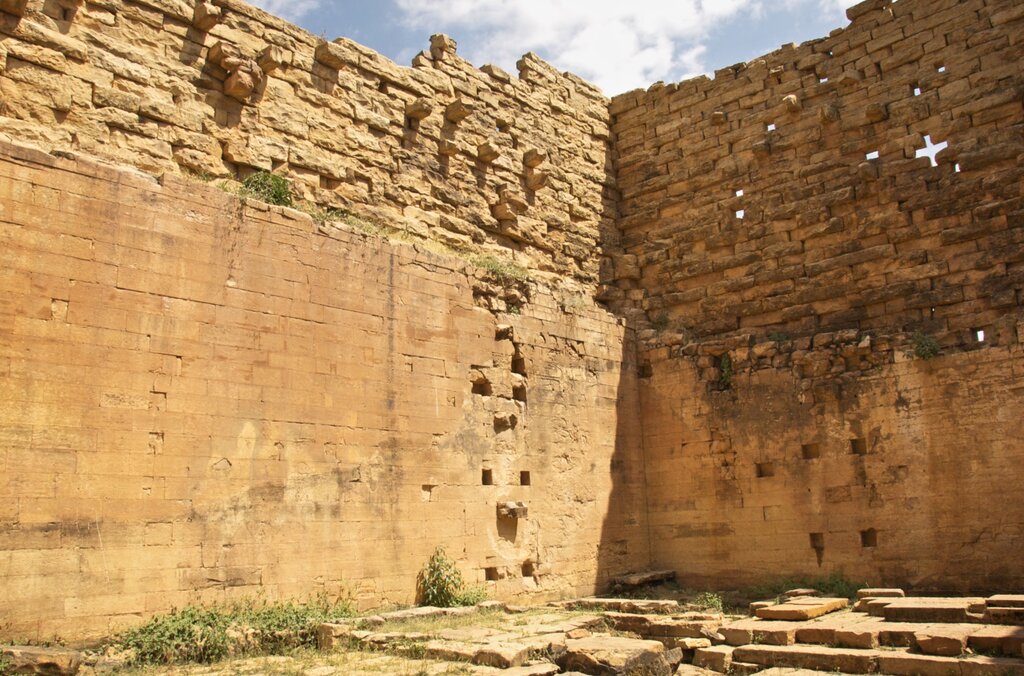
For a long time, historians believed D'mt was a colony of the powerful Sabean kingdom from across the Red Sea in modern-day Yemen. The evidence seemed clear: Sabean gods were worshipped, their script was used, and a Sabean-style political leader, the Mukarrib, was in charge. But a closer look reveals a more complex story. D'mt wasn't a Sabean outpost, but rather a unique cultural fusion. Immigrants and ideas from the Sabeans mixed with a vibrant, long-established indigenous culture to create something entirely new.
Gods and Governors
The rulers of D'mt adopted the title '', a term borrowed directly from South Arabia. This leader held both priestly and political power, unifying different clans and communities under a shared religious identity. The primary deity was Almaqah, the Sabean god of the moon, often associated with agriculture and irrigation, crucial elements for survival in the highlands.
Yet, local traditions persisted and blended with these new influences. Archaeological evidence shows that while the elite built grand Sabean-style temples, the general populace continued their own distinct burial practices and traditions, suggesting a synthesis rather than a replacement of cultures.
The First Local Script
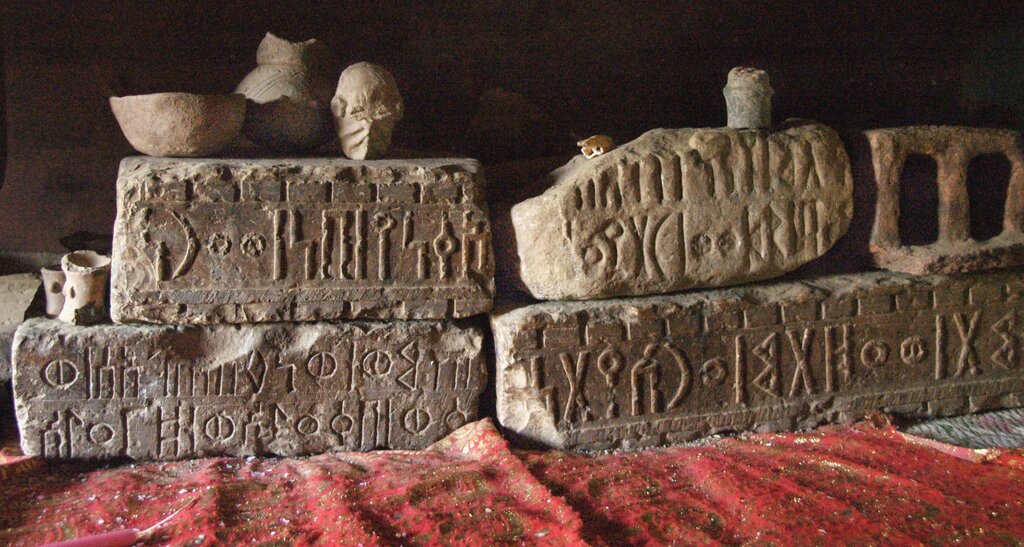
The people of D'mt adopted the writing system of the Sabeans, known as Epigraphic South Arabian or the Da'amat script. Early inscriptions from this period are almost indistinguishable from those found in Yemen. They are written in a consonantal script, meaning they lack vowels.
Over time, however, local scribes began to adapt this foreign script to fit their own language. This gradual evolution marked the beginning of Proto-Ge'ez, which introduced unique modifications and eventually led to the development of the Ge'ez script. This new script, complete with vowels, would become the liturgical language of the Ethiopian Orthodox Tewahedo Church and the ancestor of modern languages like Amharic and Tigrinya.
The Empire of Aksum is notable for a number of achievements, such its own alphabet, the Ge’ez alphabet (which evolved from Epigraphic South Arabian during the late pre-Aksumite and proto-Aksumite period), which was modified to include vowels, becoming an abugida.
Life in the Highlands
The kingdom of D'mt was supported by a network of agricultural communities scattered across the fertile plateaus of Tigray and the Eritrean highlands. Farmers developed sophisticated techniques of terrace farming and irrigation to cultivate crops like wheat, barley, and teff.
Settlements ranged from small villages to larger, fortified towns. The presence of both monumental architecture and simpler domestic dwellings points to a socially stratified society, with a clear distinction between the ruling elite and the common agriculturalists. This complex society laid the groundwork for the even more powerful Aksumite Kingdom that would follow.
Now, let's test your understanding of this foundational kingdom.
Where was the kingdom of D'mt primarily located?
The kingdom of D'mt was simply a colony of the Sabean kingdom.
This early synthesis of local and South Arabian cultures created a uniquely powerful state that set the stage for centuries of civilization in the Horn of Africa.