The Practice of Salat in Islam
Introduction to Salat
The Pillar of Prayer
Salat is the ritual prayer practiced by Muslims. It's a direct line of communication with God, a moment to pause the day and reconnect with the divine. More than just a set of words and movements, it's a spiritual anchor that structures the day and a believer's life.
Salat
noun
The ritual prayer of Muslims, performed five times daily in a set form.
Salat is the second of the five core practices in Islam, known as the Five Pillars. These pillars are the foundation of a Muslim's faith and practice, outlining the essential duties and obligations.
The Five Pillars of Islam are the core beliefs and practices that every Muslim follows.
These pillars provide a framework for a life of devotion and service. Just as a building needs strong pillars to stand, these practices support a Muslim's spiritual life. Salat, performed daily, is like the central pillar holding everything up.
The Five Daily Prayers
For adult Muslims, performing five prayers each day is an obligation. These prayers are not set by the clock but by the position of the sun, creating a rhythm that flows with the natural cycle of the day. Each prayer has its own window of time in which it must be performed.
| Prayer | Timeframe |
|---|---|
| Fajr | Dawn, before sunrise |
| Dhuhr | Midday, after the sun passes its highest point |
| Asr | Late afternoon |
| Maghrib | Just after sunset |
| Isha | Nighttime |
This schedule isn't meant to be a burden. Instead, it creates regular pauses for reflection and gratitude, turning the entire day into an act of mindfulness.
More Than Just Words
The benefits of Salat extend beyond the individual. Spiritually, it fosters discipline and keeps one conscious of God throughout daily life. It's a moment to step away from worldly concerns and find peace.
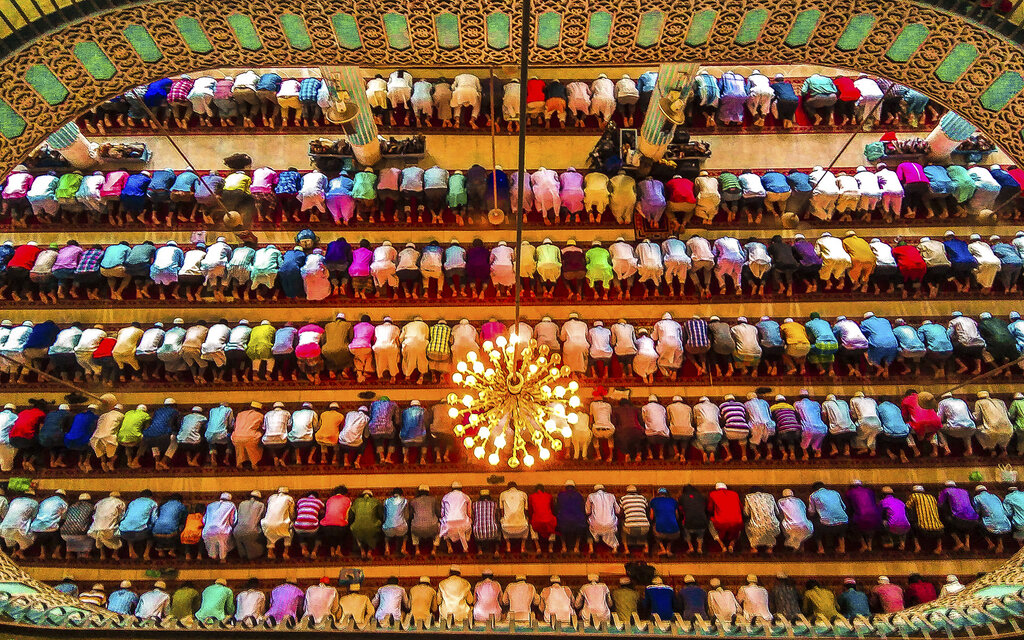
Communally, praying together in a mosque strengthens bonds between people. When Muslims stand shoulder to shoulder, regardless of their wealth, status, or background, it reinforces the principle of equality and unity within the community.
The true purpose of Salat is to connect with sincerity and focus, making it a conversation with God, not just a physical exercise.
To truly benefit from prayer, it must be performed with sincerity (ikhlas) and humble concentration (khushu). It's about being present in the moment, understanding the words being recited, and feeling the connection to Allah. The physical movements have meaning, but the inner state of the heart is what gives the prayer its power. Without this internal focus, the prayer can become an empty ritual.
What is the primary role of Salat in the life of a Muslim?
The specific times for the five daily prayers are determined by what?
Understanding the 'why' behind Salat is the first step. It is the bedrock of a Muslim's daily practice, a constant and comforting rhythm of devotion.