The Power of Laughter Yoga
Introduction to Laughter Yoga
Laughing for No Reason
What if you could get the benefits of a good laugh without needing a joke, a comedy show, or anything funny at all? That’s the core idea behind Laughter Yoga. It’s a unique practice that blends intentional laughter exercises with the deep breathing techniques of yoga, known as pranayama.
Laughter Yoga
noun
A modern exercise practice involving prolonged voluntary laughter, based on the belief that voluntary laughter provides the same physiological and psychological benefits as spontaneous laughter.
The practice began with a simple question from a physician in India. In 1995, Dr. Madan Kataria was researching the health benefits of laughter for an article. He thought, if laughter is so good for us, why leave it to chance? Why not do it on purpose?
On March 13, 1995, he went to a public park in Mumbai and convinced four other people to join him in a “laughter club.” They started by telling jokes, but the jokes quickly ran out or became stale. Dr. Kataria needed a way to keep the laughter going without relying on humor.
This led to the breakthrough discovery: the body can't tell the difference between acted laughter and genuine laughter. You get the same physiological and psychological benefits either way.
This principle became the foundation of Laughter Yoga. The practice uses structured exercises to initiate laughter as a form of physical activity. In a group setting, this simulated laughter soon turns into real, contagious joy.
How a Session Works
A Laughter Yoga session isn't a traditional, mat-based yoga class. It's an active, playful group experience. Sessions are typically led by a certified leader who guides participants through a series of exercises designed to make laughter easy and accessible.
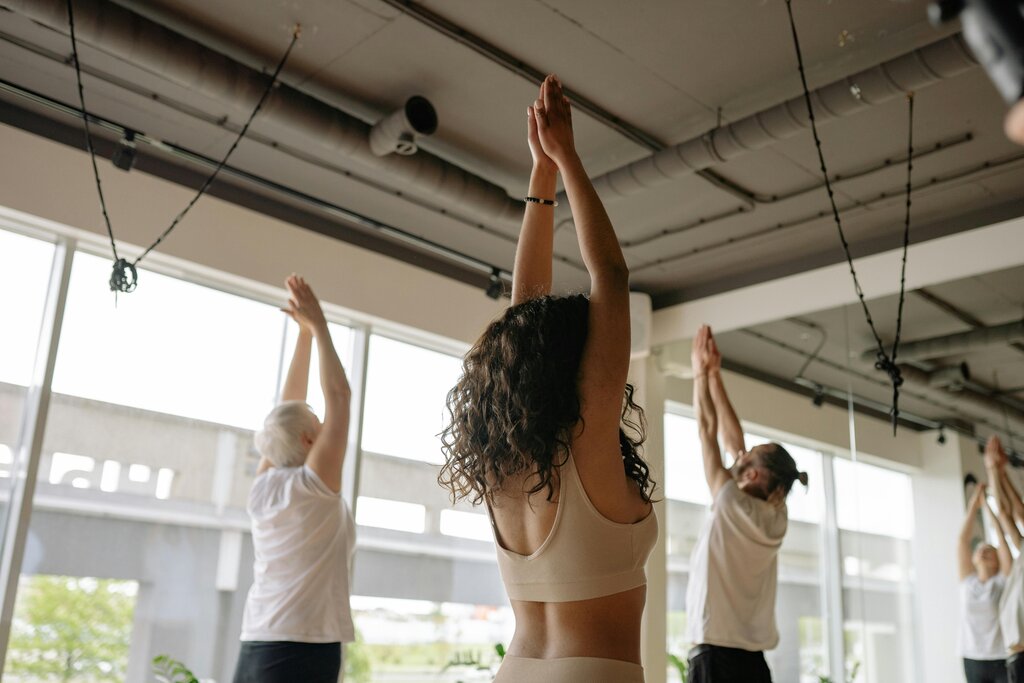
A typical session follows a basic structure:
-
Warm-ups: The session starts with gentle stretching, clapping, and chanting. A common chant is “Ho-ho, ha-ha-ha,” which helps warm up the diaphragm and create a positive, playful energy.
-
Laughter Exercises: The leader guides the group through various laughter exercises. These are often combined with deep yogic breathing. For example, participants might be asked to pretend they're laughing like a lion or miming a “milkshake laugh” by pouring imaginary ingredients from one hand to another while laughing.
-
Childlike Playfulness: The exercises are designed to reduce inhibition and encourage a sense of childlike fun. Eye contact and movement among the group help the laughter spread and become more authentic.
-
Laughter Meditation: Many sessions conclude with a laughter meditation. This is a period of unstructured laughter where participants can laugh freely, without any specific exercise. This often leads to a deep, cathartic release, followed by a period of quiet, mindful relaxation.
The entire process is built on the idea of faking it until you make it. What begins as a forced “ha-ha-ha” often blossoms into uncontrollable, heartfelt laughter.