The Power of Fusion Energy
Introduction to Nuclear Fusion
Combining Atoms for Energy
At its core, nuclear fusion is the process of taking two light atomic nuclei and merging them to form a single, heavier nucleus. Think of it like squishing two small balls of clay together to make one bigger ball. When this happens with atoms, an incredible amount of energy is released.
Nuclear fusion is the process of combining two light atomic nuclei to form a heavier nucleus, releasing a tremendous amount of energy in the process.
This energy comes from a tiny bit of mass that gets converted during the reaction. The resulting nucleus is slightly less massive than the combined mass of the two original nuclei. This 'lost' mass isn't really lost; it's transformed into energy, following Albert Einstein's famous equation, . Because the speed of light () is such a huge number, even a minuscule amount of mass () can become a vast quantity of energy ().
But getting nuclei to fuse isn't easy. Atomic nuclei are positively charged, and like magnets with the same poles, they naturally repel each other. To overcome this repulsion, you need extreme conditions: incredibly high temperatures and immense pressure.
How Stars Shine
The perfect environment for fusion exists in the core of stars, including our own Sun. The Sun's core is a blistering 15 million degrees Celsius, and the pressure from its immense gravity is over 250 billion times that of Earth's atmosphere. These conditions are so intense that they strip electrons from hydrogen atoms, creating a superheated gas of charged particles called plasma.
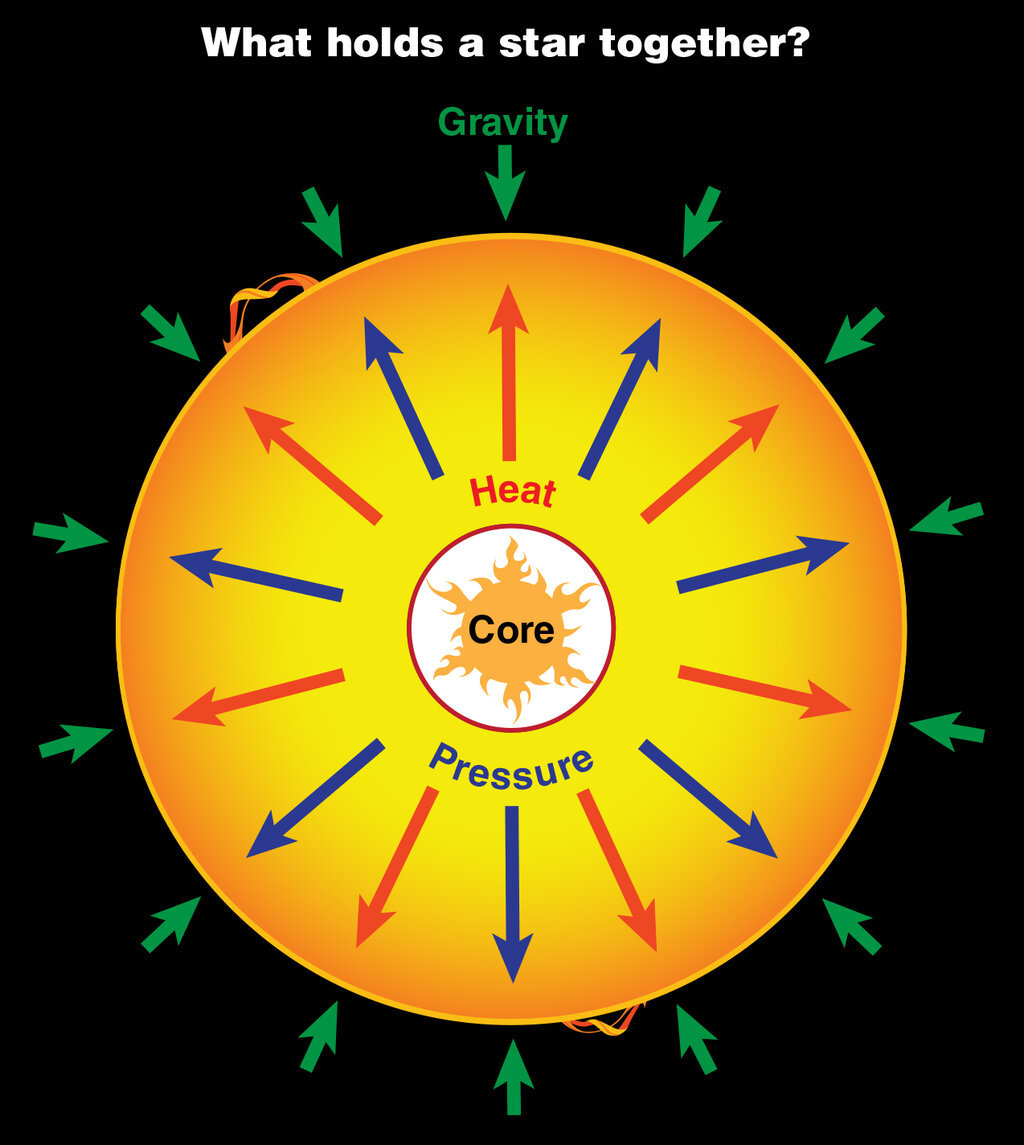
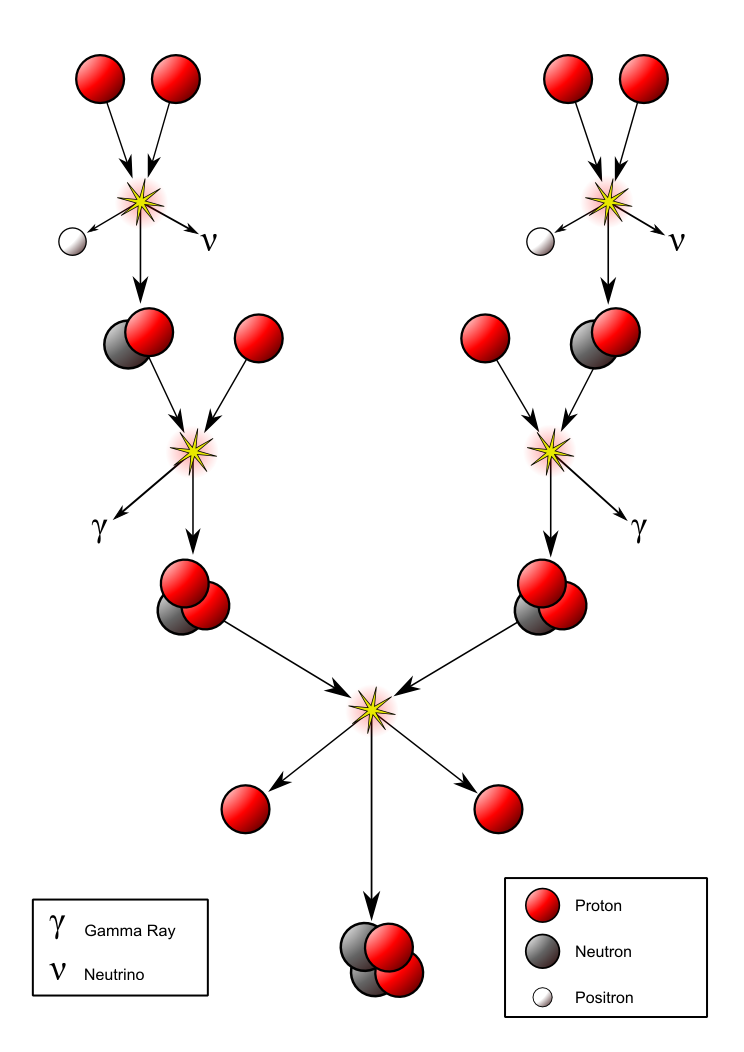
In this plasma, hydrogen nuclei are moving so fast that they can overcome their mutual repulsion and slam into each other, fusing to form helium. This process, known as the proton-proton chain, is what has powered the Sun for billions of years. It's the source of the light and heat that make life on Earth possible.
Fusion vs. Fission
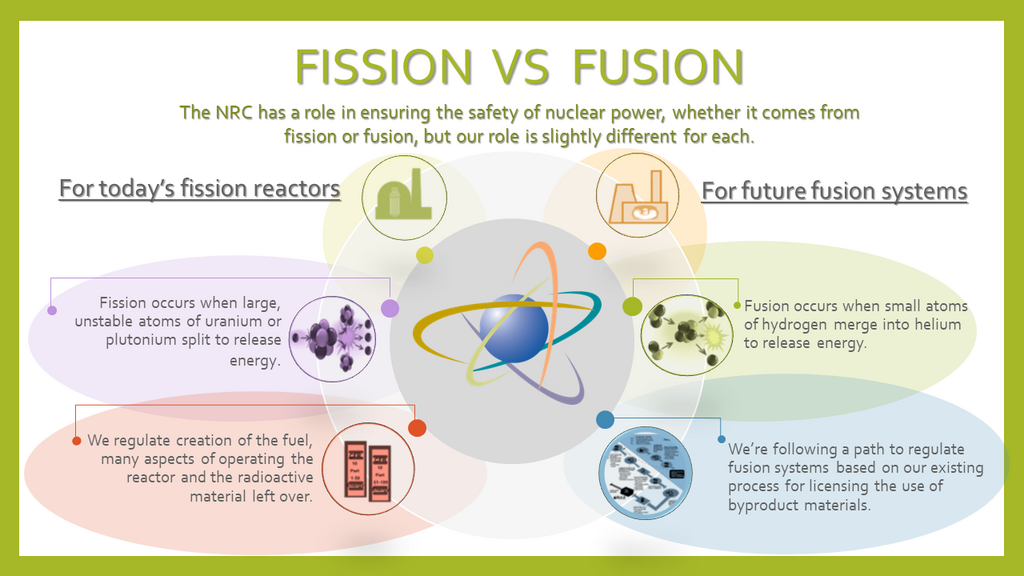
Nuclear fusion is often confused with nuclear fission, but they are opposite processes. Fission splits a single, large, unstable nucleus (like uranium-235) into two smaller nuclei. This is the reaction used in today's nuclear power plants. Fusion, on the other hand, combines two small nuclei (like isotopes of hydrogen).
Fusion combines light atoms, while fission splits heavy ones. Both release enormous amounts of energy.
Here’s a quick comparison:
| Feature | Nuclear Fusion | Nuclear Fission |
|---|---|---|
| Process | Joins light nuclei (e.g., hydrogen) | Splits heavy nuclei (e.g., uranium) |
| Byproducts | Primarily helium; few radioactive byproducts | Radioactive fission fragments and waste |
| Conditions | Extremely high temperature and pressure | Can occur at lower temperatures |
| Natural Example | The Sun and other stars | Occurs rarely in nature |
| Energy Release | Releases 3-4 times more energy per unit mass | Releases a large amount of energy |
The dream of scientists is to harness nuclear fusion on Earth. The fuel, isotopes of hydrogen like deuterium, can be extracted from seawater, making it incredibly abundant. The process doesn't produce greenhouse gases or long-lived radioactive waste, making it a potentially clean and sustainable energy source for the future. The challenge, however, remains in creating and containing the star-like conditions needed for the reaction to happen.
Now, let's test your understanding of these fundamental concepts.