The Power of Breathwork
Introduction to Breathwork
What Is Breathwork?
Most of the time, we breathe without thinking. It’s an automatic process, like our heartbeat, that keeps us alive. Breathwork is the simple practice of making this unconscious process conscious. It involves intentionally changing your breathing pattern to improve your mental, physical, or spiritual well-being.
By consciously guiding your breath—making it faster or slower, deeper or shallower—you can influence your internal state. It’s a direct way to communicate with your own body and mind, using the breath as a tool for change.
Breathwork is a broad term that encompasses various breathing techniques designed to enhance oxygenation, regulate the nervous system, and promote overall well-being.
Ancient Roots, Modern Practice
The idea of using breath for healing and insight is ancient. In India, the yogic practice of pranayama, which translates to "life force control," has been used for thousands of years to calm the mind and energize the body. Buddhist meditation techniques, like anapanasati (mindfulness of breathing), also focus on the breath as an anchor for awareness.
These practices weren't limited to one part of the world. Similar techniques appeared in Taoist traditions in China, Sufi mysticism in the Middle East, and among Indigenous cultures globally. They all recognized a fundamental truth: the way we breathe is deeply connected to the way we feel and experience life.
In the 20th century, these ancient ideas were rediscovered and adapted for modern therapeutic settings. Today, breathwork is used by people from all walks of life, from athletes looking to improve performance to individuals seeking to manage stress and anxiety.
How Breathing Works
To understand breathwork, it helps to know a little about the mechanics of breathing. Your primary breathing muscle is the diaphragm, a dome-shaped sheet of muscle at the base of your lungs. When you inhale, your diaphragm contracts and moves downward, creating space for your lungs to expand with air. When you exhale, it relaxes and moves up, pushing air out.
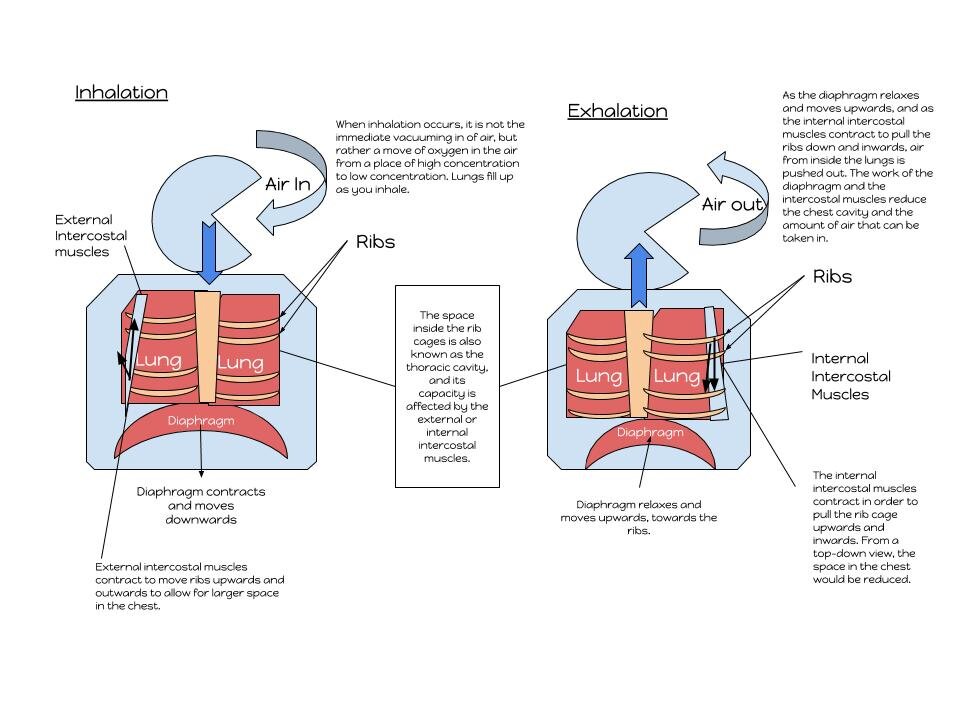
This whole process is managed by your autonomic nervous system, the part of your body's control center that runs on autopilot. It has two main branches: the sympathetic nervous system (your "fight or flight" response) and the parasympathetic nervous system (your "rest and digest" response).
Think of it like a car. The sympathetic system is the gas pedal, revving you up for action. The parasympathetic system is the brake, slowing you down to conserve energy and repair.
The Mind-Body Connection
Breathing is unique because it's one of the few autonomic functions you can consciously control. You can't tell your heart to beat slower, but you can choose to slow down your breath. This gives you a direct line of communication to your nervous system.
When you're stressed or anxious, your breathing often becomes shallow and rapid, activating your sympathetic "fight or flight" response. By deliberately taking slow, deep, diaphragmatic breaths, you signal to your body that you are safe. This activates the parasympathetic "rest and digest" system, which lowers your heart rate, relaxes your muscles, and calms your mind.
By consciously controlling one’s breath, individuals can activate the body’s parasympathetic nervous system, reducing stress levels and cultivating a sense of inner peace.
This simple act of controlled breathing can reduce feelings of stress, improve focus, and help regulate emotions. It's a powerful reminder that we have the ability to influence our own physiology and psychology, just by paying attention to our breath.
Now, let's review what you've learned.
What is the fundamental practice of breathwork?
Taking slow, deep breaths primarily activates the __________ nervous system, often called the "rest and digest" response.
Understanding these core principles provides a solid foundation for exploring specific breathwork techniques.