The Piano A Musical Journey
Early Keyboard Instruments
Keyboards Before Piano
Long before the piano dominated concert halls, other keyboard instruments were the stars of the musical world. Composers like Bach and Mozart wrote for them, and they filled homes and courts with music. Two of the most important were the harpsichord and the clavichord. Though they look similar to a modern piano, they produced sound in fundamentally different ways.
The Harpsichord's Pluck
The harpsichord was a centerpiece of the Baroque era. Often beautifully decorated, these instruments were status symbols as much as musical tools. Their sound is bright, crisp, and has a distinctive metallic tang.
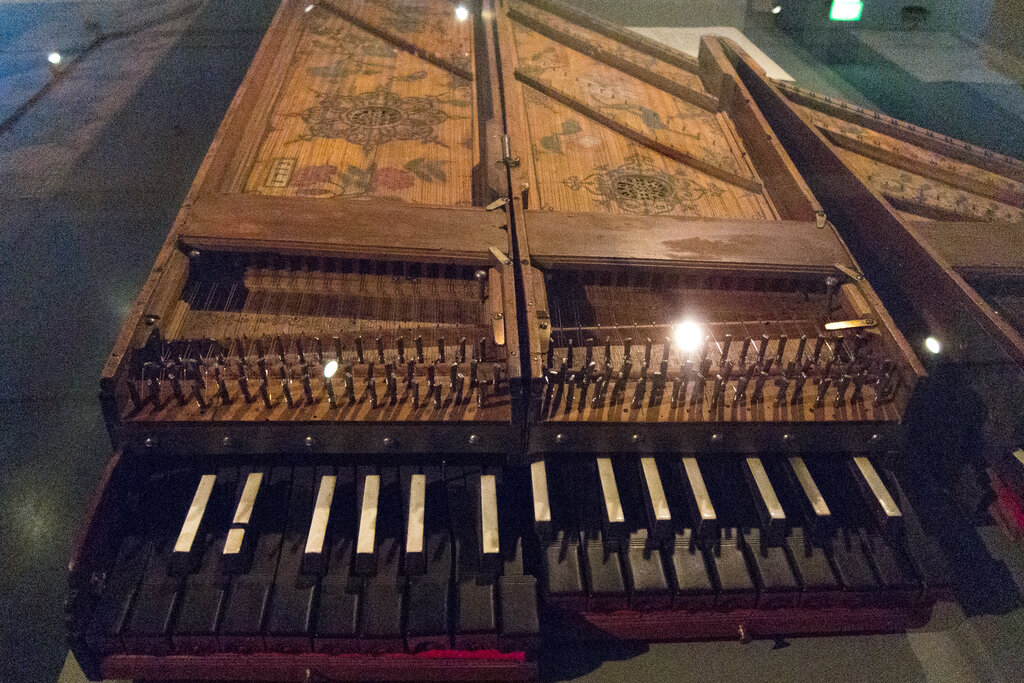
Unlike a piano, which strikes its strings with hammers, the harpsichord plucks them. When a key is pressed, it raises a small wooden piece called a jack. Attached to the jack is a tiny plectrum, historically made from a bird's quill. The plectrum rises, plucks the string like a guitar pick, and then falls back down, ready to play again.
This plucking action has a crucial consequence: volume is fixed. It doesn't matter if you press the key gently or forcefully; the string is plucked with the same strength, producing the same volume. This lack of dynamic range defined its musical role. Harpsichords were excellent for providing the steady harmonic foundation in orchestras and chamber groups, a role known as the basso continuo. They cut through the sound of other instruments, providing a clear rhythmic and harmonic pulse.
The Clavichord's Whisper
If the harpsichord was for the concert hall and salon, the clavichord was for the private study. It was much smaller and far quieter, producing a delicate, silvery tone.
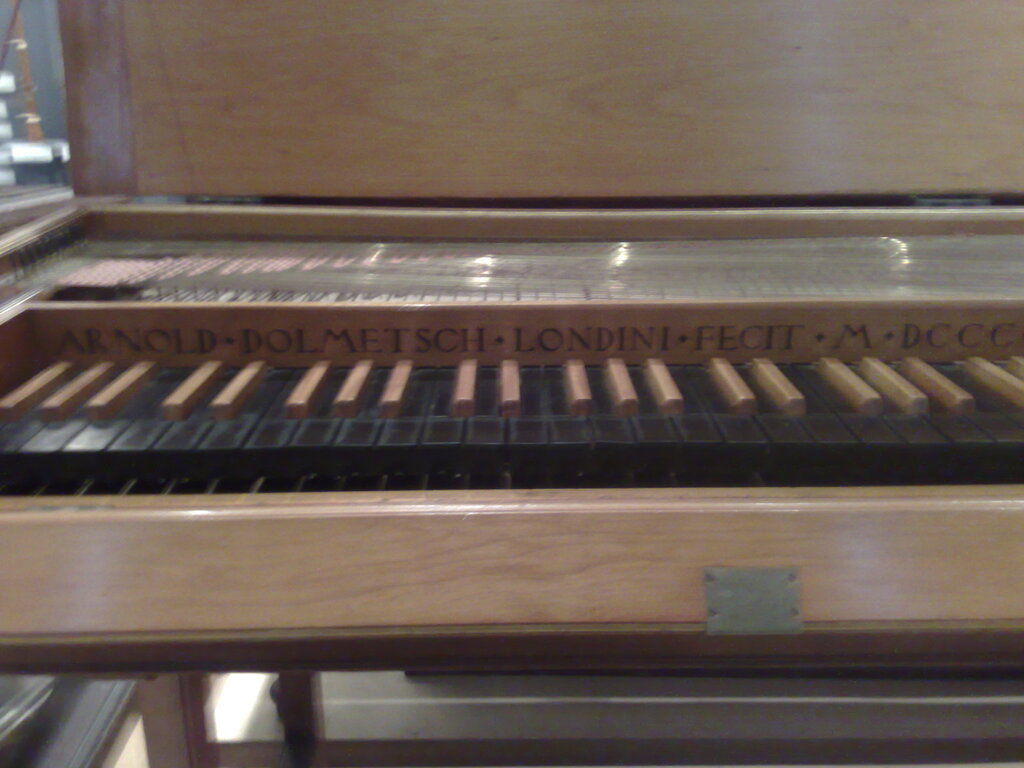
The clavichord's mechanism was simpler and more direct. Pressing a key levers up a small brass blade called a tangent, which strikes the string. Unlike the harpsichord's plectrum, the tangent stays in contact with the string as long as the key is held down. The tangent's position on the string even determines the vibrating length, and thus the pitch.
This direct connection gave the player incredible control. The clavichord was touch-sensitive; a harder press produced a slightly louder sound. A player could even create a subtle vibrato, called Bebung, by wiggling their finger on the key, altering the pressure of the tangent on the string. However, its sound was too quiet for anything but solo practice or performance in a very small, intimate room.
| Feature | Harpsichord | Clavichord |
|---|---|---|
| Mechanism | Plucks strings with a plectrum | Strikes strings with a tangent |
| Volume | Fixed; not touch-sensitive | Variable; touch-sensitive |
| Sound | Bright, loud, crisp | Delicate, quiet, soft |
| Primary Use | Public performance, ensemble music | Private practice, solo music |
These two instruments defined the sound of keyboard music for centuries. The harpsichord provided the brilliant, rhythmic drive of the Baroque era, while the clavichord offered a quiet, expressive outlet for composers and performers. They paved the way for the development of new keyboard instruments that would combine the harpsichord's power with the clavichord's sensitivity.