The Physics of Oscillations
Introduction to Oscillatory Motion
The Rhythm of Motion
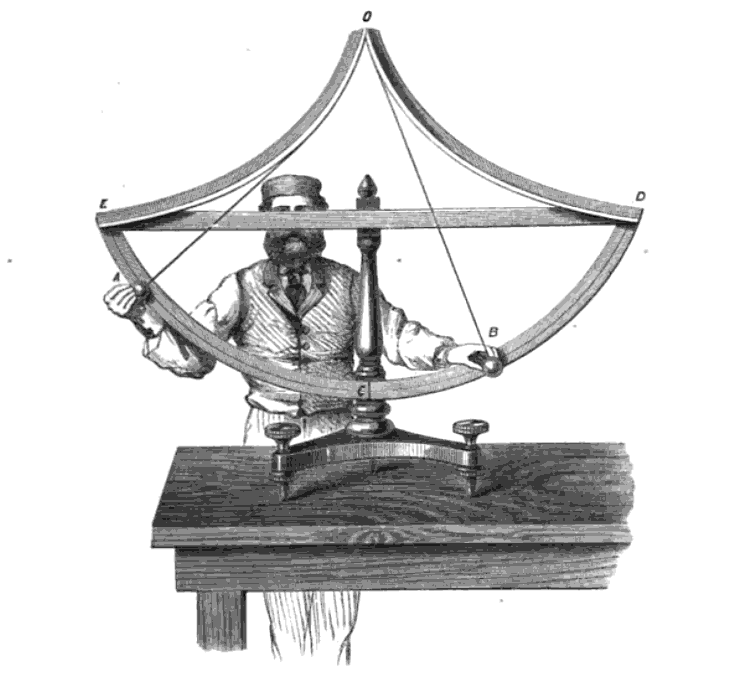
Some motions repeat. Think of a child on a swing, a pendulum in a grandfather clock, or a guitar string after it's been plucked. Each one moves back and forth, over and over again, around a central point. This kind of repeating movement is called oscillatory motion.
The central point, where the object would rest if it weren't moving, is called the equilibrium position. For the swing, it's the spot where it hangs straight down. For the guitar string, it's its straight, unplucked state. All oscillatory motion happens around this point of balance.
Oscillatory Motion
noun
A repetitive back-and-forth movement of an object around a central, or equilibrium, position.
Describing the Swing
To talk about these motions precisely, we need a few key terms. These terms form the basic language for describing any oscillation, from a simple wave in a pond to the complex vibrations in an earthquake.
First, we have periodicity. Every oscillation takes a certain amount of time to complete one full cycle and return to its starting point. A full cycle for a swing is from its highest point on one side, all the way to the other, and back again.
Period
noun
The time it takes to complete one full cycle of an oscillation. It's usually measured in seconds.
Closely related to the period is frequency. While period measures the time per cycle, frequency measures the number of cycles that happen per unit of time, usually one second. If something has a long period, it has a low frequency, and vice versa.
Frequency
noun
The number of complete oscillations that occur in a given amount of time. The standard unit for frequency is Hertz (Hz), which means cycles per second.
Next is amplitude. This tells us how big the oscillation is. It's the maximum distance or displacement the object moves from its equilibrium position. If you give a swing a small push, it will have a small amplitude. A big push results in a large amplitude.
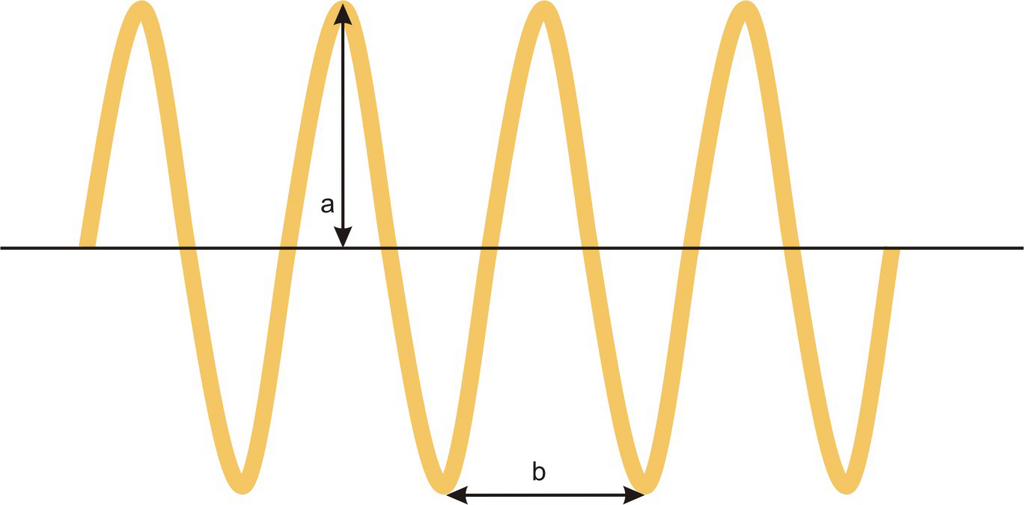
Finally, we have phase. This concept is a bit more subtle. Phase describes an object's position within its cycle. It's most useful when comparing two different oscillations. Imagine two people on identical swings. If they start at the same time and move in perfect sync, we say they are "in phase." If one starts a little after the other, they are "out of phase."
Phase tells you where a wave is in its repeating cycle at a specific moment in time.
Oscillations in the Wild
Once you know what to look for, you'll see oscillatory motion everywhere. It's one of the most fundamental types of motion in the universe. A boat bobs up and down on the water. The strings on a violin vibrate to create sound. The Earth's rotation creates the daily cycle of day and night.
Oscillations even happen on scales we can't see. Atoms in a solid crystal are not static; they are constantly vibrating around their fixed positions. The light that reaches our eyes consists of oscillating electric and magnetic fields. Understanding the simple back-and-forth of a swing gives us the tools to start understanding these more complex phenomena.
Let's check your understanding of these fundamental concepts.
A guitar string is plucked, causing it to vibrate. What is its equilibrium position?
If a pendulum takes 2 seconds to complete one full swing back and forth, what is its frequency?