The Physics of Automobiles
Introduction to Automotive Physics
The Laws of the Road
A car is a brilliant showcase of physics in action. At its core, a vehicle's every move is dictated by a few fundamental rules, the most important being Newton's laws of motion.
First up is the law of inertia. An object at rest stays at rest, and an object in motion stays in motion unless an outside force acts on it. When you're sitting at a red light, your car isn't going anywhere until the engine applies a force. Once you're cruising on the highway, you'd keep going at that speed forever if it weren't for forces like air resistance and friction from the tires slowing you down.
You feel this law every time you drive. When the car accelerates, you feel pressed back into your seat. That's your body's inertia, its tendency to stay put while the car moves forward around you. When the driver hits the brakes, you lurch forward because your body wants to continue moving at the same speed the car was.
Next is Newton's Second Law, which connects force, mass, and acceleration. It's often written as a simple, powerful equation.
This means the force () needed to move something is equal to its mass () times its acceleration (). A powerful engine produces a large force, leading to quick acceleration. A heavier car has more mass, so it needs more force to accelerate at the same rate as a lighter one. This is why sports cars are often small and light, while big trucks need massive engines to get moving.
Finally, there's the third law: for every action, there is an equal and opposite reaction. This might sound abstract, but it's how a car moves at all. The tires push backward on the road (the action). In response, the road pushes forward on the tires (the reaction), propelling the car forward.
Where the Energy Goes
A car runs on energy. This is governed by the law of conservation of energy, which states that energy cannot be created or destroyed, only converted from one form to another. The gasoline in a car's tank is stored chemical energy.
When the engine runs, it converts this chemical energy into thermal energy (heat) and then into kinetic energy, which is the energy of motion. But if you've ever felt the hood of a car after a drive, you know that a lot of that energy becomes heat that doesn't help the car move at all.
This conversion is not very efficient. In fact, most of the energy stored in gasoline is lost before it ever reaches the wheels. It's converted into forms that don't contribute to the car's movement.
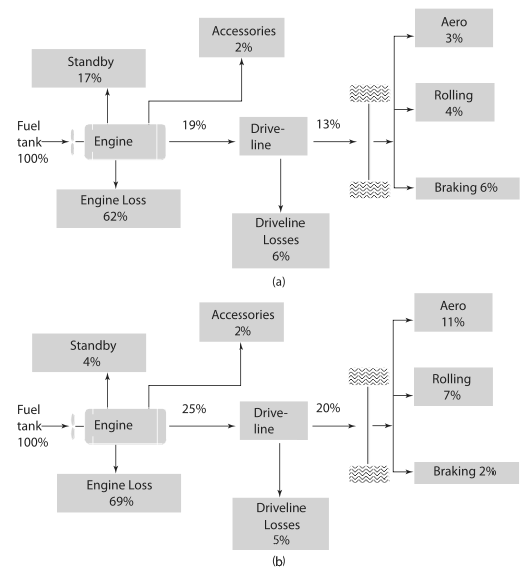
Energy is
Energy is 'lost' to several forces:
- Engine Heat: The combustion process generates a tremendous amount of heat, much of which is radiated away.
- Drivetrain Losses: Friction in the transmission, axles, and other moving parts turns kinetic energy into heat.
- Aerodynamic Drag: The car has to push air out of the way, which requires energy.
- Rolling Resistance: The tires deform slightly as they roll, creating friction that opposes motion.
- Braking: When you brake, the kinetic energy of the car is converted into heat by the brake pads and rotors.
So, while energy is always conserved, a car's systems are constantly converting it into less useful forms, primarily heat.
Heat, Work, and Engines
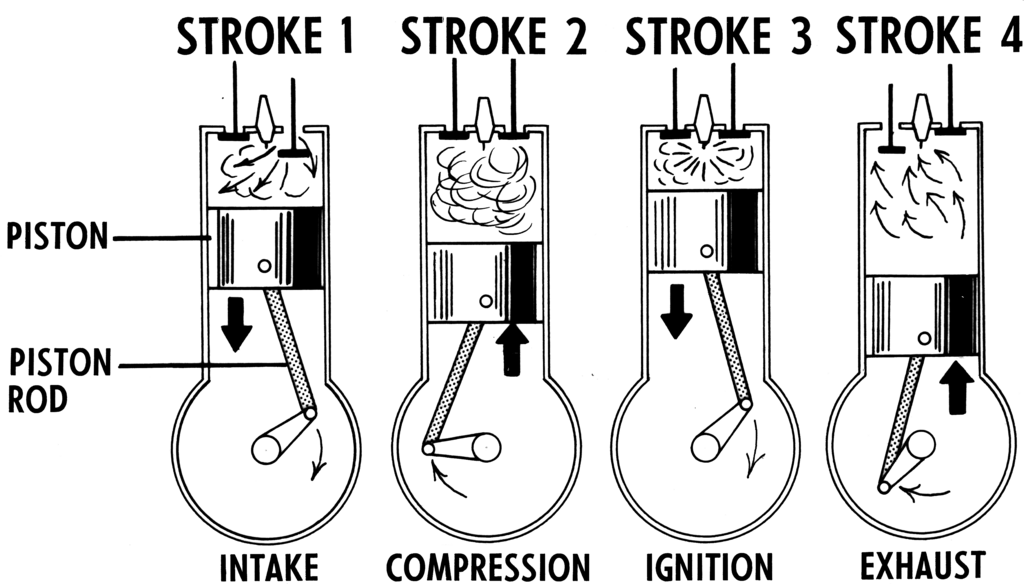
The process of converting fuel into motion is the domain of thermodynamics, the study of heat and energy. A car's internal combustion engine is a classic example of a heat engine. It's a device that converts thermal energy into mechanical work.
The First Law of Thermodynamics is essentially a restatement of the conservation of energy. It says that the change in a system's internal energy is equal to the heat added to the system minus the work done by the system.
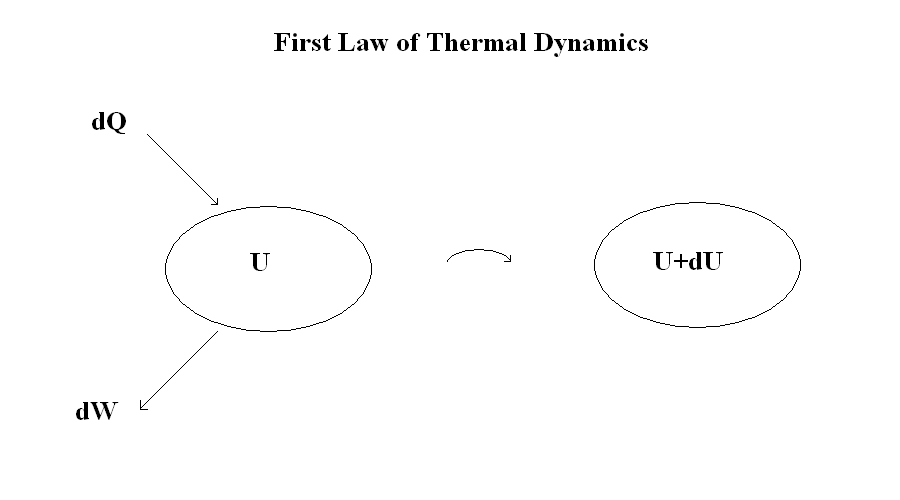
In an engine, fuel is burned to create high-pressure hot gas (heat is added). This gas expands and pushes a piston (work is done). This work is what ultimately turns the wheels. However, no engine can convert all the heat into work. This is a consequence of the Second Law of Thermodynamics.
This law, in simple terms, states that heat naturally flows from hotter objects to cooler ones, and that some energy will always be lost as waste heat in any energy conversion. This is why car engines need cooling systems. A significant portion of the fuel's energy must be dissipated into the atmosphere as heat to keep the engine from overheating. It's an unavoidable inefficiency built into the laws of physics.
Let's check your understanding of these core principles.
When a car accelerates from a standstill, you feel pressed back into your seat. This is a direct experience of which physical principle?
According to Newton's Second Law, . If a sports car and a large truck are equipped with engines that produce the exact same amount of force (), which vehicle will have a greater acceleration ()?
These three areas—motion, energy, and thermodynamics—are the physical foundation for everything a car does. Understanding them is the first step to understanding the entire automotive system.