The Pharmacological and Cultural History of Belladonna
Dionysian Roots
The Wine of Divine Madness
The rites of Dionysus, and his Roman counterpart Bacchus, were centered on achieving a state of ekstasis, a removal from the ordinary self. While wine was the primary vehicle, the intense, frenzied states described in historical accounts suggest the involvement of more potent psychoactive agents. The wine consumed during these ceremonies was frequently fortified with various botanicals to amplify its effects, transforming it from a simple intoxicant into a powerful entheogen.
Atropa belladonna
noun
A perennial herbaceous plant in the nightshade family Solanaceae, containing potent tropane alkaloids. Also known as deadly nightshade.
Among the key additives was Atropa belladonna. The tropane alkaloids within the plant, primarily atropine and scopolamine, were responsible for inducing the desired ritualistic trance. These compounds are competitive antagonists of muscarinic acetylcholine receptors, leading to a state of anticholinergic delirium. What the ancients perceived as divine possession or a merging with the godhead was, in neuropharmacological terms, a predictable toxidrome characterized by profound hallucinations, dissociation, confusion, and amnesia.
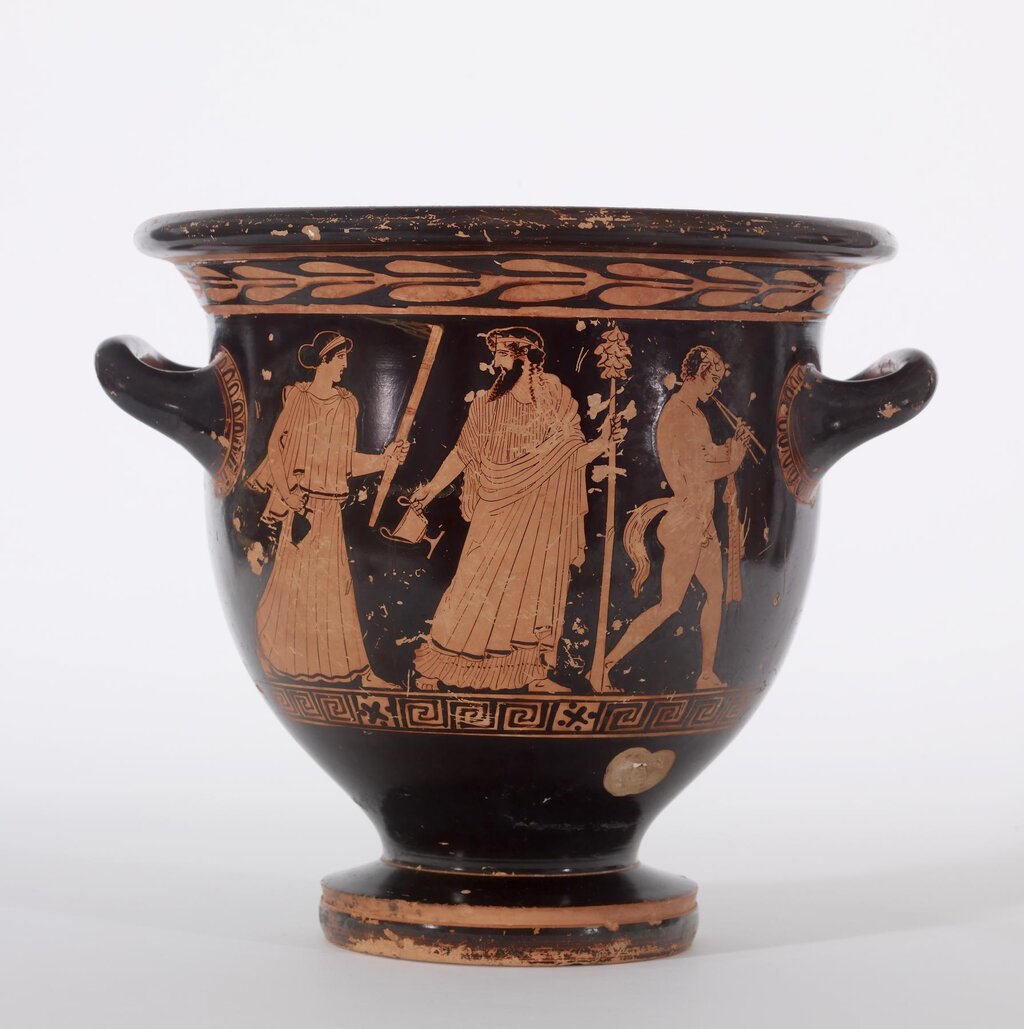
The behavior of the Maenads, the female followers of Dionysus, aligns closely with the symptoms of anticholinergic poisoning. Accounts describe them engaging in wild, frenzied dancing (oreibasia), possessing superhuman strength, and experiencing a complete break from rational consciousness. The amnesia induced by scopolamine would also explain why participants often had no memory of the rites afterward, reinforcing the sense of a divine, otherworldly experience rather than a botanical intoxication.
A Name Born from Fate
The plant's lethality is directly encoded in its scientific name. The genus Atropa is derived from Atropos, one of the three Moirai, or Fates, in Greek mythology. While her sisters Clotho spun the thread of life and Lachesis measured it, Atropos was the one who severed it, determining the moment of death.
Atropos, the 'inflexible' or 'unturnable,' wielded the shears that cut the thread of life, making her the ultimate arbiter of mortality.
Carl Linnaeus, the father of modern taxonomy, chose this name with purpose. The botanical nomenclature reflects the plant’s extreme toxicity. A small dose could induce a spiritual journey in a Bacchic ritual, but a slightly larger one could lead to the state from which there is no return, making Atropos a fitting namesake.
Let's review the key concepts from this section.
Now, check your understanding of belladonna's role in antiquity.
What was the primary goal of the rites of Dionysus and Bacchus?
The genus name Atropa for belladonna is derived from Atropos, one of the Moirai (Fates). What was her specific role?
This ethnobotanical history, linking a plant's pharmacology to ancient ritual, provides the foundation for understanding how Atropa belladonna transitioned from a sacred poison to a source of modern medicine.