The Pervasive Power Law
Introduction to Power Laws
What is a Power Law?
Many relationships in the world follow a specific pattern called a power law. This happens when a change in one quantity causes a proportional change in another, raised to a certain power. It sounds complex, but the idea is quite simple.
Mathematically, we can write a power law relationship like this:
Let's break that down:
- and are the two quantities we are comparing.
- is a constant of proportionality. It's a fixed number that scales the relationship.
- is the exponent. This number is the heart of the power law and dictates how strongly changes when changes.
Think about the relationship between the area of a square and the length of its side. If the side length is , the area is . This is a power law with and . If you double the side length, the area increases by a factor of , which is 4. The exponent tells you exactly how the scaling works.
Key Properties
Power laws have a fascinating property called scale invariance. This means there is no characteristic scale for the quantity. If you zoom in on a portion of a power-law distribution, its shape looks the same as the whole. It's like a coastline on a map. From a satellite, you see a jagged shape. If you zoom in on a one-mile section, you see a similar jagged shape, just on a smaller scale.
Because of this property, a power law looks like a straight line when you plot it on a graph with logarithmic scales on both the x and y axes. This is often the easiest way to spot one in data.
The slope of the line in the log-log plot is equal to the exponent . This straight-line test is a powerful tool for identifying power-law relationships in scientific data.
Examples in Science
Power laws are not just mathematical curiosities; they are fundamental to describing the physical world. Many of the most famous laws in physics are power laws.
Newton's Law of Universal Gravitation states that the gravitational force () between two objects is inversely proportional to the square of the distance () between them.
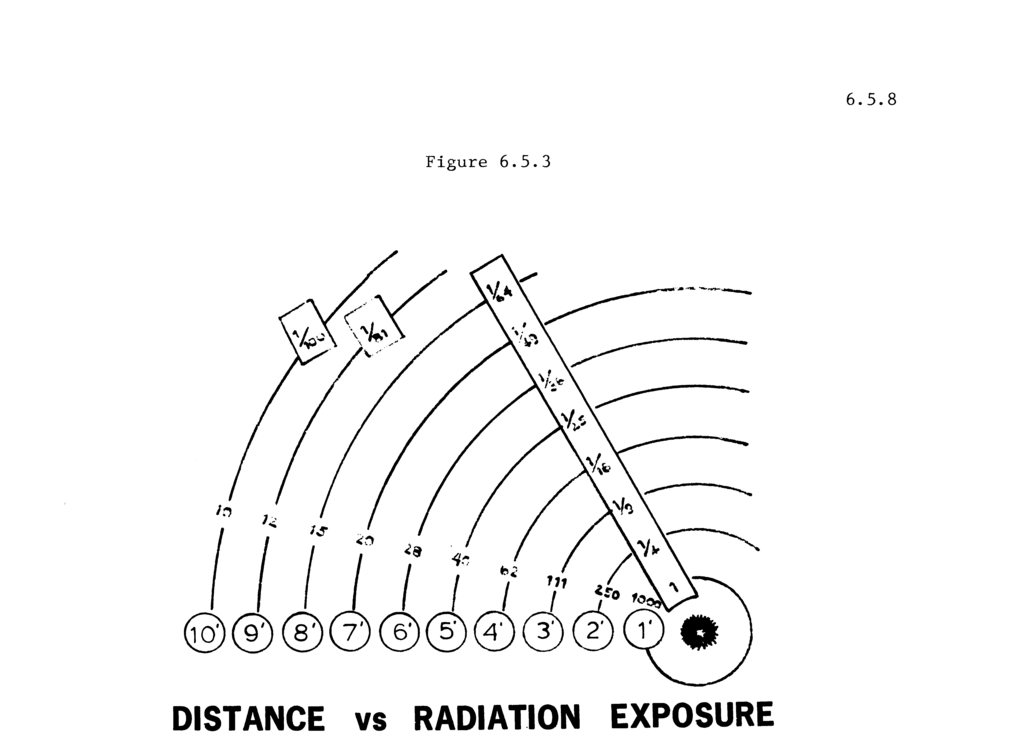
This is a power law with an exponent of -2. If you triple the distance between two planets, the gravitational force between them drops to one-ninth of its original strength. Coulomb's Law, which describes the electrostatic force between charged particles, has the exact same inverse-square relationship.
Another classic example comes from astronomy. Kepler's Third Law of planetary motion relates a planet's orbital period () to the semi-major axis of its orbit (). The relationship is:
To see this as a standard power law, we can solve for :
Here, the exponent is . This elegant rule governs the motion of every planet in our solar system, and it's all described by a simple power law.
Let's check your understanding of these concepts.
Which of the following equations represents the general form of a power law relationship between variables and ?
When data following a power law is plotted on a log-log graph, it appears as a straight line.
Understanding this basic form is the first step. You'll soon see how this simple relationship appears in surprisingly diverse and complex systems.