The Pathless Path
Understanding the Default Path
The Path Most Traveled
From a young age, most of us are handed a map. It’s not a physical map, but a life blueprint. Go to school, get good grades, go to a good college, land a secure job, and then start climbing the corporate ladder. This is the 'default path'—a well-worn road paved with societal expectations and traditional markers of success.
This path prioritizes career advancement, financial stability, and social status. It’s the story we’re told is the key to a successful life. Buy a house, get married, save for retirement. Each step is clearly defined, a checklist of accomplishments to tick off. It feels safe and predictable because we see so many others walking it.
The default path is the life script society hands us, emphasizing external achievements over internal alignment.
The Pressure Cooker
Why do so many of us follow this script without question? The pressure comes from all directions. Well-meaning parents and teachers guide us toward stable, respectable careers. Media bombards us with images of success tied to wealth and possessions. We celebrate promotions and new job titles as the ultimate wins, reinforcing the idea that our worth is tied to our professional achievements.
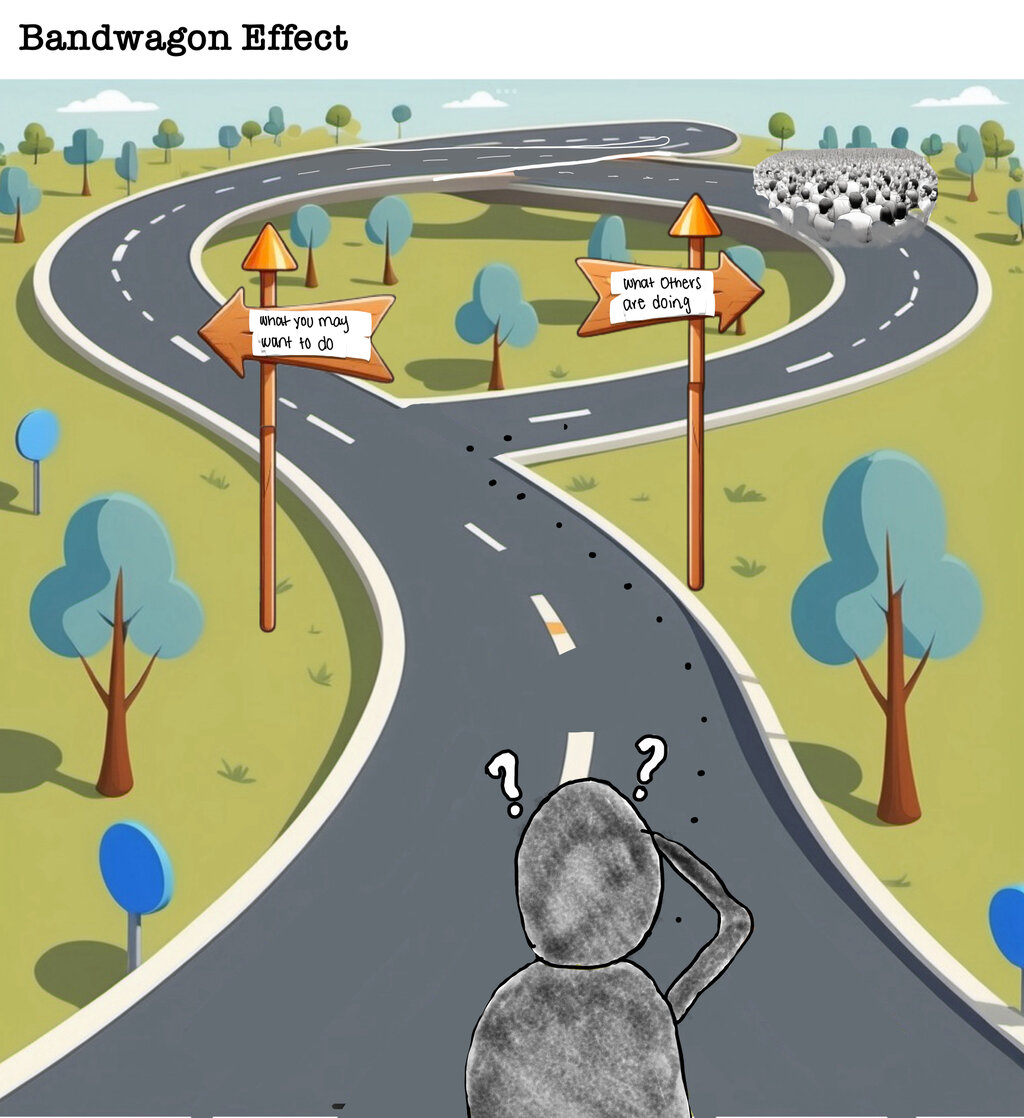
This creates a powerful sense of conformity, a social pressure to fit in and meet the expectations of our community. Deviating from the path can feel risky and isolating, leading many to stick with the familiar even when it doesn't feel right. The fear of judgment or failure keeps us in line, marching along with everyone else.
Conformity
noun
Behavior in accordance with socially accepted conventions or standards.
The Cost of Convention
The trouble is, a path designed for everyone isn't designed for anyone in particular. Following the default path can lead to a deep sense of unfulfillment. You might achieve all the external markers of success—a great job, a nice car, a comfortable life—only to feel a nagging emptiness. A feeling of, “Is this really it?”
This happens because the default path often forces us to suppress our own desires, curiosities, and values in favor of what’s expected. It can disconnect us from our true identity. When your life is built around external validation, you might not know who you are without it. You spend so much time climbing the ladder that you never stop to ask if it’s leaning against the right wall.
The narrative delves into themes of consumerism and materialism, revealing the emptiness that often accompanies superficial success.
This disconnection isn't a personal failure. It’s a natural consequence of following a one-size-fits-all life plan that doesn't account for individual passions or purpose. Recognizing this is the first step toward understanding what a more authentic life might look like.
Let's review what we've covered.
What is the 'default path' as described in the text?
According to the text, why do so many people follow the 'default path' without questioning it?
Understanding this conventional script is crucial because it shapes so much of our lives, often without our conscious consent.