The Overnight Repo Market Explained
Introduction to Repurchase Agreements
What Is a Repurchase Agreement?
A repurchase agreement, or "repo," is a way for institutions to get short-term loans. Think of it like a high-finance version of a pawn shop. Instead of pawning a guitar for cash, an institution pawns financial securities, like government bonds.
The transaction happens in two steps. First, one party sells securities to another party for cash. At the same time, they agree to buy back those same securities at a slightly higher price on a specific future date, often just the next day. This makes it a very short-term, secured loan.
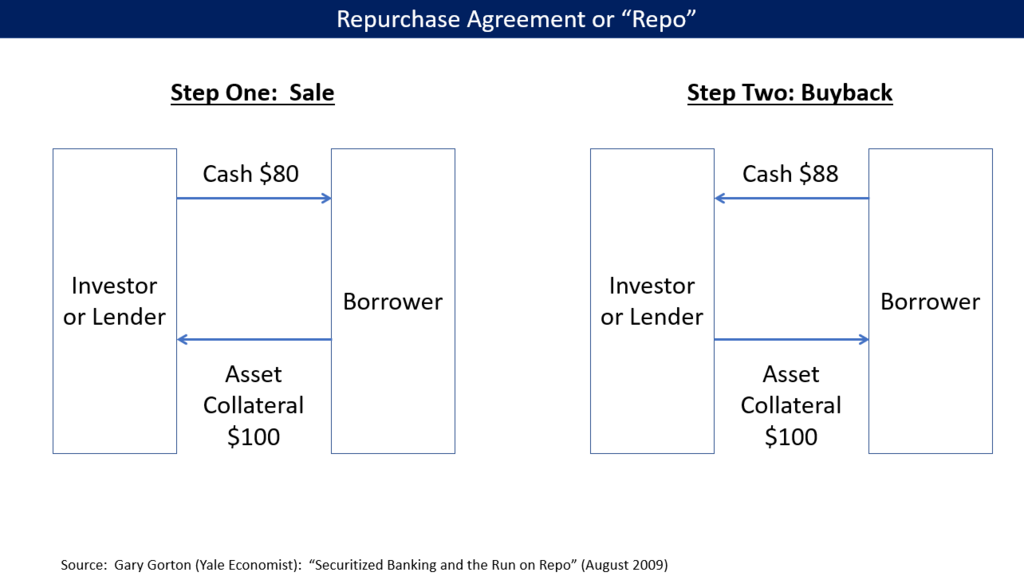
The party selling the securities and agreeing to buy them back is the borrower of cash. The party buying the securities and agreeing to sell them back is the lender. The securities act as collateral, which makes the loan very safe for the lender.
The difference between the initial sale price and the higher repurchase price is the interest paid on the loan. This interest is known as the repo rate.
The Other Side of the Coin
Every transaction has two sides. What one party calls a repo, the other party calls a reverse repurchase agreement, or "reverse repo."
From the lender's perspective, they are engaging in a reverse repo. They buy securities with an agreement to sell them back later. It's simply the same deal viewed from the opposite chair. The goal for the lender is to earn a small amount of interest on their idle cash in a very low-risk way.
| Party's Role | Their Transaction | What They Do | Goal |
|---|---|---|---|
| Borrower | Repo | Sells securities, then repurchases | Borrows cash |
| Lender | Reverse Repo | Buys securities, then resells | Lends cash |
These agreements are a fundamental part of the financial system, allowing banks and other large institutions to manage their short-term cash needs efficiently and safely.