The Overland Campaign
Introduction to the Overland Campaign
A New Kind of War
By the spring of 1864, the American Civil War had raged for three long years. The Union had more soldiers, more factories, and more railroads, yet the Confederate Army of Northern Virginia, led by the brilliant Robert E. Lee, seemed unbreakable. Frustration was mounting in the North. President Abraham Lincoln, facing a tough reelection, knew he needed a general who wouldn't just win battles, but who would win the war.
He found that general in Ulysses S. Grant. Fresh from a string of major victories in the Western Theater, Grant was brought to Washington and promoted to lieutenant general, a rank previously held only by George Washington. He was given command of all Union armies. Grant's plan was simple and brutal: apply constant, coordinated pressure on the Confederacy from all sides, preventing them from shifting troops to counter individual threats.
Unlike previous Union commanders in the East, Grant's primary target wasn't the Confederate capital of Richmond. It was Lee's army itself.
The Commanders
The Overland Campaign was essentially a 40-day duel between two of history's most famous military minds. On one side was Ulysses S. Grant, a quiet, determined man who understood the grim arithmetic of war. He knew the Union could replace its losses of men and material, while the Confederacy could not. His strategy was one of attrition, aiming to wear down Lee's army until it could no longer fight effectively.
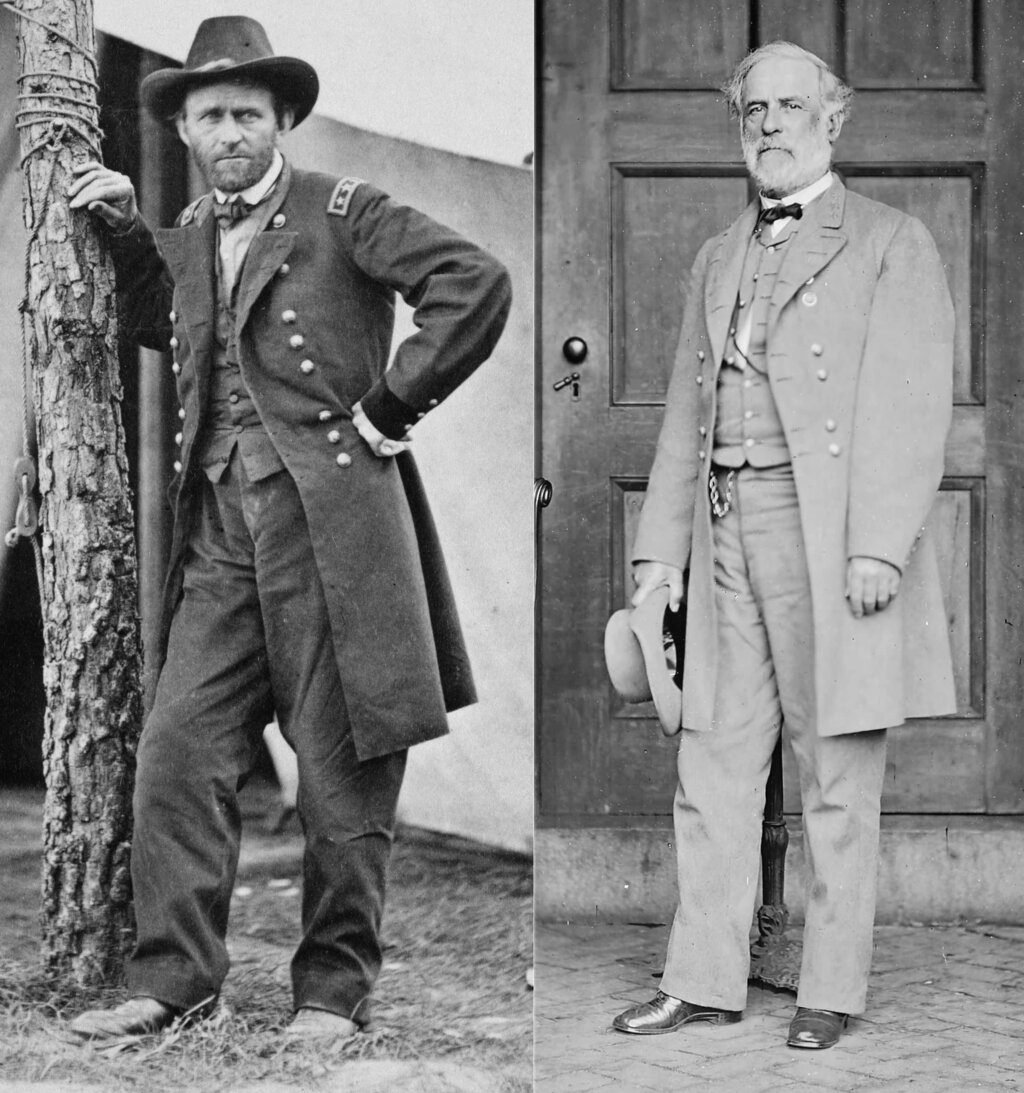
Opposing him was Robert E. Lee. Revered in the South, Lee was a master of defensive warfare and battlefield tactics. He had consistently defeated larger Union armies with brilliant maneuvering and audacity. But by 1864, his army was dwindling in size and running low on supplies. His only path to victory was to inflict such punishing losses on Grant's forces that the Northern public would lose its will to continue the war.
The Campaign Begins
In early May 1864, Grant's Army of the Potomac, over 100,000 strong, crossed the Rapidan River into a dense, tangled forest known as the Wilderness. Grant's objective was to force Lee into an open battle where the Union's superior numbers and artillery could be brought to bear. Lee, with his smaller force of about 60,000, had other plans. He chose to attack Grant inside the Wilderness, where the thick undergrowth would neutralize the Union's advantages and turn the battle into a chaotic, close-quarters slugfest.
This series of movements and battles, from the Wilderness to Spotsylvania Court House, North Anna, and Cold Harbor, became known as the Overland Campaign. It wasn't about capturing territory. It was about destroying the enemy's army. After each bloody encounter, Grant refused to retreat and regroup as his predecessors had. Instead, he would sidle to his left, always pressing south towards Richmond, forcing Lee to constantly shift his own army to block the Union advance.
The Overland Campaign marked a turning point in the Civil War. It was warfare of a new, relentless intensity. The casualties were staggering on both sides, but Grant's strategy of attrition slowly and inexorably ground down the Army of Northern Virginia. The campaign set the stage for the final siege of Petersburg and, ultimately, the end of the war.
Now, let's test your understanding of the campaign's strategic context.
What was the primary strategic objective of Ulysses S. Grant's Overland Campaign?
By 1864, Robert E. Lee's army was dwindling and undersupplied. His best hope for victory was to inflict such punishing losses on the Union army that the Northern public would lose its will to continue the war.
This brutal, month-long confrontation between Grant and Lee fundamentally changed the character of the war in the Eastern Theater.