The Oboe Explored
Oboe Origins
Ancient Ancestors
The oboe's story begins not in an orchestra pit, but in ancient civilizations. For thousands of years, people across the globe have made music using double-reed instruments. The basic idea is simple: two pieces of cane are tied together and vibrate against each other when a musician blows through them, creating a buzzing sound. This sound is then amplified and shaped by the instrument's body.
Early versions of these instruments, found in ancient Greece and the Middle East, were often simple pipes made from wood or bone. They produced loud, penetrating tones, perfect for outdoor ceremonies and gatherings.
The Shawm's Loud Call
By the Middle Ages, a powerful double-reed instrument called the shawm had spread throughout Europe. It had a conical bore, meaning the tube gradually widened from the reed to the end, and a flared bell, much like a trumpet. This design made the shawm incredibly loud.
Its piercing sound was ideal for military bands, town criers, and outdoor festivities. Shawms were the life of the party, but their volume and somewhat raucous tone made them less suitable for the more intimate setting of indoor court music.
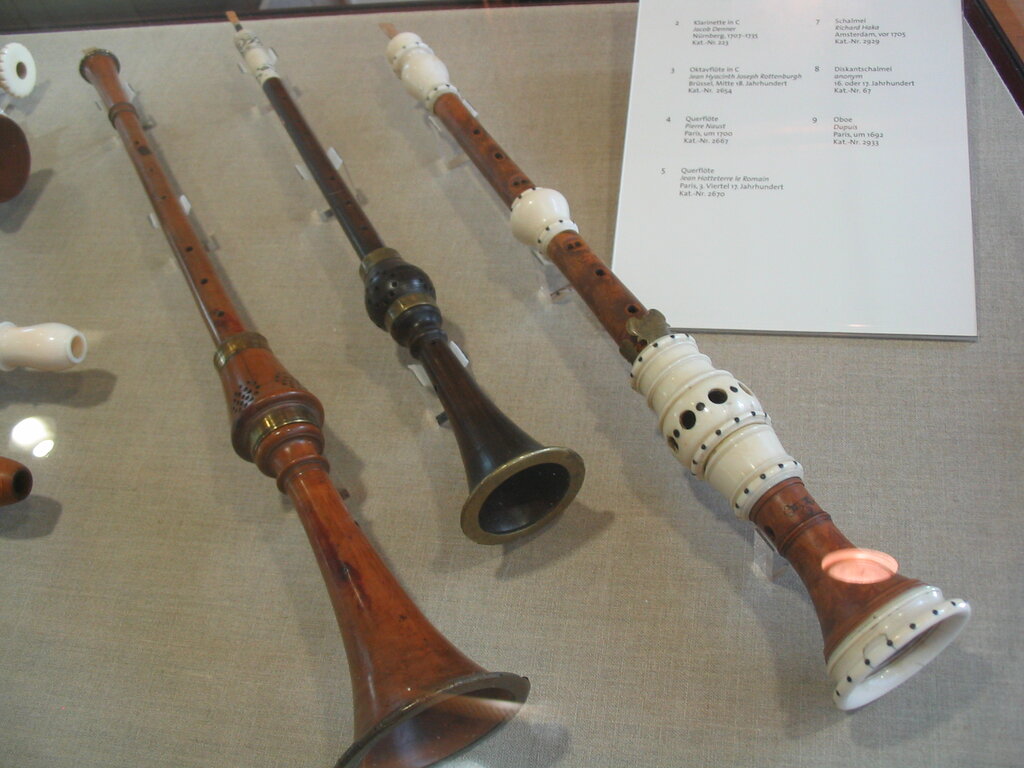
A New Voice for the Court
In the mid-17th century, the musical world was changing. Composers and patrons in the French court of Louis XIV wanted an instrument with the expressiveness of a double reed but with more dynamic control and a sweeter tone. They turned to instrument makers to refine the shawm.
The task fell to musicians like Jacques Hotteterre and Michel Philidor. They made several key innovations that transformed the shawm into an entirely new instrument.
They narrowed the instrument's bore, refined the reed to make it smaller and more controlled, and constructed the body in three separate sections, or joints. They also added keys, allowing for more precise fingering and better intonation.
The result was an instrument with a more focused, delicate, and lyrical sound. It was named the hautbois.
high wood
This new instrument was an instant success. It quickly found a place in the orchestra, where its voice-like quality was perfect for playing melodies, often doubling the violin parts. French military bands also adopted it, creating ensembles known as bandes de hautbois that included oboes of different sizes.
By the end of the 17th century, the oboe had cemented its role as a principal wind instrument. Composers across Europe, like Jean-Baptiste Lully and Henry Purcell, began writing music that showcased its unique and beautiful character.
Time to review what you've learned.
What medieval instrument, known for its loud and piercing sound, is considered the direct ancestor of the oboe?
The transformation of the shawm into the oboe occurred primarily to meet the needs of musicians in which setting?
From its loud outdoor origins to its refined place in the orchestra, the oboe's early development set the stage for its long and storied history in classical music.