The Oboe Explained
Oboe Origins
From Shawm to Oboe
The oboe's story begins long before the instrument as we know it existed. For centuries, musicians across Europe and the Middle East played double-reed instruments. These instruments all work on the same principle: two thin pieces of cane are tied together and vibrate when a player blows through them, creating a powerful, buzzing sound.
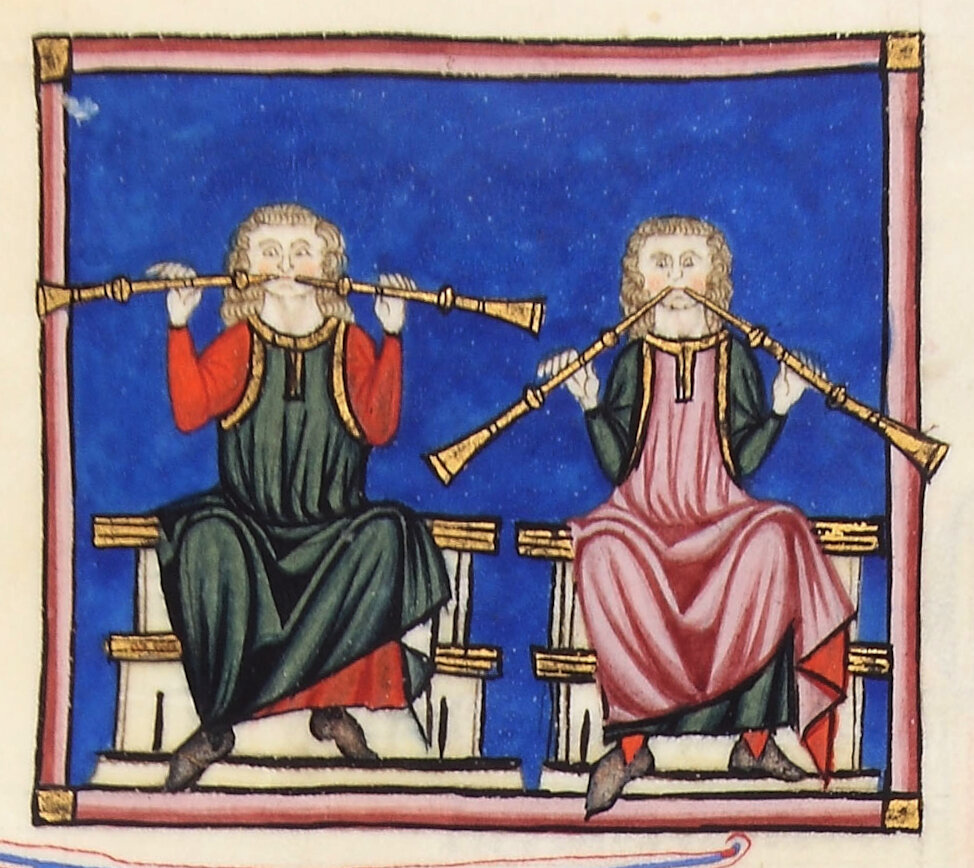
The most direct ancestor of the oboe was the shawm. Popular from the medieval period through the Renaissance, the shawm was a loud and piercing instrument. It had a conical bore, meaning it gradually widened from the mouthpiece to the flared bell at the end. This design, combined with a wide reed, gave it a trumpet-like volume that was perfect for outdoor events.
Shawms were the go-to instruments for town bands, military processions, and festive outdoor ceremonies where their sound could carry over long distances.
In the mid-17th century, musical tastes began to change. Composers and patrons started favoring the more intimate setting of indoor concerts. The shawm's powerful tone was too overwhelming for these spaces. French instrument makers, particularly the Hotteterre family, began experimenting. They refined the shawm's design to create a new, more delicate instrument.
One person credited with the development of the oboe was Jean Hotteterre who narrowed the bore of the instrument and reduced the width of the reed.
This new instrument, called the hautboy, was made in three distinct sections. This construction allowed for more precise carving of the bore and tone holes, improving its intonation. The reed was also made narrower and placed on a small metal tube called a staple. These changes tamed the shawm's wildness, producing a sweeter, more expressive tone that could blend beautifully with other instruments.
A New Voice for the Ensemble
The new instrument quickly found a home in the court of King Louis XIV of France. Composers like Jean-Baptiste Lully featured it prominently in his orchestra, the Grande Écurie. The hautboy's stable pitch made it the ideal instrument for tuning the entire orchestra, a tradition that continues with the modern oboe today.
hautboy
noun
The early French name for the oboe, used during the Baroque period. The name is derived from the French words for 'high' and 'wood'.
Its vocal, penetrating quality allowed it to sing out over the string section, while its refined dynamics made it suitable for the nuanced music being written for indoor chapels and concert halls. It wasn't just a loud outdoor instrument anymore; it was a sophisticated member of the orchestra.
high wood
This transition marked a major step in the development of the woodwind family and orchestral music itself. The oboe's journey from the boisterous shawm to the elegant hautboy set the stage for its central role in classical music for centuries to come.