The Oboe Explained
Oboe Origins
From Shawm to Oboe
The story of the oboe begins long before the instrument we know today existed. Its ancestor was a loud, brash instrument called the shawm. Like the oboe, the shawm is a double-reed instrument, meaning its sound is produced by blowing air through two thin pieces of cane that are tied together. When the player blows, the reeds vibrate against each other, creating a sound wave that resonates through the instrument's body.
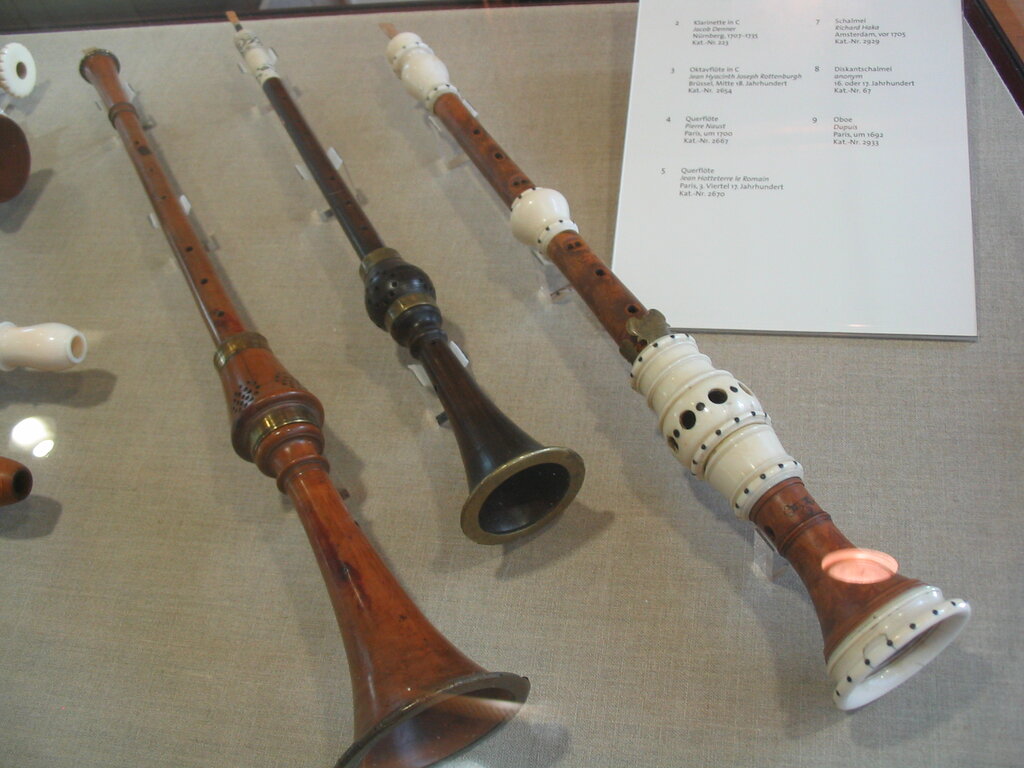
The shawm was popular from the Middle Ages through the Renaissance. It had a conical bore, meaning it gradually widened from the mouthpiece to the bell, which gave it a powerful, piercing tone. This made it perfect for outdoor music, like military bands and town ceremonies, where it needed to be heard over the noise of a crowd. Its sound was effective, but not exactly subtle.
A Refined Sound for the Court
In the mid-17th century, musical tastes in France began to shift. The lavish court of King Louis XIV demanded more refined and expressive music suitable for indoor concerts and ballets. The shawm was simply too loud and unruly for these new ensembles. Composers and musicians needed an instrument with a sweeter, more controlled voice that could blend with strings and other softer instruments.
The (Baroque) oboe was developed from the shawm in the 17th century by the instrument maker Jean de Hotteterre (commissioned by Jean-Baptiste Lully).
This need led to the creation of the Baroque oboe. Instrument makers, most notably the Hotteterre family and Michel Danican Philidor, began modifying the shawm. They narrowed the instrument's bore, redesigned the reed to be smaller and more responsive, and constructed the body in three separate sections. This last innovation allowed for more precise tuning.
The new instrument was called the hautbois.
high-wood or loud-wood
The name is a bit of a puzzle. While "haut" can mean "high" (referring to its pitch), it can also mean "loud." It likely retained the name from its loud predecessor, the shawm, even though its defining new quality was its ability to play softly and expressively.
A New Role in the Ensemble
The hautbois was an immediate success. The court composer Jean-Baptiste Lully incorporated it into his orchestra, the Grands Hautbois, which originally featured a variety of shawms and other loud wind instruments. The new, more nuanced oboes quickly took over the lead melodic roles.
Oboes were typically used in pairs, often playing in harmony with the violins or carrying the melody on their own. Their clear, singing tone cut through the texture of the orchestra without overpowering it. The oboe's stable pitch also made it the ideal instrument for the rest of the orchestra to tune to, a tradition that continues to this day.
From the French court, the oboe's popularity spread rapidly across Europe. Composers like Purcell in England, Bach in Germany, and Vivaldi in Italy fell in love with its expressive capabilities. What began as a modification of a rustic outdoor instrument became one of the most essential and beloved voices in the orchestra.
Ready to test your knowledge?
The shawm, the ancestor of the modern oboe, was particularly well-suited for what kind of events?
What was the primary motivation for transforming the loud shawm into the more refined Baroque oboe in 17th-century France?
The oboe's journey from the boisterous shawm to the elegant star of the Baroque orchestra was a direct response to the changing musical needs of the time. This evolution laid the groundwork for the instrument we know today.