The Oboe Explained
Oboe History
From Shawm to Symphony
The story of the oboe begins long before concert halls existed. Its ancestor is an instrument called the shawm, a loud and powerful double-reed instrument popular from the medieval period through the Renaissance.
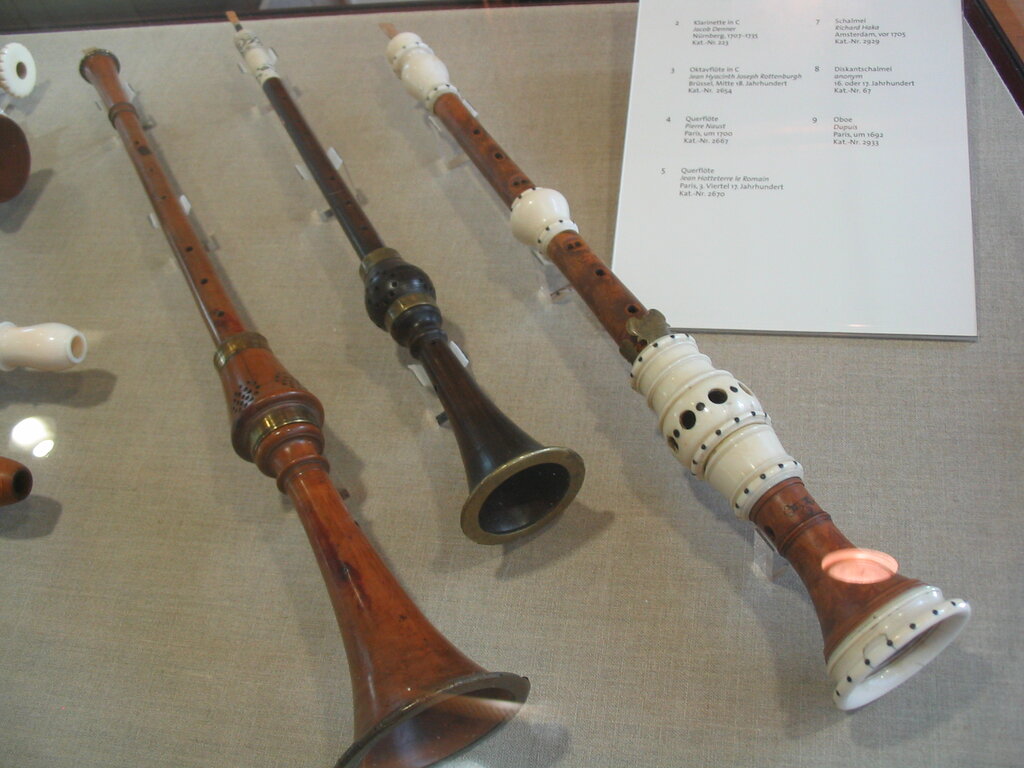
With its wide conical bore and direct, piercing sound, the shawm was perfect for outdoor music, processions, and military bands. But as music moved indoors into the courts and chambers of the Baroque era, composers and musicians needed something a little more refined and expressive.
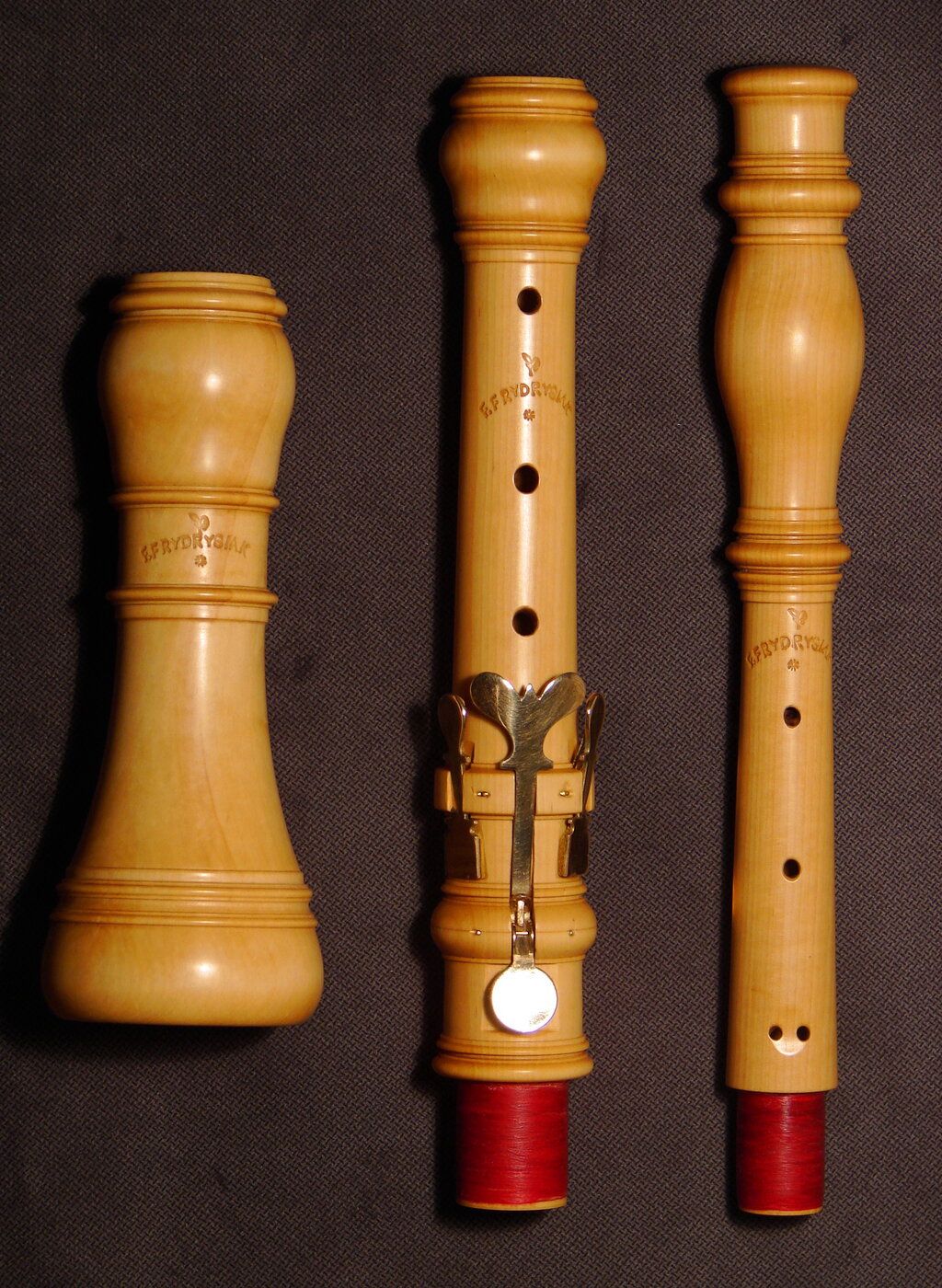
Enter the first true oboe. French instrument makers in the mid-17th century, likely working at the court of King Louis XIV, transformed the shawm. They narrowed its bore, made the walls of the instrument thinner, and constructed it in three separate sections, or joints. This allowed for more precise carving and tuning.
The result was a much sweeter, more nuanced instrument capable of a wider dynamic range. This new "hautbois" (French for "high wood" or "loud wood") quickly found a place in the orchestra, prized for its vocal quality.
The Rise of Keys
The Baroque oboe was a relatively simple instrument, often with just two or three keys. This was enough for the music of the time, which tended to stay in keys with few sharps or flats. But as the Classical era dawned, composers like Mozart and Haydn began writing more complex and harmonically adventurous music.
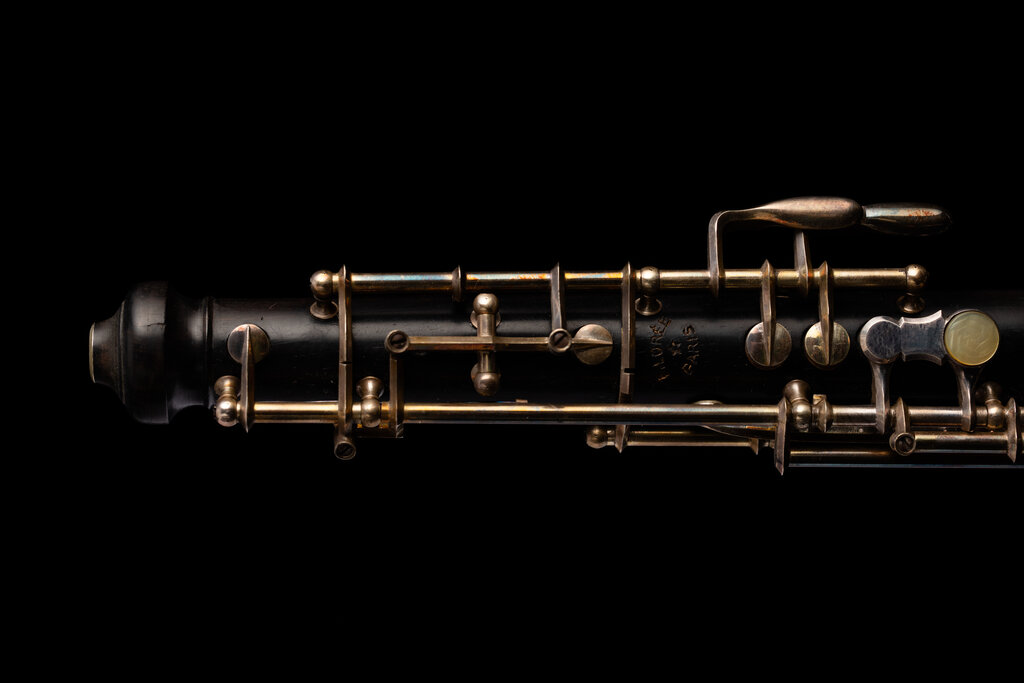
Musicians needed to play in distant keys and move quickly between chromatic notes, a task that was difficult or impossible on early oboes. The solution was to add more keys. Each new key was a mechanical lever designed to close a tone hole that was too far for a finger to reach, or one that needed to be covered with perfect precision to produce a clear note.
Throughout the late 18th and early 19th centuries, oboes steadily gained keys. This gradual evolution allowed players to navigate the increasingly demanding music of the Romantic period.
A Tale of Two Systems
By the mid-19th century, oboe design was heading in different directions, most notably in France and Germany. In Paris, the Triébert family of instrument makers began to systematically refine the oboe, creating what would become the "conservatoire" system. They adjusted the positions of the tone holes and added interconnected keys to make fingering patterns more logical and consistent.
At the same time in Germany, the instrument maker and flutist Theobald Boehm was creating a revolutionary new key system for the flute. His approach was highly scientific, placing large tone holes at their acoustically optimal positions and devising a complex system of rings and axles to control them. While Boehm's full system was never applied to the oboe—it would have radically altered its characteristic sound—his ideas were incredibly influential. Concepts like ring keys and acoustically placed holes inspired oboe makers, including the Triéberts, to further rationalize their designs.
The French conservatoire system ultimately became the dominant model for the modern oboe, incorporating Boehm's principles to create an instrument that was both agile and expressive. This is the system used by the vast majority of oboists around the world today.
The modern oboe is a delicate balance: its key system is a marvel of mechanical engineering, yet it's all designed to preserve the instrument's unique, vocal tone quality that has been cherished for centuries.
From a boisterous outdoor instrument to a refined orchestral soloist, the oboe's journey reflects the changing landscape of music itself. Its evolution is a story of craft, innovation, and the endless pursuit of a more perfect sound.
What is the name of the loud, double-reed instrument considered the ancestor of the modern oboe?
The primary motivation for transforming the shawm into the first oboe in the 17th century was a demand for an instrument that was...