The Nuclear Fuel Cycle Explained
Uranium Mining
Getting Uranium Out of the Ground
Uranium is the starting point for nuclear energy, but first, it has to be pulled from the earth. Like many resources, uranium ore—rock containing enough uranium to be worth extracting—is found in deposits underground. The challenge is getting it out efficiently and safely. Geologists locate these deposits, and then engineers decide on the best extraction method. The choice depends on how deep the ore is, how concentrated it is, and the geology of the area.
The most common methods fall into three categories: open-pit mining, underground mining, and a more modern technique called in-situ leaching.
Digging from the Surface
When uranium ore is close to the surface, typically less than 120 meters deep, the most economical way to get it is through open-pit mining. This method is exactly what it sounds like. Miners remove the layers of soil and rock above the ore, called overburden, to expose the deposit.
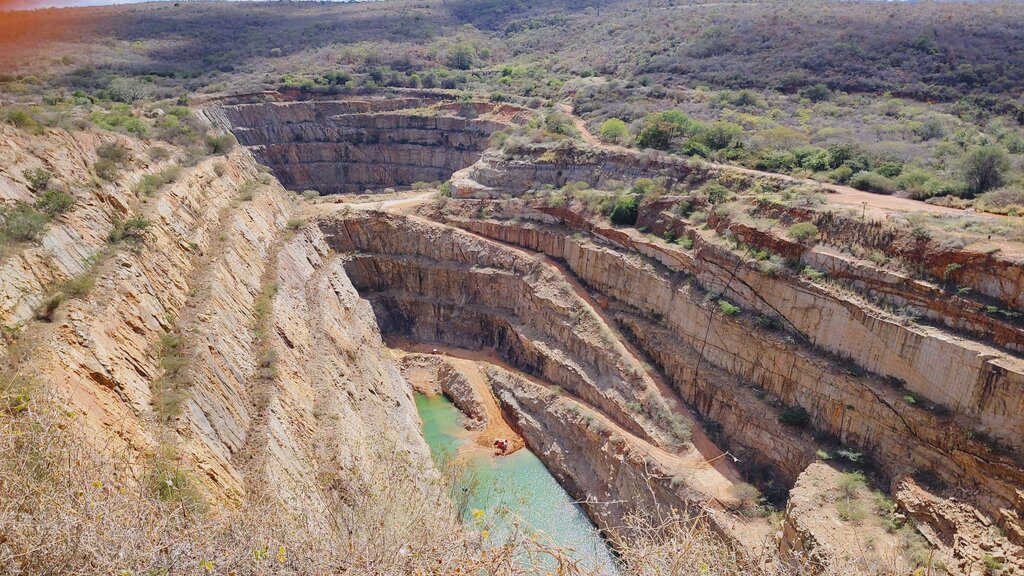
Once the ore is accessible, it's broken up with explosives and dug out by massive excavators and trucks. The hole, or pit, is often built in a series of terraced benches to maintain the stability of the walls. This method can extract huge volumes of ore, but it also creates a massive physical footprint, disturbing a large area of land.
Going Deep
For ore deposits that are too deep for open-pit mining, miners must go underground. They dig a vertical shaft down to the level of the ore deposit and then excavate horizontal tunnels, or drifts, to reach it. The ore is then drilled, blasted, and transported back to the surface for processing.
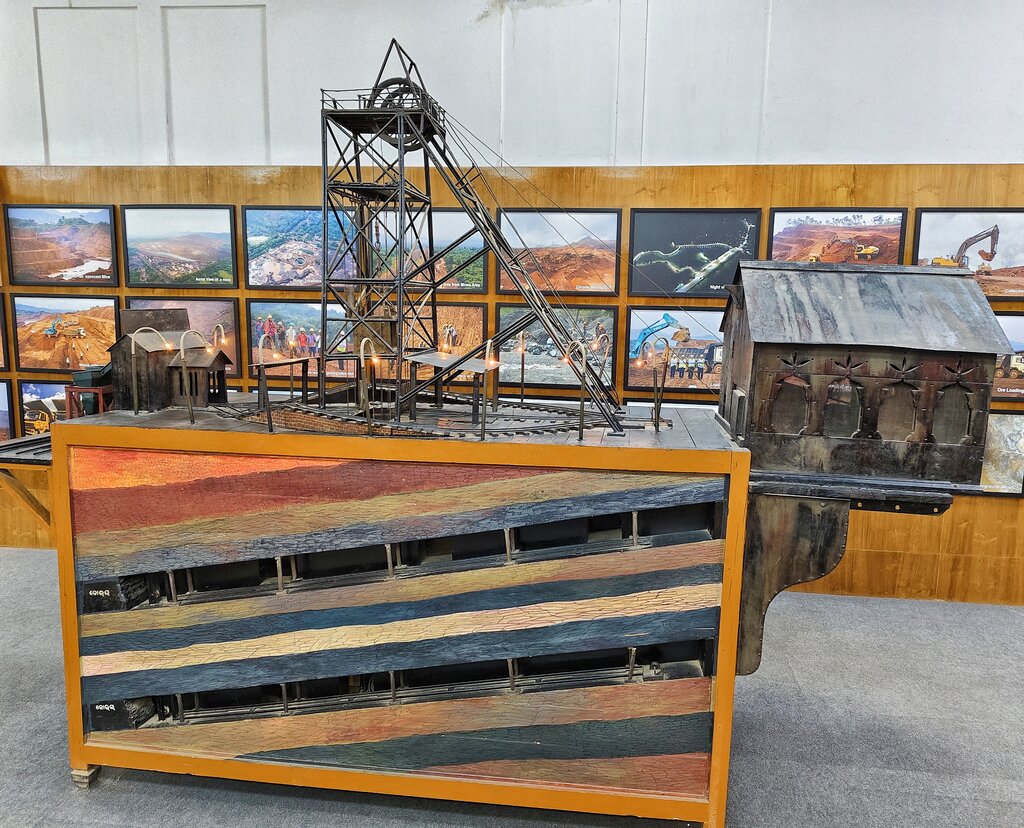
Underground mining has a smaller surface footprint than open-pit mining, but it comes with its own set of challenges. It's more expensive and generally more dangerous for workers. Constant ventilation is crucial to clear out dust and, importantly, radon gas—a radioactive byproduct of uranium decay that can be harmful if inhaled.
Mining Without Digging
Other methods include placer mining, which is used to filter valuable metals from sediments in river channels and shorelines, as well as in-situ mining, which is primarily used in mining uranium.
A third method, in-situ leaching (ISL), or in-situ recovery (ISR), avoids moving large quantities of rock altogether. It’s a bit like making coffee with a percolator, but underground. This technique is suitable when the uranium ore is located in a permeable sandstone layer, confined between two impermeable layers of rock.
Miners drill a pattern of wells into the ore body. A solution, typically containing oxygen and baking soda dissolved in groundwater, is pumped down injection wells. This solution flows through the porous sandstone, dissolving the uranium from the ore. The uranium-rich liquid is then pumped back to the surface through recovery wells.
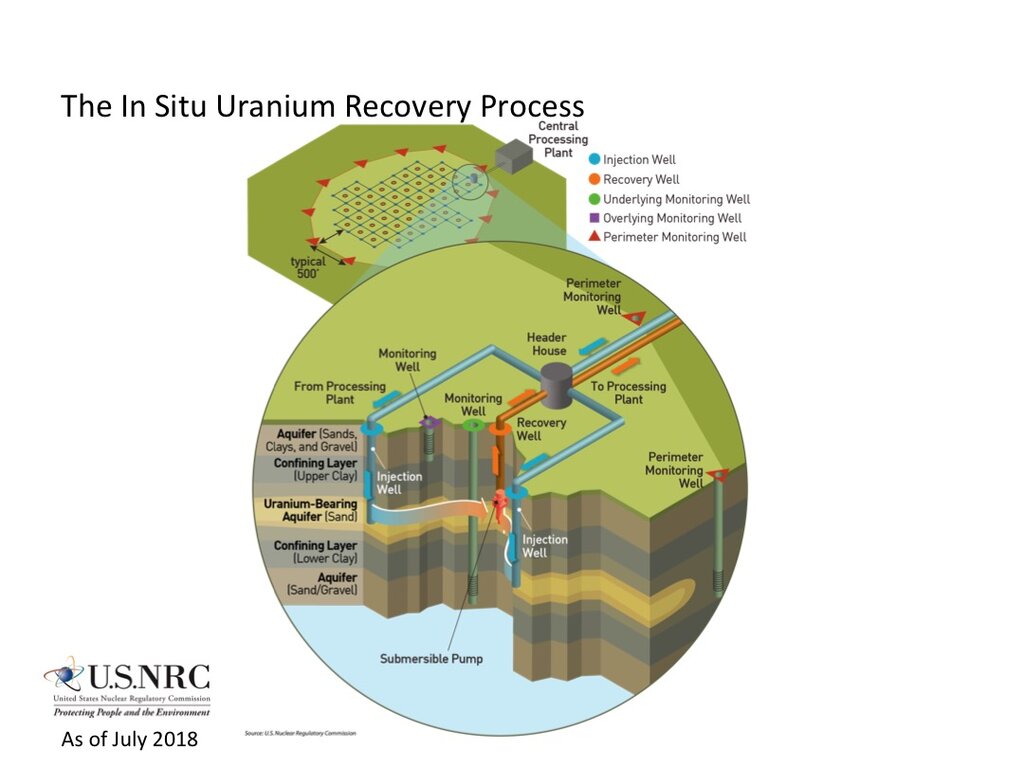
ISL has the lowest environmental impact in terms of surface disturbance and produces no tailings. However, it requires careful monitoring to ensure the leaching solution doesn't contaminate surrounding groundwater.
From Ore to Yellowcake
No matter how it's extracted, the raw uranium ore needs to be processed. The ore from an open-pit or underground mine might contain as little as 0.1% uranium. The goal of the next step, called milling, is to concentrate this into a much purer form.
At a mill, the ore is crushed into a fine powder and then mixed with chemicals, usually a strong acid or alkaline solution, to leach the uranium out of the rock. The uranium dissolves into the solution, which is then separated from the leftover rock, or tailings. Finally, the uranium is precipitated out of the solution, filtered, and dried.
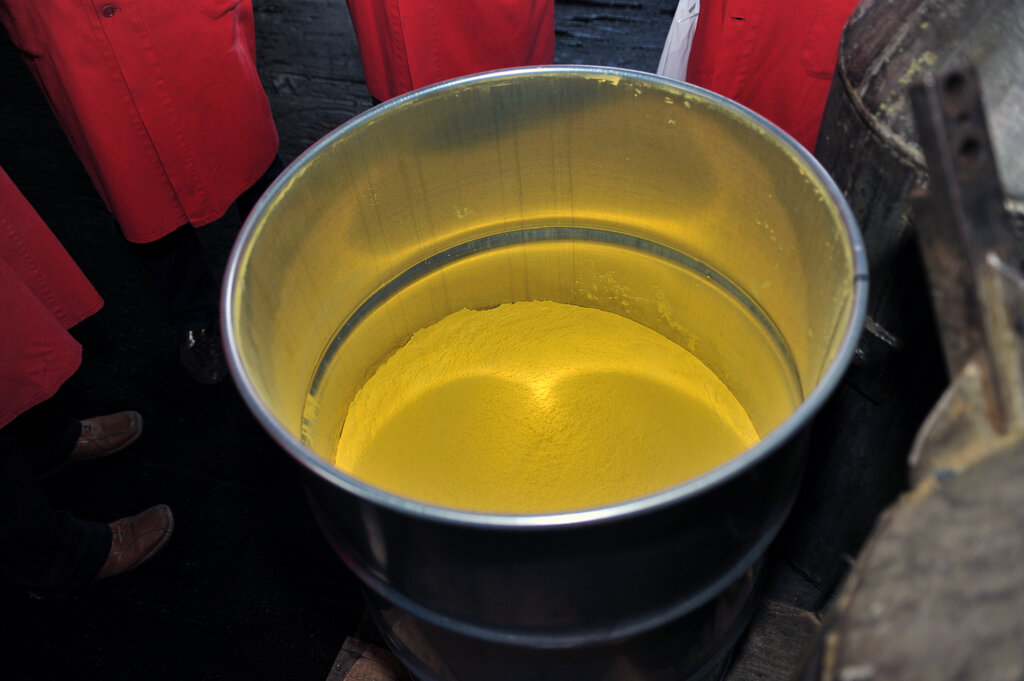
The end product is a coarse, yellow-brown powder called uranium oxide concentrate, known as yellowcake (U₃O₈). It’s about 70-90% uranium. This yellowcake is packed into drums and is the standard form in which uranium is sold and transported to the next stage of the fuel cycle.
Risks and Responsibilities
Uranium mining, like all mining, carries environmental and safety risks. The primary concerns are worker safety, land disruption, and the management of waste.
Workers in underground mines face risks from dust inhalation and exposure to radon gas. Open-pit mining disturbs large areas of land, impacting local ecosystems.
The biggest challenge is managing the tailings from the milling process. These sand-like leftovers contain heavy metals and radioactive materials from the original ore. They must be stored securely in engineered facilities, often behind dams or in specially designed pits, to prevent them from contaminating soil and water.
Modern mining regulations require companies to have detailed plans for managing these risks during operation and for reclaiming the land after the mine closes. This means restoring the site to a safe and stable condition, which might involve re-shaping the land, covering tailings to block radon, and replanting native vegetation.
Which uranium mining method is most suitable for ore deposits located less than 120 meters from the surface?
What is a primary advantage of in-situ leaching (ISL) compared to traditional mining methods?
Getting uranium out of the ground is the essential first step in harnessing nuclear power. Each method of extraction has its place, chosen based on the unique geology of the ore deposit, with a constant focus on safety and minimizing environmental impact.