The Norman Conquest of England
Pre-Conquest England
A Land of Kings and Earls
In the mid-11th century, England was a wealthy and unified kingdom. It wasn't a collection of warring tribes, but a single state with a centralized government, a standardized currency, and a complex system of shires and courts. At the top was the king, but his power wasn't absolute. He relied on the advice of a council of the most powerful men in the realm.
Witan
noun
The king's council in Anglo-Saxon England, composed of the most important nobles and churchmen. The Witan advised the king on matters of state and had the authority to choose a new king.
Below the king were the earls, immensely powerful nobles who governed large territories called earldoms. Think of them as regional governors with their own armies and wealth. The most influential family of earls were the Godwins, who controlled the vast and wealthy earldom of Wessex and other key areas. Their power rivaled, and sometimes challenged, the king's own.
Society was strictly layered. Below the earls were thegns, a class of aristocratic warriors who held land in exchange for military service to a lord or the king. The vast majority of the population were ceorls, free peasants who owned or rented small farms. At the very bottom were thralls, or slaves, who were considered property and had no rights.
The Viking Shadow
For centuries, England had faced raids and invasions from Scandinavia. The Vikings weren't just raiders; many settled, particularly in the north and east of England. This area became known as the Danelaw, a region where Danish laws and customs held sway. This long and often violent interaction left a permanent mark on English culture and politics.
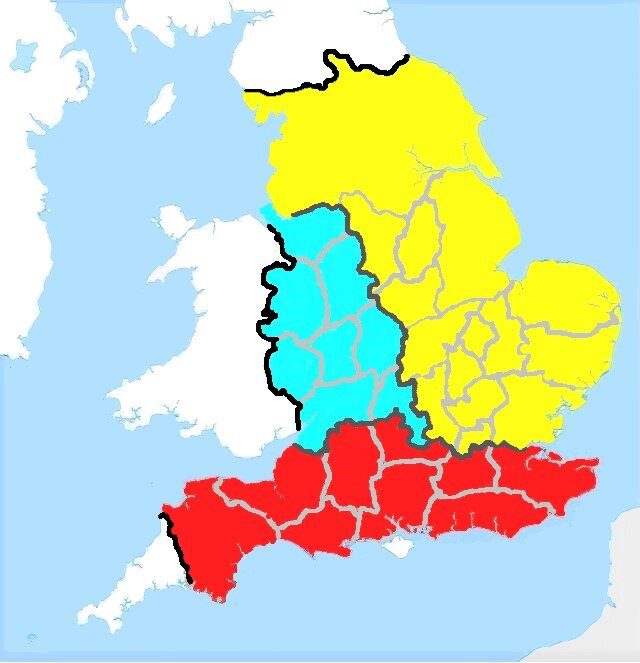
The Viking presence created deep connections across the North Sea. In the early 11th century, the Danish king Cnut the Great even conquered England and ruled a vast North Sea Empire that included Denmark, Norway, and parts of Sweden. Though his empire fell apart after his death, the memory of Danish rule was fresh. It meant that powerful Scandinavian rulers would always see the English throne as a potential prize.
The Pious King
The king on the throne in 1066 was Edward the Confessor. He had come to power in 1042, restoring the Anglo-Saxon line after a period of Danish rule. However, Edward's background was complicated. His mother was Norman, and he had spent nearly 30 years in exile in Normandy before becoming king. As a result, he had close ties to the Norman court and brought many Norman advisors and friends to England.
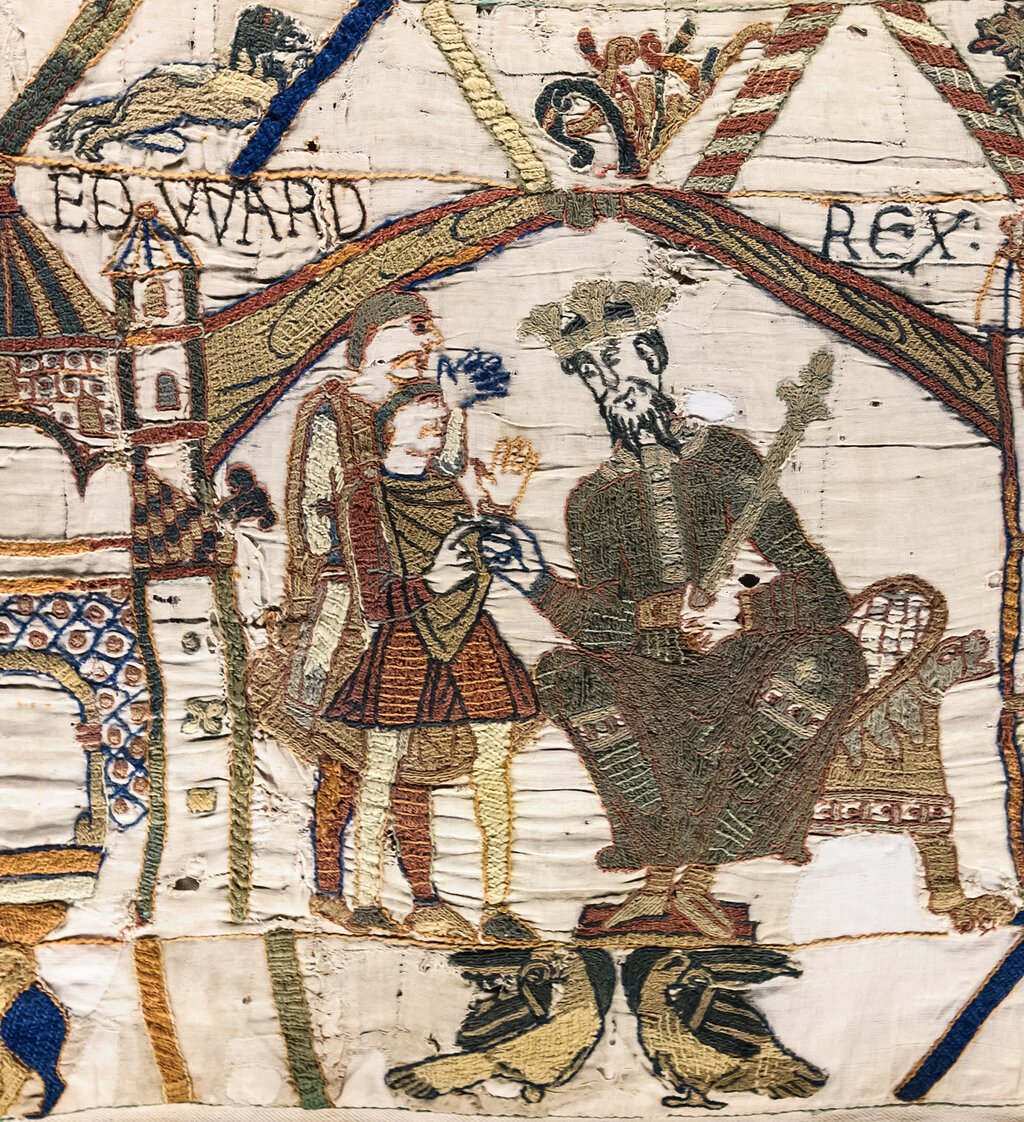
Edward was known for his piety, but not for his political strength. He struggled to control his powerful English earls, especially the ambitious Godwin family. The biggest problem, however, was that Edward and his wife had no children. As he aged, the question of who would succeed him loomed large over the kingdom.
A Throne Without an Heir
When Edward the Confessor died in January 1066, he left a power vacuum. Anglo-Saxon succession wasn't based on simple inheritance. The Witan had the final say, choosing the man they thought was best suited to rule. With no obvious heir, several powerful men saw their chance.
The stage was set for a monumental struggle for the English crown.
The first to act was Harold Godwinson, the most powerful earl in England and Edward's brother-in-law. Harold claimed that Edward had named him as his successor on his deathbed. The Witan agreed, and Harold was crowned king almost immediately after Edward's funeral.
But his claim was not undisputed. Across the channel, William, the formidable Duke of Normandy, insisted the throne was his. He claimed that Edward, his distant cousin, had promised him the throne years earlier. To strengthen his case, William also alleged that Harold Godwinson had once sworn an oath to support his claim.
And across the North Sea, another contender watched and waited. Harald Hardrada, the King of Norway, was a fearsome warrior who believed his own claim was based on an old agreement made between his predecessor and one of Cnut the Great's sons. With a powerful army and a reputation for ruthlessness, he saw an opportunity to reunite England with a Scandinavian empire.
| Claimant | Basis of Claim |
|---|---|
| Harold Godwinson | Appointed by King Edward on his deathbed; elected by the Witan. |
| William of Normandy | A promise from King Edward years earlier; an oath of support from Harold. |
| Harald Hardrada | An old political agreement related to Cnut the Great's empire. |
Three men, each with a plausible claim, were now on a collision course. England, a stable and wealthy kingdom, suddenly faced the prospect of invasion from two different directions. The year 1066 would be a year of bloodshed and destiny.