The Nature of Science and Scientific Inquiry
Introduction to Science
What is Science?
Science is our systematic way of learning about the universe. It's not just a big book of facts; it's a process of asking questions, making observations, and testing ideas to see what holds up. At its heart, science is a toolkit for understanding the world based on evidence.
Think of science as a verb, not just a noun. It’s something you do: you observe, you question, you test.
The goal is to build reliable knowledge about everything from the smallest particles to the largest galaxies. This knowledge is always growing and changing as we discover new things. What makes science powerful is its commitment to letting the natural world speak for itself through observation and experimentation.
The Branches of Science
The world is complex, so science is divided into different fields to make it easier to study. We can group these fields into three main branches.
Natural Sciences study the physical world. This includes physics (the study of matter and energy), chemistry (the study of substances), and biology (the study of living things).
Social Sciences focus on human society and relationships. Psychology, sociology, and economics fall into this category.
Formal Sciences deal with abstract systems. Mathematics, logic, and computer science are examples. They provide the tools and frameworks that other sciences often use.
The Power of Evidence
What separates science from other ways of thinking? The answer is empirical evidence. This is information that we can verify with our senses, through observation and experimentation. It's not based on opinion, gut feelings, or what someone wishes were true.
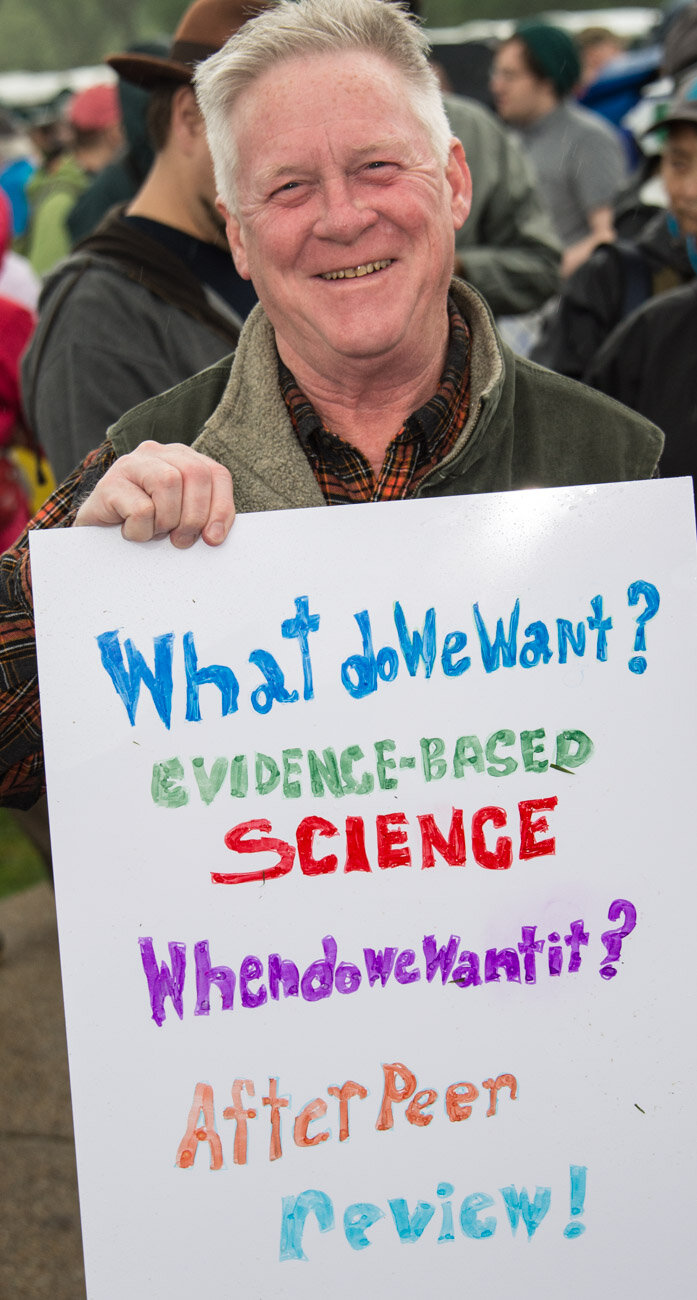
If a scientist claims a new medicine works, they must provide evidence from experiments showing that it does. If an astronomer says a new planet exists, they must show observational data to back it up. This demand for proof is what makes scientific knowledge so reliable. It’s a process of showing, not just telling.
Genuine scientific disciplines rely heavily on empirical evidence—data gathered through observation, experimentation, and rigorous testing.
Science vs. Other Ways of Knowing
We all have personal beliefs, opinions, and traditions. These are important parts of life, but they aren't science. Scientific knowledge is different because it must be testable and open to being proven wrong. This is a key feature called falsifiability. If an idea can't be tested or potentially proven false, it falls outside the realm of science.
For example, the claim "all swans are white" is scientific because it can be falsified. All we have to do is find one black swan, and the claim is proven false. In contrast, a statement like "chocolate is the best flavor of ice cream" is an opinion. There's no experiment we can run to prove it true or false for everyone.
| Characteristic | Scientific Knowledge | Beliefs & Opinions |
|---|---|---|
| Basis | Empirical evidence and observation | Faith, culture, or personal preference |
| How it's tested | Through repeatable experiments | Not testable in a systematic way |
| Can it change? | Yes, when new evidence appears | Can be resistant to change |
| Goal | To understand and explain the natural world | To express personal views or values |
This doesn't mean science is the only way to find truth, but it is a specific, powerful method for building a shared understanding of the physical universe.
Ready to check your understanding of these core ideas?
Which of the following best defines the role of empirical evidence in science?
A sociologist studying the impact of social media on community engagement is working within which main branch of science?
Understanding these fundamentals sets the stage for everything that follows. Science is a dynamic process of discovery, built on a foundation of testable evidence.