The National Woman's Party Legacy
Origins and Formation
A New Strategy for Suffrage
By the early 1900s, the fight for women's right to vote had been going on for decades. The largest organization leading the charge was the National American Woman Suffrage Association (NAWSA). Its strategy was methodical and patient: win the right to vote state by state. The thinking was that once enough states granted suffrage, the federal government would have no choice but to follow.
But for some, this slow-and-steady approach felt agonizingly slow. Two young American activists, Alice Paul and Lucy Burns, had witnessed a different kind of fight while in England. They were inspired by the more confrontational tactics of the British suffragettes, which included protests and civil disobedience. They believed that focusing on individual states was a waste of energy. The real target should be a constitutional amendment that would grant suffrage to all women in the nation at once.
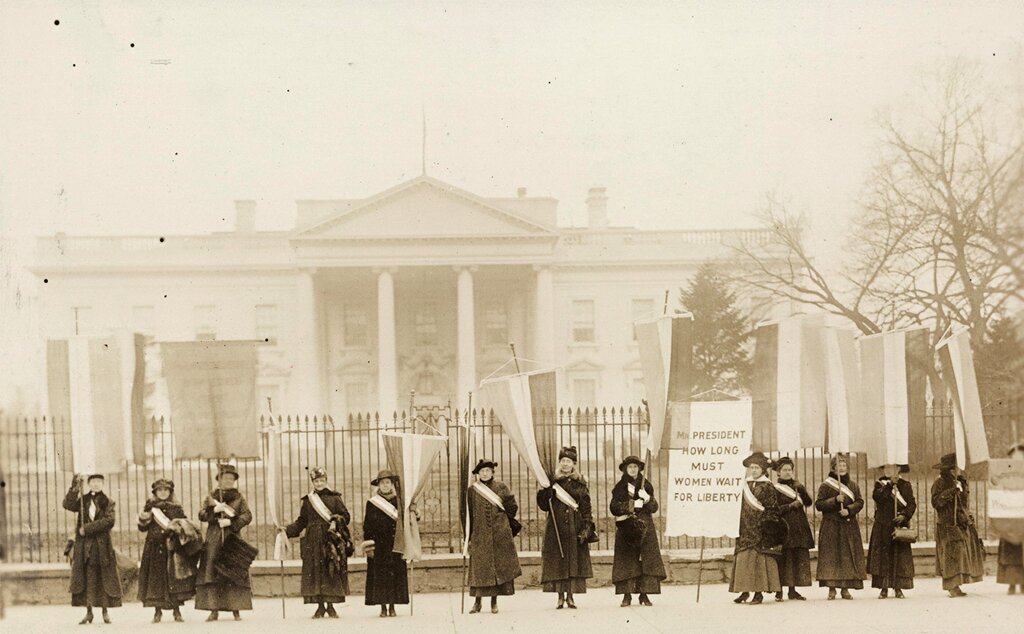
In 1913, Paul and Burns proposed a new path forward within NAWSA. They formed a committee called the Congressional Union for Woman Suffrage. Its sole purpose was to lobby Congress and the President for a federal amendment. They kicked things off with a massive suffrage parade in Washington, D.C., held the day before President Woodrow Wilson's inauguration. The event drew huge crowds and national attention, but also conflict and riots, signaling a shift toward more visible and disruptive tactics.
The Breakaway
The Congressional Union's aggressive style quickly created friction with the more conservative leadership of NAWSA. The leaders of NAWSA, like Carrie Chapman Catt, believed in diplomacy and non-partisan pressure. They cultivated relationships with politicians from all parties and avoided public confrontations.
Paul and Burns, however, adopted the British strategy of holding the political party in power responsible for the lack of progress. Since President Wilson was a Democrat, they targeted Democrats in their campaigns, regardless of an individual politician's stance on suffrage. This clash in strategy and tactics proved too great to overcome. NAWSA wanted to persuade; the Congressional Union wanted to pressure.
| Organization | Leadership | Strategy |
|---|---|---|
| NAWSA | Carrie Chapman Catt | Diplomatic, state-by-state campaigns, non-partisan |
| Congressional Union / NWP | Alice Paul & Lucy Burns | Confrontational, focused on a federal amendment, targeted the party in power |
By 1914, the split was official. The Congressional Union broke away from NAWSA to become a fully independent organization. Two years later, in 1916, they adopted a new name that reflected their national scope and political focus: the National Woman's Party (NWP).
The formation of the NWP marked a new, more militant phase in the American suffrage movement. Its members were prepared to use parades, protests, and pickets to force the issue of a federal amendment into the national spotlight. They believed that polite lobbying had run its course. It was time for direct action.
What was the primary strategic difference between the National American Woman Suffrage Association (NAWSA) and the Congressional Union?
The Congressional Union's tactic of holding the political party in power responsible was most directly inspired by the actions of which group?