The Motor Effect Explained
Magnetic Fields
What is a Magnetic Field?
Think of a magnet as having an invisible zone of influence around it. Step into this zone, and you can feel its pull or push. Physicists call this region a magnetic field. It’s the area where a magnetic force is exerted on other magnets or magnetic materials, like iron.
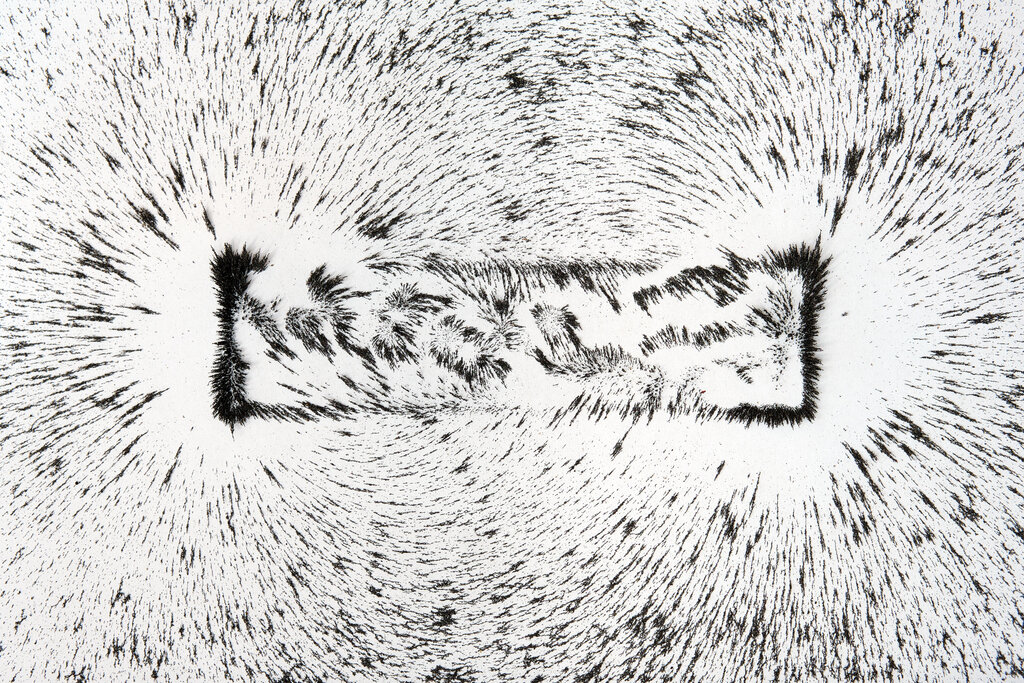
This field isn't just a vague bubble of force. It has specific properties at every single point in space around the magnet. At any given spot, the field has a certain strength (how strong the push or pull is) and a specific direction. Because it has both magnitude and direction, a magnetic field is a vector field.
A magnetic field is the region around a magnetic object where its force can be detected. It has both strength and direction.
Drawing the Invisible
Since we can't see magnetic fields, we use a tool called magnetic field lines to visualize them. These lines are imaginary, but they follow a few strict rules that help us understand what the field is doing.
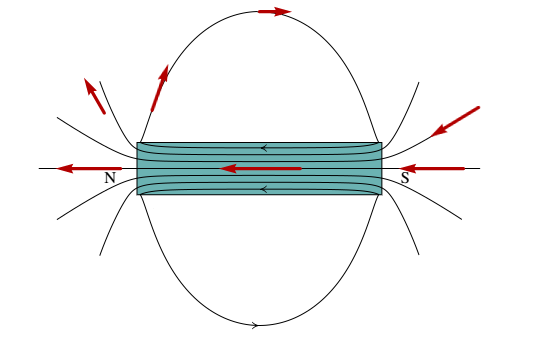
First, the lines show direction. By convention, they always point away from a magnet's north pole and toward its south pole. If you placed a tiny compass anywhere along a line, its needle would point in the direction of the line.
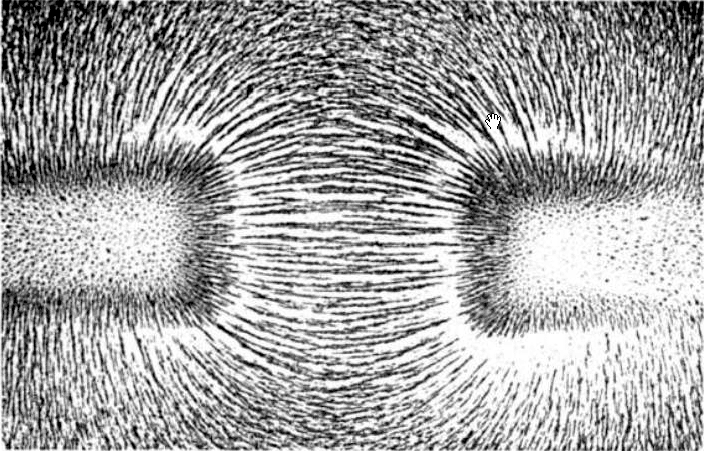
Second, the spacing of the lines tells us about the field's strength. Where the lines are packed closely together, the magnetic field is strong. Where they are spread far apart, the field is weak. You can see this in the diagram above—the field is most intense right at the poles.
Finally, magnetic field lines never cross. Each point in space has only one unique field direction, so the lines can't intersect.
Where Do Fields Come From?
So, what creates these fields? There are two main sources: permanent magnets and moving electric charges.
Permanent Magnets These are the objects we typically think of as magnets, like the ones on your fridge. They are made from materials like iron, nickel, or cobalt. At a microscopic level, these materials contain tiny magnetic regions called domains. When these domains are all aligned in the same direction, their individual magnetic fields add up to create one large, strong field.
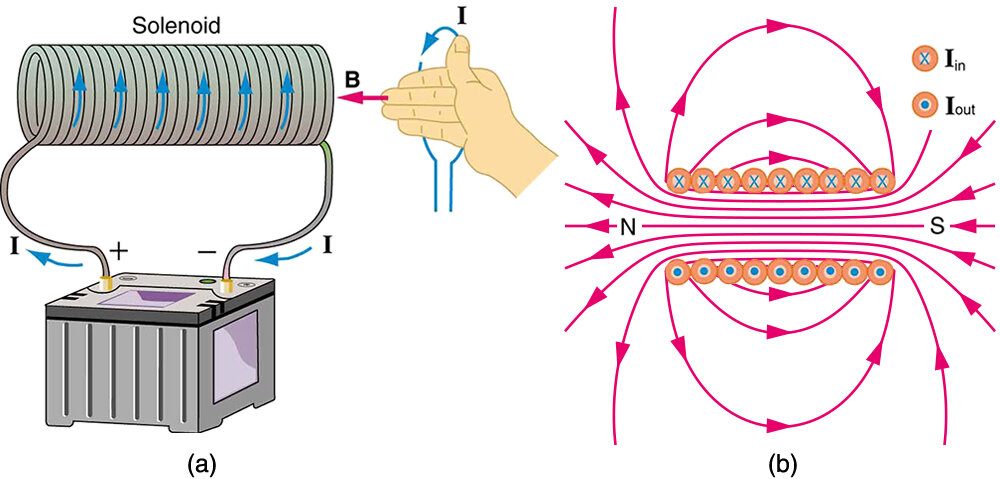
The other source is a bit more fundamental: moving electric charges. Whenever an electric charge moves, it creates a magnetic field. An electric current is simply a flow of many charges, so a wire carrying a current generates a magnetic field around it.

This principle is used to create electromagnets. By coiling a wire, often around an iron core, we can concentrate the magnetic field produced by the current. The more turns in the coil and the higher the current, the stronger the magnet becomes. The biggest advantage of an electromagnet is that you can turn it on and off just by controlling the flow of electricity.
What is a magnetic field?
A magnetic field is a vector field. What does this mean?
Understanding what magnetic fields are and where they come from is the first step. Next, we'll explore how these fields can be put to work.