The Mother of All Demos Unveiled
Historical Context
The Age of Mainframes
In the 1960s, computers weren't personal devices. They were enormous, room-sized machines called mainframes, owned by large corporations, universities, and governments. These behemoths lived in air-conditioned glass rooms, tended to by specialists in white lab coats. They were the exclusive domain of trained operators, not everyday users.
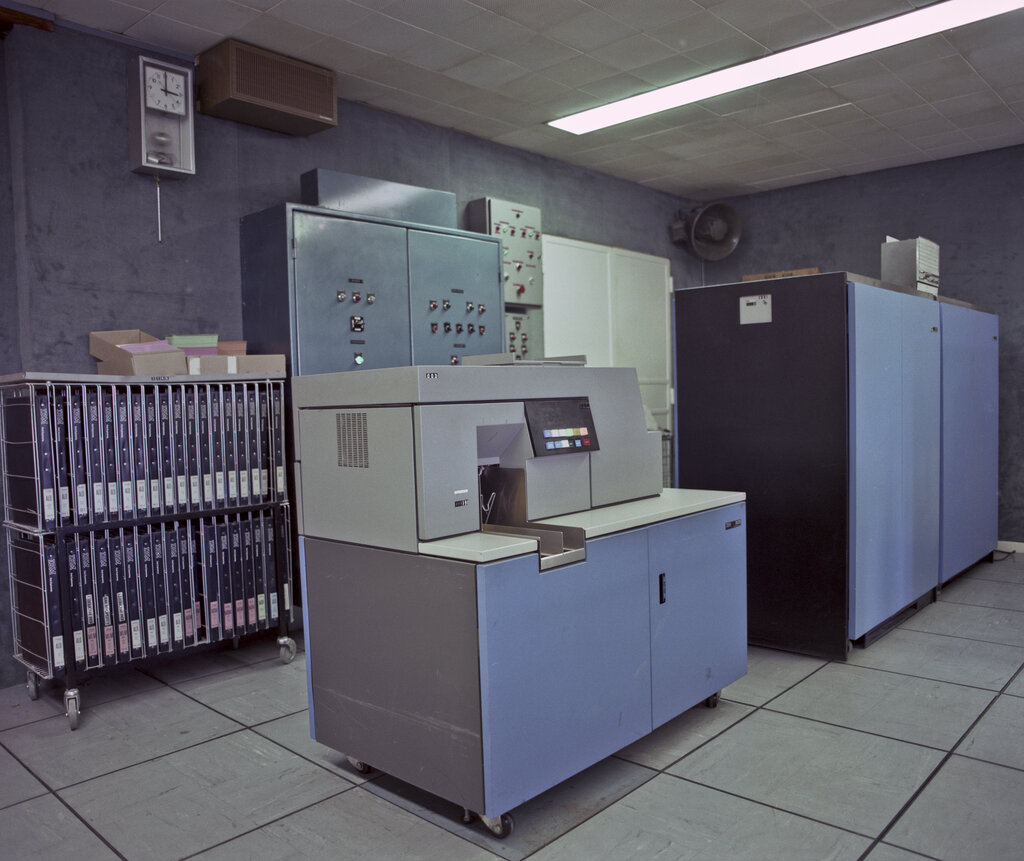
Interacting with these machines was a slow, physical process. You didn't type on a keyboard; you used a keypunch machine to poke holes into stiff paper cards. Each card represented a single line of code or a piece of data. A program might consist of a thick stack of these cards, carefully ordered and held together by a rubber band.
Life with Batch Processing
Once your stack of cards was ready, you couldn't run it yourself. You handed it over to a computer operator through a small window. The operator would add your stack to a queue of other jobs, a process called batch processing. The computer would run each job one by one, printing the results onto large sheets of paper.
You would then wait. It could be hours, or even a full day, before your printout was ready. If you made a single typo, you'd only find out after all that waiting. Then you'd have to fix the card, resubmit the job, and wait all over again.
This system was efficient for the machine, allowing it to churn through calculations without interruption. For humans, it was painfully slow and completely non-interactive. There was no direct conversation with the computer. It was a one-way street: you gave it instructions and hoped for the best.
A New Way of Thinking
Amidst this world of batch processing, a few visionaries started asking a radical question: What if computers could be tools for augmenting human intellect? What if a person could sit in front of a screen and interact with information directly and immediately?
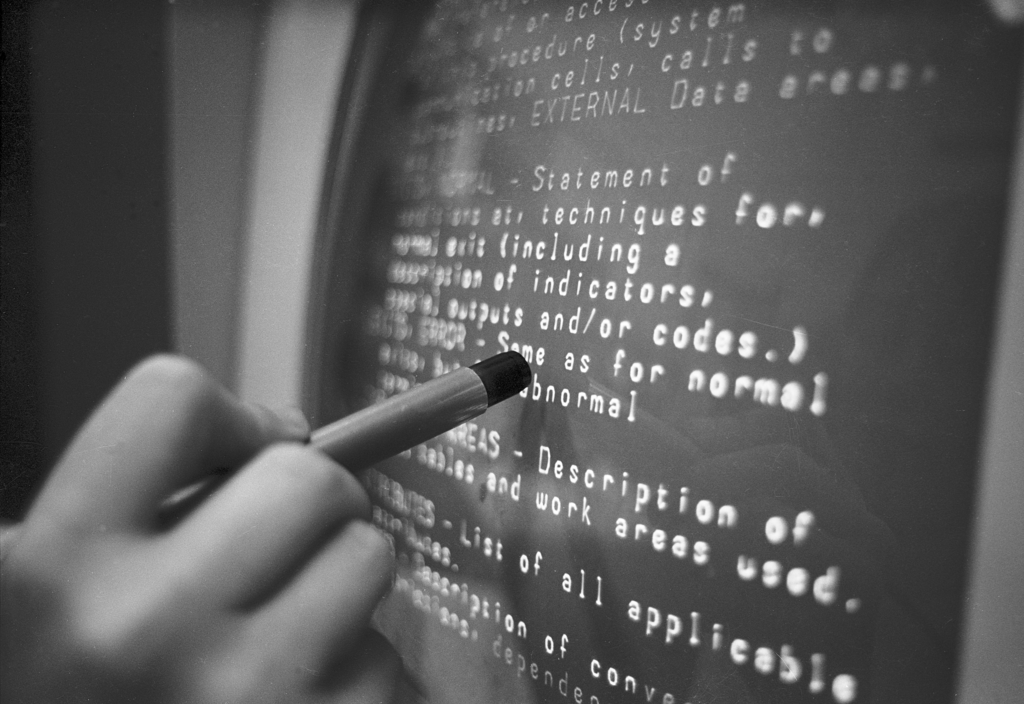
This was the seed of human-computer interaction. Early experiments in the 1960s explored concepts like timesharing, which allowed multiple users to connect to a single mainframe simultaneously, creating the illusion of having the machine to themselves. Thinkers like J.C.R. Licklider wrote about a future "man-computer symbiosis," where humans and machines would collaborate to solve problems in real time.
These ideas were revolutionary. They challenged the entire paradigm of computing, shifting the focus from calculation efficiency to human empowerment. The goal was no longer just to get an answer, but to create a dynamic, conversational partner for the human mind. This set the stage for a demonstration that would change everything.