The Modern Master Key Professional Locksmithing Unlocked
High Security Mechanics
Beyond the Basic Pin
Standard pin-tumbler locks are clever, but they operate on a single principle: lifting pins to a specific height. This creates a shear line, allowing the plug to turn. Because this design is so widespread, its vulnerabilities—like picking and bumping—are also well understood. High-security locks don't just refine this principle; they add entirely new layers of mechanical complexity to defeat these attacks.
The goal isn't just to make a lock harder to pick, but to make it so complex that bypassing it is impractical without specialized tools and knowledge.
Adding More Puzzles
To move beyond simple pin heights, high-security locks introduce secondary locking mechanisms. One of the most common is a sidebar. A sidebar is a rectangular bar that sits in a channel between the lock's plug and its housing. In its default state, this bar physically blocks the plug from rotating. It won't retract unless every single pin is not only at the correct height but also rotated to the correct angle.
This dual requirement of height and rotation is the signature of brands like and forms the basis of their security. The key has angled cuts that rotate the pins as it's inserted. If even one pin is at the wrong angle, the sidebar remains engaged. This stumps conventional lock picking, which is designed only to manipulate pin height.
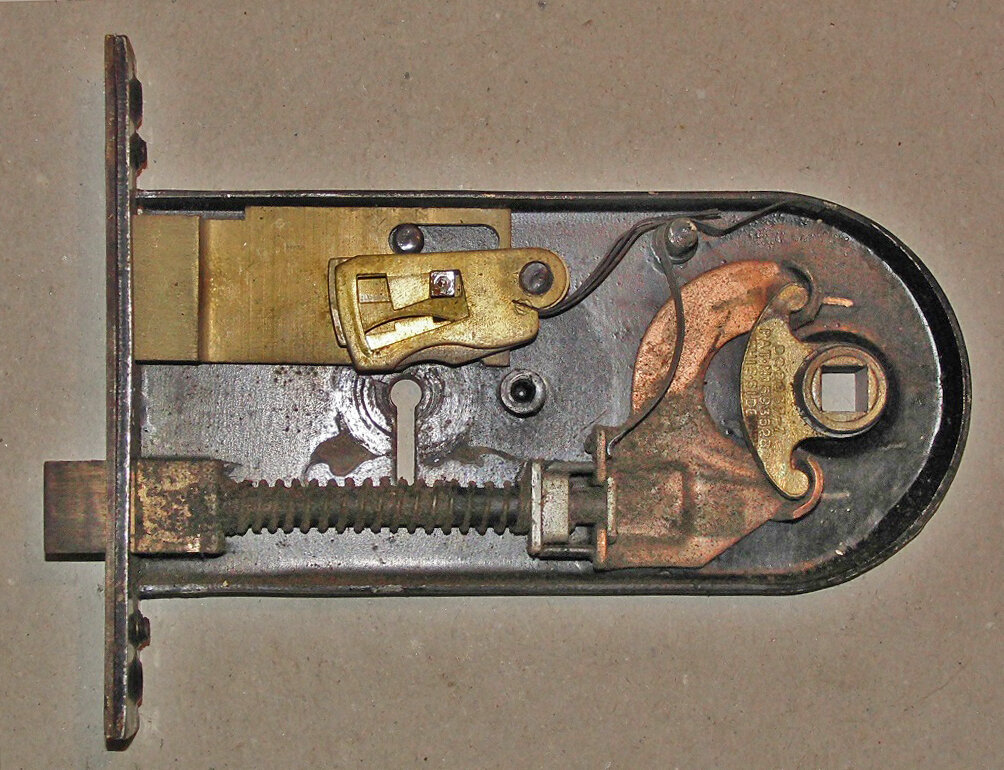
Resisting Brute Force
Sophisticated mechanisms are only half the battle. High-security locks must also withstand destructive attacks like drilling. To counter this, manufacturers embed hardened steel components within the lock cylinder and housing. This includes anti-drill plates and pins that are harder than the drill bits attackers use. When a drill bit encounters one of these components, it's more likely to shatter or be deflected than to penetrate the lock.
High-security locks may include features like master pins, anti-drill plates, and intricate keyways, adding layers of complexity to deter unauthorized access.
Another layer of defense is the design of the keyway itself. A standard keyway offers a relatively straight path for picking tools. High-security locks often feature paracentric keyways that are convoluted and zig-zag, with sections of the warding crossing the cylinder's centerline. This makes it extremely difficult to maneuver picking tools inside and properly manipulate the pins. Some keyways are also patented and restricted, meaning key blanks are controlled by the manufacturer and can only be duplicated with proper authorization, adding an administrative layer of security.
Rethinking the Tumbler
While many high-security locks build upon the pin-tumbler design, some abandon it entirely. The most notable alternative is the disk detainer lock, commonly associated with the brand Abloy. Instead of pins that move up and down, these locks use a series of slotted rotating disks. The correct key rotates each disk to a specific angle, aligning all the slots. Once aligned, a sidebar can retract into the slots, allowing the cylinder to turn.
| Feature | Advanced Pin-Tumbler (e.g., Medeco) | Disk Detainer (e.g., Abloy) |
|---|---|---|
| Core Mechanism | Pins that lift and rotate | Disks that rotate |
| Key Feature | Angled cuts on the key blade | Shaped cuts along the key's edge |
| Primary Vulnerability | Extremely complex picking | Requires specialized tensioning tools |
| Strength | High number of possible key combinations | Very resistant to bumping and picking |
| Weakness | Susceptible to wear over time | Can be vulnerable to over-torquing |
Disk detainer locks are inherently resistant to picking because there are no pins to lift. They also can't be bumped. The trade-off is often a more complex and expensive manufacturing process. The choice between an advanced pin-tumbler system and a disk detainer lock depends on the specific security needs, budget, and the types of threats one expects to face.
What is the primary function of a sidebar in a high-security lock?
A paracentric keyway is specifically designed to thwart which type of attack?
Understanding these advanced mechanics reveals how security is a constant evolution, with lock designers engineering new puzzles to stay ahead of ever-more-sophisticated attacks.