The Mobile Revolution
Early Mobile Communication
The Dream of Wireless Talk
Long before anyone could imagine a phone in their pocket, people dreamed of talking to each other across vast distances without wires. Early radio pioneers showed it was possible to send messages through the air using Morse code. But sending voice was a much bigger challenge.
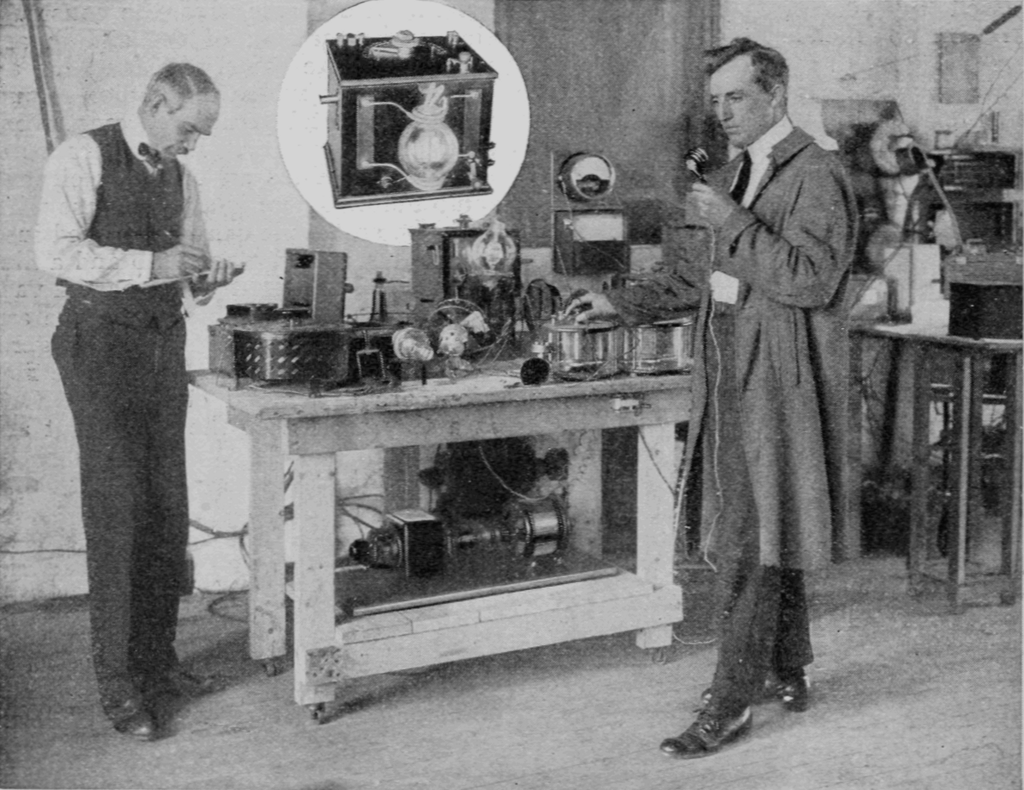
Innovators in the early 20th century began experimenting with “wireless telephony.” They envisioned a world where conversations weren't tied to physical cables. These early systems were clunky and experimental, but they planted the seed for all mobile communication to come.
A Phone in the Car
The first major step toward true mobile communication arrived in 1946. AT&T launched its Mobile Telephone Service (MTS) in St. Louis, Missouri. For the first time, you could make a phone call from a private vehicle. But this was a far cry from the mobile phones we know today.
The equipment was massive, weighing around 80 pounds, and it filled a good portion of a car's trunk. A large antenna was mounted on the car's roof. More importantly, it wasn't a private, direct-dial system. To make a call, you had to press a button on the handset to speak, then release it to listen, much like a walkie-talkie. An operator had to manually connect your call to the landline network.
The biggest limitation was capacity. A single transmitter tower served an entire city, and there were often only three available channels. This meant only three people could be on a call at the same time across the whole metropolitan area.
Waitlists for the service were long, sometimes lasting years. Despite its limitations, MTS proved there was a real demand for communication on the go. The challenge was figuring out how to serve more than just a handful of users at once.
The Cellular Idea
The solution came just a year later, in 1947. Engineers at Bell Labs, an AT&T research division, had a revolutionary idea. Instead of using one powerful, high-wattage transmitter to cover an entire city, why not use many low-power transmitters to cover smaller areas? They called these areas “cells.”
The concept was simple but brilliant. A geographic area, like a city, could be divided into a grid of hexagonal cells. Each cell would have its own low-power transmitter and a set of unique radio frequencies. As a user in a car moved from one cell to another, their call would be automatically passed off—or “handed off”—to the next cell's transmitter without interruption.
This design solved the capacity problem. Because the transmitters were low-power, their signals didn't travel very far. This meant the same radio frequencies could be reused in non-adjacent cells across the city without interfering with each other. This frequency reuse is the key that allows a cellular network to handle thousands of simultaneous calls, not just three.
Although the technology to build this network wouldn't exist for several decades, the 1947 concept laid the complete theoretical groundwork for the mobile phone revolution. It was a blueprint for the future.