The Miracle of Photosynthesis
Introduction to Photosynthesis
The Planet's Power Plant
Plants don't eat the way animals do. They can't hunt for a meal or graze in a field. Instead, they are the planet's original solar-powered chefs, creating their own food from the simplest ingredients. This amazing process is called photosynthesis.
photosynthesis
noun
The process used by plants, algae, and certain bacteria to convert light energy into chemical energy, through a process that converts carbon dioxide and water into glucose (sugar) and oxygen.
At its core, photosynthesis is about converting energy from one form to another. Plants capture energy from sunlight and store it as chemical energy in sugar molecules. This process doesn't just feed the plant; it fuels nearly all life on Earth.
The Recipe for Life
Like any recipe, photosynthesis has key ingredients (inputs) and finished products (outputs). A plant needs three things to get started:
- Sunlight: The energy source.
- Water (H₂O): Usually absorbed from the soil through the roots.
- Carbon Dioxide (CO₂): The same gas we exhale, taken from the air.
With these inputs, the plant's internal machinery gets to work. It produces two vital outputs:
- Glucose (C₆H₁₂O₆): A type of sugar that acts as the plant's food and energy source.
- Oxygen (O₂): A byproduct that is released into the atmosphere.
This fundamental exchange can be summarized in a simple chemical equation. It shows how the atoms from six molecules of carbon dioxide and six molecules of water are rearranged to form one molecule of glucose and six molecules of oxygen.
The Foundation of Ecosystems
The impact of photosynthesis extends far beyond the plant itself. The oxygen it releases is what most animals, including humans, need to breathe. Scientists estimate that photosynthesis is responsible for nearly all of the oxygen in our atmosphere.
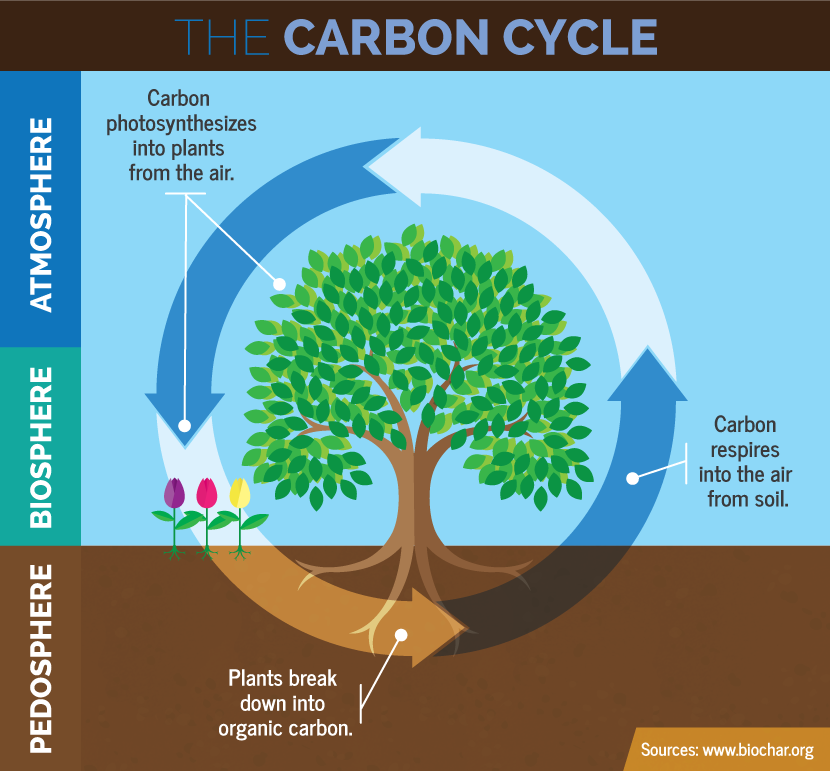
Furthermore, the energy captured by plants becomes the foundation of almost every food chain. Organisms that perform photosynthesis are known as producers. When a rabbit eats grass, it's consuming the energy the grass stored from the sun. When a fox eats the rabbit, that same energy is transferred again. Without producers capturing solar energy, there would be no energy to support consumers like animals and humans.
From the air we breathe to the food we eat, nearly every aspect of life on our planet is connected to this quiet, constant process happening in the leaves of plants all around us.