The Ming Dynasty
Origins and Rise
The Crumbling Mongol Empire
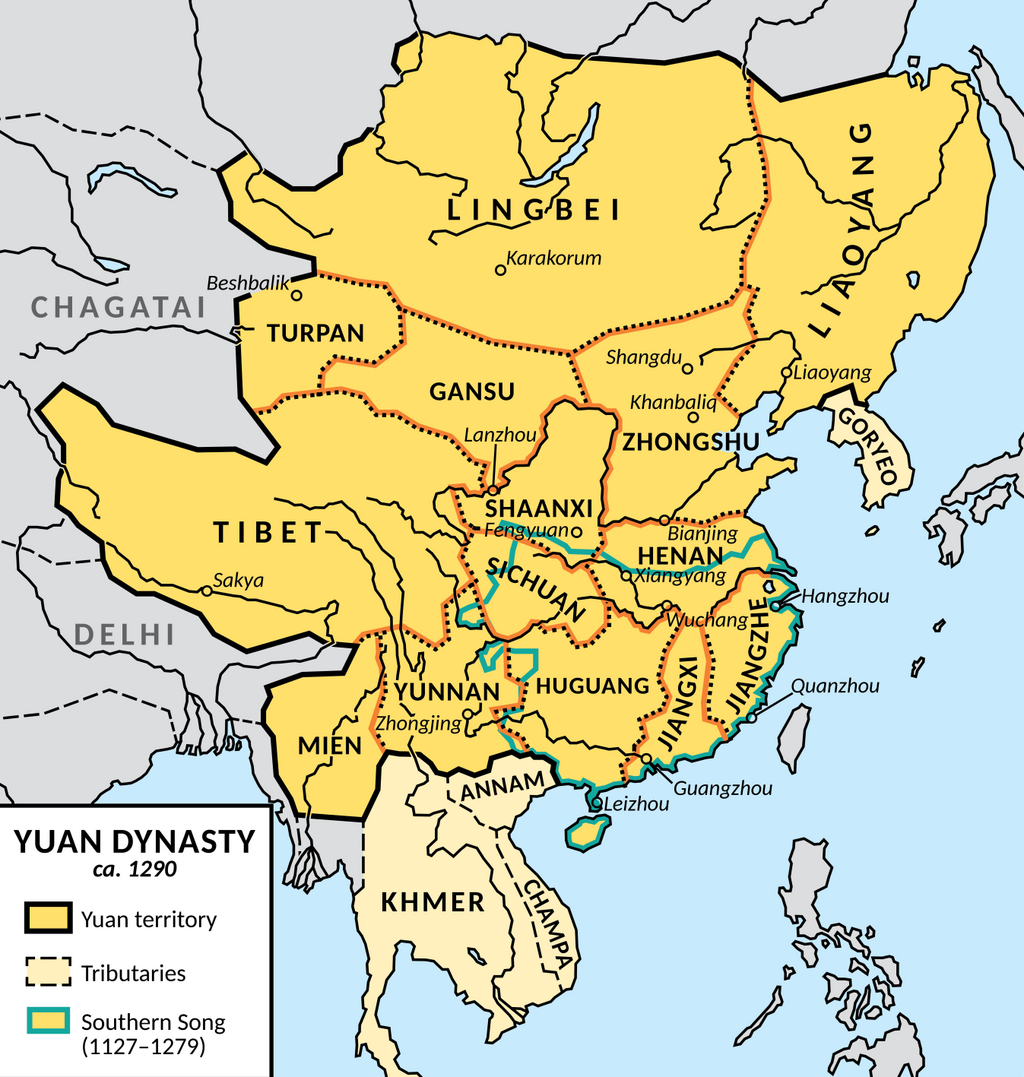
By the middle of the 14th century, the mighty Yuan Dynasty, established by Kublai Khan, was in deep trouble. A series of natural disasters struck China, including devastating floods of the Yellow River and widespread famine. To make matters worse, the bubonic plague, known in Europe as the Black Death, ravaged communities, killing millions.
The Mongol government's response was ineffective. They tried to fund disaster relief and military campaigns by printing massive amounts of paper money, which led to hyperinflation. The value of currency plummeted, wiping out the savings of ordinary people. On top of these economic woes, the Yuan government maintained a rigid social hierarchy. They placed Mongols at the top and relegated the majority Han Chinese population to the bottom two classes, fueling deep-seated resentment. Political infighting among Mongol princes further weakened the central government, leaving it unable to handle the growing crises.
The Red Turban Rebellion
With the dynasty failing and people starving, desperation turned to open revolt. In the 1350s, a massive uprising known as the Red Turban Rebellion erupted across northern and central China. The rebels were named for the red headbands they wore.
This wasn't a single, coordinated movement but a collection of different rebel armies. Many were inspired by the White Lotus, a secret Buddhist society that preached the imminent arrival of Maitreya, a messianic figure who would bring peace and prosperity. The rebellion's message was simple and powerful: overthrow the Mongol
Restore the Song and exterminate the barbarians.
The Red Turban armies fought with religious zeal and the ferocity of people with nothing left to lose. They attacked government offices, captured cities, and battled the already-strained Yuan armies. While the rebellion was chaotic and often brutal, it shattered what little control the Yuan Dynasty had left.
A Peasant Becomes Emperor
One of the many who joined the rebellion was a man named Zhu Yuanzhang. His story is one of the most remarkable in Chinese history. Born into a desperately poor peasant family, he was orphaned when his entire family died in a famine and the plague that followed. To survive, he became a wandering Buddhist monk, begging for food.
In 1352, he joined a local Red Turban group. Zhu quickly proved to be a natural leader and a brilliant military strategist. He was intelligent, disciplined, and ruthless when necessary. Unlike other rebel leaders who often pillaged the lands they conquered, Zhu enforced strict discipline on his troops, which helped him win the support of the local population. He attracted educated advisors who helped him build a stable government in the territories he controlled.
Over the next decade, Zhu Yuanzhang systematically defeated his rivals, both other rebel leaders and the Yuan forces. In 1368, his army marched on the Yuan capital, Dadu (modern-day Beijing). The last Yuan emperor fled north, and the Mongol rule over China officially ended. Zhu declared the founding of a new dynasty, which he called the Ming, meaning "brilliance." He, the former peasant and monk, became its first emperor, known as the Hongwu Emperor.
Which of the following best describes the combination of factors that led to the decline of the Yuan Dynasty?
The Yuan government's attempt to fund disaster relief by printing massive amounts of paper money led directly to what economic crisis?
The rise of the Ming was a testament to the collapse of the old order and the ambition of a man who rose from the lowest rungs of society to claim the Mandate of Heaven.