The Menstrual Cycle Explained
Menstrual Cycle Phases
The Four Phases
The menstrual cycle is a month-long process guided by hormones. While it's often associated with the period, that's just one part of the story. The entire cycle involves a series of changes in the body that prepare it for a potential pregnancy. A typical cycle lasts about 28 days, but it's normal for this to vary from person to person and month to month.
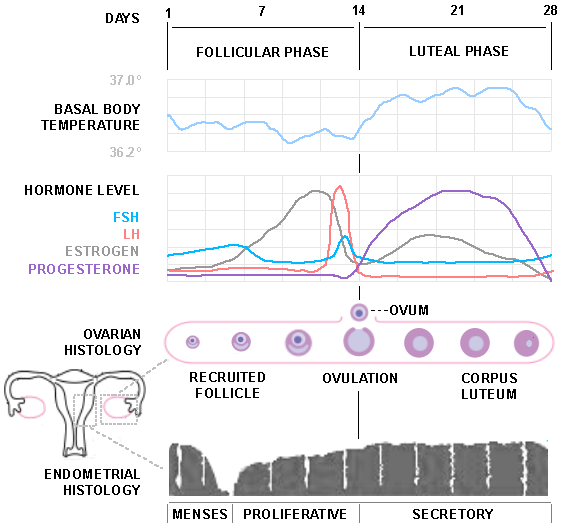
The cycle is divided into four distinct phases, each with its own hormonal profile and physiological events. Let's walk through them one by one.
Menstrual Phase (Days 1–5)
Day one of the cycle starts with the first day of your period. This phase, known as menstruation, is when the body sheds the thickened lining of the uterus. This bleeding occurs because an egg from the previous cycle wasn't fertilized.
During this phase, levels of the hormones estrogen and progesterone are at their lowest.
Follicular Phase (Days 1–14)
The follicular phase begins on the first day of your period, so it overlaps with the menstrual phase. Its main purpose is to prepare an egg for release. The pituitary gland in your brain releases Follicle-Stimulating Hormone (FSH). This hormone signals the ovaries to start maturing several small sacs called follicles, each containing an immature egg.
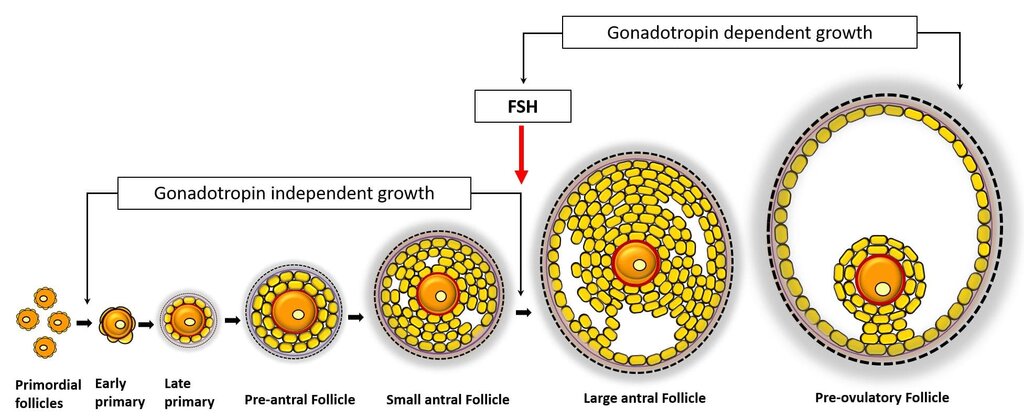
Eventually, one of these follicles becomes dominant and continues to develop, while the others stop growing. The maturing follicle produces estrogen, causing estrogen levels to steadily rise. This rise in estrogen helps rebuild the uterine lining (the endometrium) that was shed during the period.
Ovulatory Phase (Around Day 14)
Ovulation is the main event of the cycle: the release of a mature egg from the ovary. It's a short phase, typically lasting only 24 to 48 hours.
The high levels of estrogen from the follicular phase trigger the pituitary gland to release a surge of another hormone, called Luteinizing Hormone (LH). This LH surge is the green light for ovulation. It causes the dominant follicle to rupture and release its mature egg into the fallopian tube, where it can be fertilized.
A sharp spike in Luteinizing Hormone (LH) is the direct trigger for ovulation.
Luteal Phase (Days 15–28)
After the egg is released, the cycle enters its final phase. The ruptured follicle that was left behind in the ovary transforms into a new structure called the corpus luteum. The name comes from Latin, meaning "yellow body."
The corpus luteum is a temporary endocrine gland, and its job is to produce the hormone progesterone, along with some estrogen. Progesterone is key to this phase. It signals the uterine lining to continue thickening and maturing, creating a nourishing environment for a fertilized egg to implant.
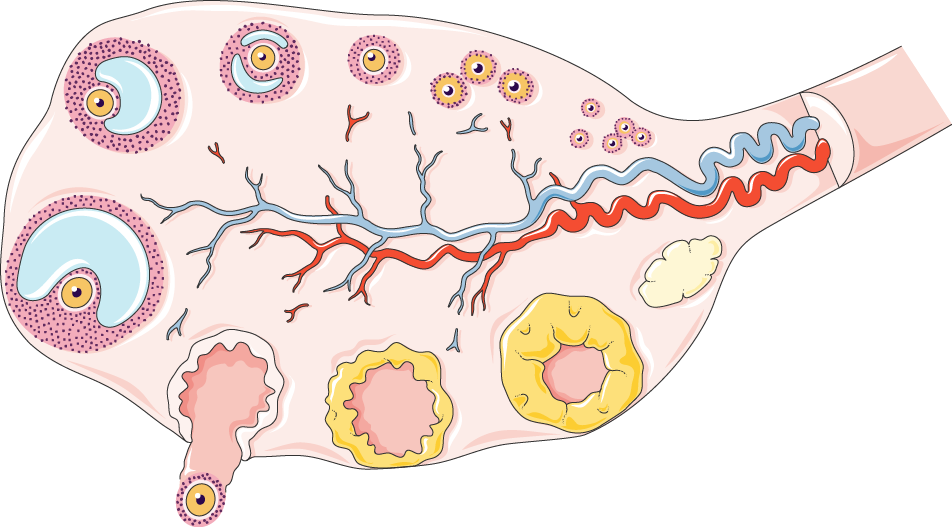
What happens next depends on whether fertilization occurs. If the egg is fertilized and implants in the uterine wall, the body starts producing hCG, the hormone detected in pregnancy tests. This hormone tells the corpus luteum to keep making progesterone to support the early pregnancy.
If the egg isn't fertilized, the corpus luteum begins to break down about 10 to 12 days after ovulation. This causes a sharp drop in both progesterone and estrogen levels. This hormonal drop signals the uterine lining to shed, triggering the start of your period and a new cycle.
| Phase | Typical Day Range | Key Hormonal Event | Key Physiological Event |
|---|---|---|---|
| Menstrual | 1–5 | Estrogen & Progesterone are low | Uterine lining is shed |
| Follicular | 1–14 | Estrogen rises due to FSH | Ovarian follicle matures |
| Ovulatory | ~14 | LH surges | Egg is released from ovary |
| Luteal | 15–28 | Progesterone rises | Uterine lining thickens |
Let's review what we've learned.
What event marks the first day of the menstrual cycle?
What is the primary role of the corpus luteum?
Understanding these four phases provides a clear picture of the hormonal and physical changes that happen each month.