The Master Blueprint of Money
Evolution of Value
The Barter Problem
Before money existed, trade was direct. If you were a chicken farmer who needed a new pair of shoes, you had to find a shoemaker who wanted chickens. This is harder than it sounds. The shoemaker might need bread, not chickens. You’d then have to find a baker who wanted chickens, trade your chickens for bread, and then take the bread to the shoemaker. This inefficiency is called the double coincidence of wants problem. For a trade to happen, both parties must have what the other desires, at the exact same time. It’s a major drag on economic activity, making it difficult to specialize and limiting the scale of trade.
Commodities as a Solution
Societies naturally gravitated toward a solution: commodity money. This involves using a specific, widely-valued good as a medium of exchange. Early on, this could be anything from salt and seashells to cattle. The chicken farmer could trade eggs for salt, then use that salt to buy shoes from the shoemaker, who could then use the salt to buy bread. The salt solved the coincidence of wants problem.
Over time, metals like gold and silver became the preferred commodities for money. Why? Because they possessed several key properties that made them highly suitable for the job. These are often called the properties of sound money.
| Property | Description |
|---|---|
| Durability | It doesn't rot, rust, or easily fall apart. |
| Portability | It's easy to carry around. A lot of value in a small package. |
| Divisibility | It can be easily divided into smaller units without losing value. |
| Uniformity | One unit is the same as any other unit (e.g., an ounce of gold). |
| Limited Supply | It's scarce enough to hold value, not easily created out of thin air. |
| Acceptability | Enough people agree to accept it as payment. |
From Physical Metal to Paper Promises
Carrying around bags of gold and silver is cumbersome and risky. As trade grew more sophisticated, people began storing their precious metals with trusted third parties, like goldsmiths, who had secure vaults. In return for a deposit, the goldsmith would issue a paper receipt.
Soon, people realized it was easier to trade the paper receipts directly rather than constantly withdrawing and re-depositing the physical gold. These receipts were a form of ; they had no value on their own, but each note represented a specific amount of a real commodity held in a vault, which could be redeemed at any time. This was the birth of the banknote.
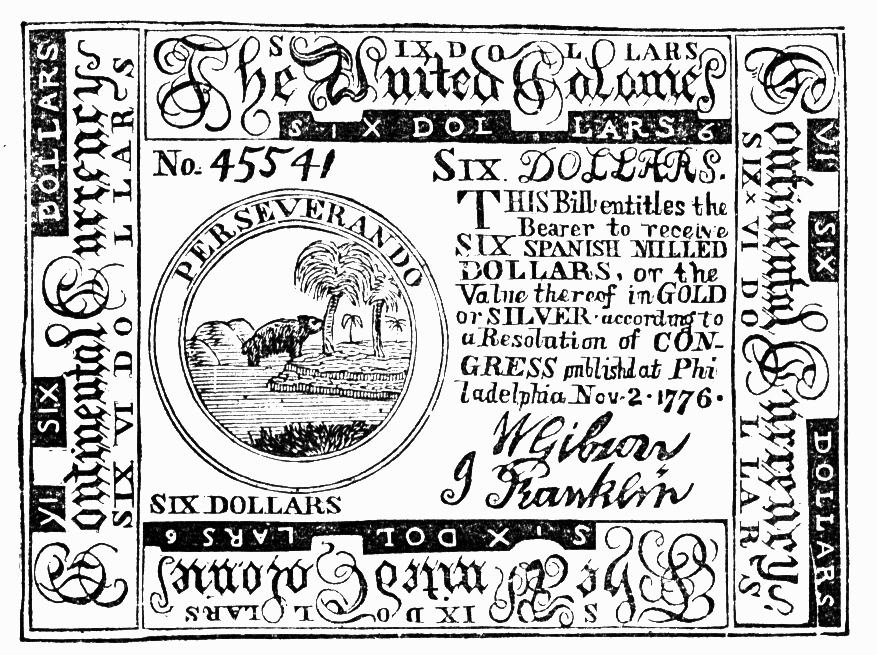
This system worked well for a long time. The paper notes were convenient, and the promise of redemption kept the system honest. But it set the stage for the next, and most abstract, evolution in money.
The Great Abstraction: Fiat Currency
Eventually, governments made a crucial change. They severed the link between their paper money and any physical commodity. The paper notes were no longer redeemable for gold or silver. They became . The term "fiat" comes from Latin, meaning "let it be done"—an order or decree. The money has value simply because the government declares that it does, and requires it for the payment of taxes.
This is a massive psychological leap. A U.S. dollar bill or a Euro note is just a piece of paper (or polymer). It has no intrinsic value. Its value comes entirely from collective trust. You accept it as payment because you have faith that others will accept it from you. This shared belief, backed by the stability and authority of the government that issues it, is what gives fiat currency its purchasing power.
The trust in a fiat system is fragile. If a government prints too much money, causing hyperinflation, that trust can evaporate. When people lose faith in their currency, they quickly revert to barter or seek out more stable foreign currencies or commodities. The value isn't in the paper; it's in the shared story we all agree to believe about that paper.
The credit theory of money: According to the main rival theory, coins and notes are merely tokens of something more abstract: money is a social construction rather than a physical commodity.
Understanding this evolution—from direct barter, to commodity-backed notes, to pure government-backed fiat—is key to understanding modern finance. It reveals that money is not a static thing, but a constantly evolving social technology built on a foundation of trust.
Ready to test your knowledge on how we got from bartering chickens to using abstract currencies?
What is the primary problem that commodity money solves?
A paper note that can be exchanged for a specific amount of gold held in a vault is an example of what?
The journey of money from tangible goods to abstract trust shows how human ingenuity solved fundamental problems of trade. Each step made commerce more efficient, but also more reliant on shared belief systems.