The Magic of Photosynthesis
Introduction to Photosynthesis
The Power of Sunlight
Plants don't eat the way animals do. They can't move around to find a meal. Instead, they create their own food using light. This amazing process is called photosynthesis.
Photosynthesis literally means "making with light," and the first stage (light-dependent reactions) absolutely requires light energy to convert into chemical energy.
Think of a plant leaf as a tiny, solar-powered factory. It takes in simple ingredients from the environment—sunlight, water, and a gas from the air called carbon dioxide—and converts them into energy-rich sugar. This process not only feeds the plant but also releases the oxygen we need to breathe. Without photosynthesis, life as we know it wouldn't exist.
The Recipe for Life
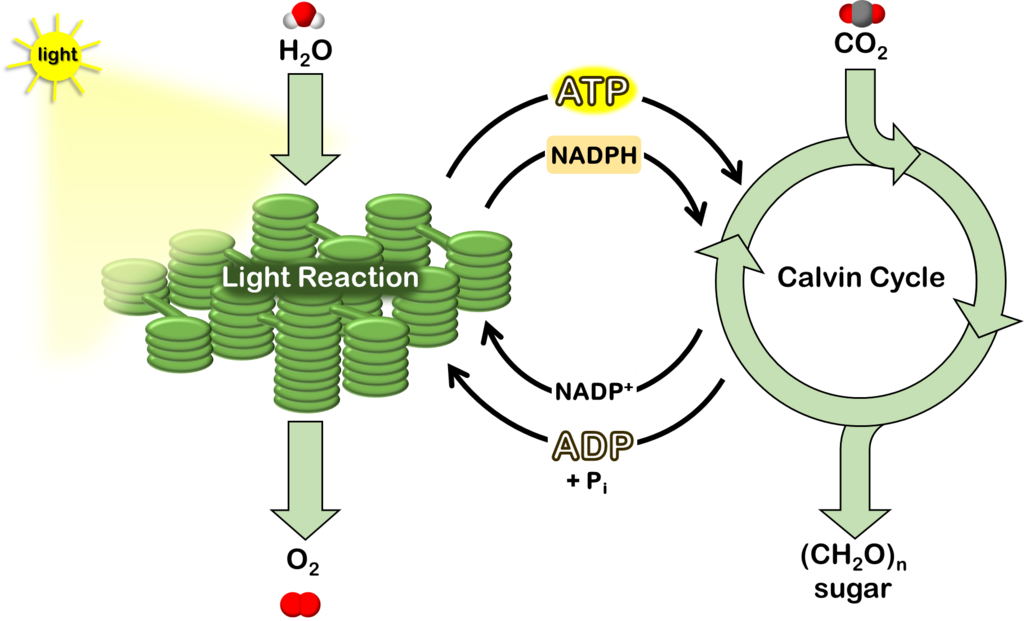
Like any recipe, photosynthesis has inputs (ingredients) and outputs (the finished product). The plant takes in carbon dioxide from the air through tiny pores in its leaves. It pulls up water from the soil through its roots. Sunlight provides the energy to power the chemical reaction.
The outputs are glucose, a type of sugar that serves as the plant's food, and oxygen, which is released back into the atmosphere as a byproduct.
This entire process can be summarized in a simple chemical equation. It shows how the atoms in water and carbon dioxide are rearranged to create glucose and oxygen.
Here's what that means:
- : Six molecules of carbon dioxide.
- : Six molecules of water.
- : One molecule of glucose.
- : Six molecules of oxygen.
The plant uses the glucose for energy to grow and build its structure, like its leaves, stems, and roots.
The Foundation of Ecosystems
The importance of photosynthesis extends far beyond the individual plant. It is the foundation of nearly every food chain on Earth. Organisms that perform photosynthesis, like plants, algae, and some bacteria, are called producers. They are the only living things that can create their own food from an inorganic energy source.
producer
noun
An organism that can produce its own food, using light, water, carbon dioxide, or other chemicals.
Animals, fungi, and other organisms that cannot make their own food are called consumers. They get their energy by eating producers. A rabbit eats grass, a fox eats the rabbit, and so on. All the energy in that chain originally came from the sun, captured by the grass through photosynthesis.
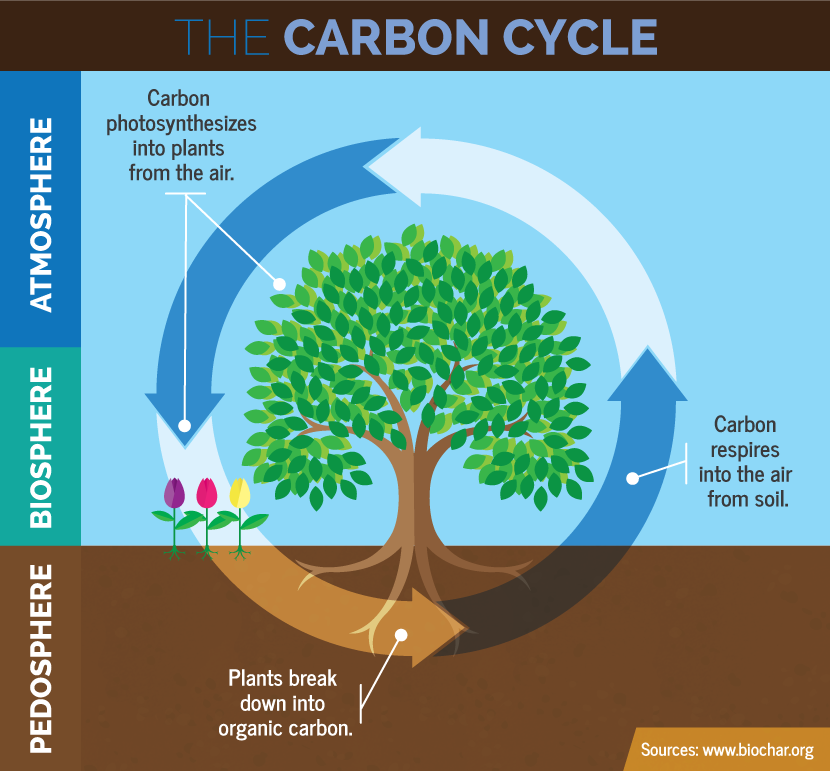
Furthermore, the oxygen released by photosynthesis transformed our planet. Billions of years ago, Earth's atmosphere had very little oxygen. The evolution of photosynthetic organisms gradually filled the atmosphere with oxygen, paving the way for complex, air-breathing life to evolve.
Ready to test your knowledge on the basics of photosynthesis?
What are the three main ingredients a plant needs to perform photosynthesis?
The primary role of sunlight in photosynthesis is to provide the ______ for the chemical reaction.
This fundamental process shows how interconnected life is on our planet, all powered by the light of a distant star.