The MAGA Movement Analysis
Populist Roots
The People vs. The Elite
Populist movements, at their core, aren't about the traditional left-right divide. Instead, they slice society differently, creating a vertical conflict between 'the pure people' and 'the corrupt elite.' This framework, known as a vertical cleavage, is central to understanding the MAGA movement and what separates it from mainstream conservatism.
While traditional Republicanism often focuses on economic policies like lower taxes and deregulation, this new populism centers on identity and cultural grievance. It argues that a distant, out-of-touch elite—comprising politicians from both parties, media figures, academics, and bureaucrats—has betrayed the interests of 'real' Americans. This creates a powerful sense of shared identity among those who feel left behind by economic and cultural shifts.
Populists are anti-pluralists – only they represent the people, and citizens who don’t support them are declared by them as “un-American” or “un-British”.
This isn't just about disagreeing on policy. It's a moral battle. The 'people' are portrayed as virtuous and hardworking, while the 'elite' are cast as morally bankrupt and self-serving. This narrative simplifies complex political issues into a struggle of good versus evil.
From Tea Party to MAGA
The MAGA movement didn't appear in a vacuum. Its immediate predecessor was the Tea Party movement, which emerged in 2009. Initially, the Tea Party's anger was directed at government spending, the bank bailouts, and the Affordable Care Act. It was a fiscally focused, anti-establishment rebellion within the Republican base.
However, as the movement evolved, its focus shifted. While fiscal concerns remained, issues of national identity, immigration, and cultural preservation became more prominent. The anger at 'big government' broadened into a deeper resentment of a globalist elite perceived as prioritizing international interests over American workers. This shift laid the groundwork for a leader who could speak directly to these anxieties.
| Feature | Tea Party (circa 2010) | MAGA (circa 2016) |
|---|---|---|
| Primary Grievance | Government spending, debt, taxes | Immigration, trade deals, cultural change |
| Core Enemy | Big government, 'RINOs' | Globalist elite, media, 'the swamp' |
| Economic Focus | Fiscal conservatism, balanced budget | Protectionism, trade tariffs |
| Identity Focus | Constitutional originalism | Nativism, 'America First' nationalism |
This evolution was less about changing policies and more about changing the enemy. The emphasis moved from abstract principles like fiscal responsibility to a more visceral defense of national identity. This is where nativism became a powerful mobilizing force, framing immigration and global trade not as economic issues, but as threats to the nation's cultural fabric and the status of its native-born citizens.
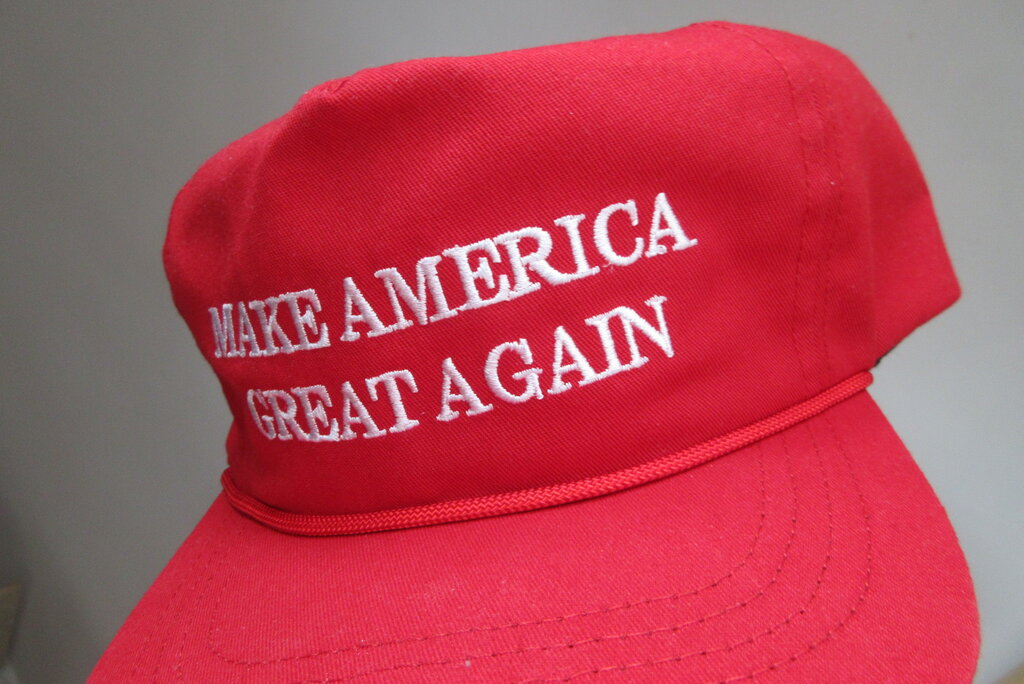
nativism
noun
A political policy of promoting the interests of native inhabitants against those of immigrants.
Weaponizing The 'Deep State'
To solidify the 'people vs. elite' narrative, a clear villain is needed. For the MAGA movement, this villain is often personified as the ''. This term refers to a supposed clandestine network of unelected government officials and power brokers who secretly manipulate state policy, thwarting the will of the people and their elected leaders.
This concept is a powerful tool for populist leaders. When a policy fails or a promise goes unfulfilled, the blame can be placed on these invisible, internal enemies. It allows a leader to be both the head of the government and its chief critic, running against the very institutions they are supposed to command. Every investigation, regulation, or piece of negative press can be framed as an attack by the Deep State, reinforcing the sense of being under siege and strengthening the bond between the leader and their supporters.
The Deep State narrative transforms bureaucratic obstacles into evidence of a conspiracy, delegitimizing institutions and fueling anti-establishment anger.
This skepticism toward institutions marks a profound challenge to the traditional functioning of the state. It questions the legitimacy of everything from the electoral process and the justice system to intelligence agencies and public health organizations. By redefining the state not as a neutral arbiter but as a tool of a corrupt elite, this populist framework encourages its followers to trust only the movement's leader, who is presented as the sole defender of the people's will.
Now, let's test your understanding of these core concepts.
What is the 'vertical cleavage' that populist movements like MAGA create, according to the provided text?
How did the focus of the Tea Party movement evolve, paving the way for the MAGA movement?
The ideas we've covered are key to understanding this modern political phenomenon. They represent a significant shift in how a large portion of the electorate views politics, power, and their place in the nation.