The Life of Martin Luther King Jr.
Early Life and Education
A Foundation in Atlanta
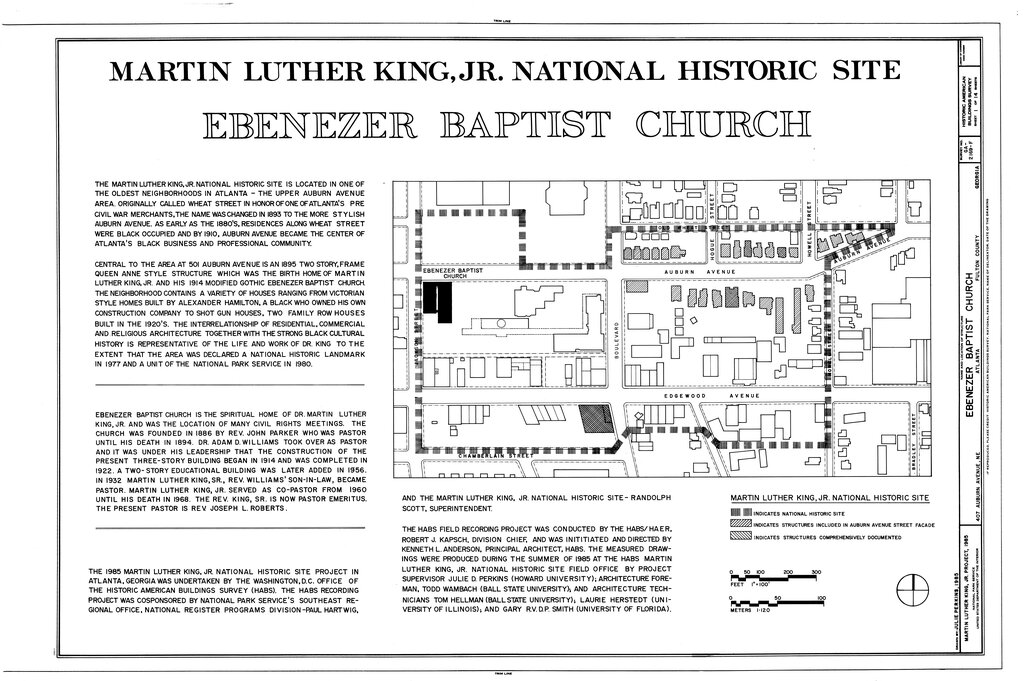
Martin Luther King Jr. was born Michael King Jr. on January 15, 1929, in Atlanta, Georgia. His father was a pastor at the Ebenezer Baptist Church, a prominent Black congregation. The family lived in a comfortable middle-class home on Auburn Avenue, a street known as a hub for Black life and business. Young Michael was part of a close-knit family and a vibrant community, but the world outside was deeply segregated.
In 1934, after a trip to Germany, his father changed his own name and his son's to Martin Luther King, in honor of the Protestant reformer. This change was significant, signaling a stand for moral conviction.
King's first direct experience with racial discrimination came early. At age six, he was told by the parents of his white playmates that they could no longer play together because they were now attending segregated schools. The sting of that moment, and his mother's explanation of the unjust system of segregation, left a lasting impression.
The Path of a Scholar
A gifted student, King skipped two grades and entered Morehouse College at the age of 15. Morehouse was an acclaimed historically Black college, and it was here that King's intellectual and spiritual horizons expanded dramatically. He studied sociology and was deeply influenced by the college president, Dr. Benjamin E. Mays, a theologian and outspoken advocate for racial equality. Mays became a mentor to King, encouraging him to see the ministry as a vehicle for social protest.
After graduating from Morehouse in 1948, King moved north to attend Crozer Theological Seminary in Pennsylvania. At Crozer, one of the few integrated seminaries at the time, he excelled academically and was elected student body president. He dove into the works of philosophers and theologians, studying everything from Plato to Walter Rauschenbusch, a key figure in the Social Gospel movement. It was at Crozer that he first encountered the teachings of Mahatma Gandhi and became convinced that nonviolent resistance was the most powerful weapon for oppressed people.
theology
noun
The study of the nature of God and religious belief.
His quest for knowledge continued at Boston University, where he enrolled in the doctoral program for systematic theology in 1951. His studies focused on the concept of a personal God and the ethical responsibilities of individuals. While in Boston, he met Coretta Scott, an aspiring singer studying at the New England Conservatory of Music. They married in 1953, and she became his partner in both life and the struggle for civil rights. King completed his Ph.D. in 1955, his dissertation comparing the concepts of God in the thinking of two modern theologians.
Shaping a Philosophy
King's education was not just an academic exercise. It was the forging of a philosophy that would change the world. From his father, he inherited a powerful preaching style and a deep-rooted Baptist faith. From Benjamin Mays at Morehouse, he learned that this faith demanded social action.
At Crozer and Boston University, he built the intellectual framework for that action. He synthesized the Christian call to love one's enemies with Gandhi's method of nonviolent resistance. The result was a unique and powerful philosophy: a commitment to nonviolent protest grounded in religious faith and moral conviction. This unique blend of ideas would become the foundation of his leadership in the Civil Rights Movement.
King's formative years combined the emotional power of the Black church, the intellectual rigor of higher education, and a profound commitment to social justice.
Ready to test your knowledge?
What was Martin Luther King Jr.'s name at birth?
The decision by Martin Luther King Jr.'s father to change both of their names was significant because it signaled...
King's early life and extensive education provided the critical foundation for his future as a leader. His experiences in the segregated South gave him a clear understanding of injustice, while his intellectual journey gave him the tools to fight it.