The Life and Works of Mary Shelley
Mary Shelley's Early Life
A Radical Inheritance
Mary Shelley was born into a world of words and radical ideas. Her birth on August 30, 1797, in London, was the union of two of the most formidable intellectual figures of the late 18th century. Her mother was Mary Wollstonecraft, a pioneering feminist and author of A Vindication of the Rights of Woman. Her father was William Godwin, a philosopher and the founder of modern anarchism.
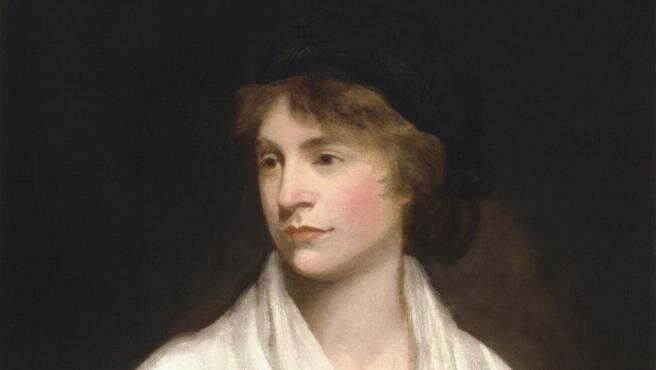
This powerful intellectual legacy was immediately marked by tragedy. Just eleven days after giving birth, Mary Wollstonecraft died from complications of childbirth. William Godwin was left to raise his infant daughter, Mary, and her older half-sister, Fanny Imlay.
Growing up, Mary was surrounded by the lingering presence of the mother she never met. Godwin encouraged her to read her mother’s works and revere her memory. This created a profound, lifelong connection to Wollstonecraft, shaping Mary's own sense of identity and her future writing.
Living in the shadow of a celebrated mother she never knew, Mary felt a constant pressure to live up to her intellectual inheritance.
An Unconventional Education
Mary did not receive a formal education. Her father, a critic of the formal schooling system, educated her himself. Her classroom was his extensive library, and her curriculum was whatever sparked her curiosity. She read voraciously, from the classics to the latest scientific theories. The Godwin household was a hub for the great thinkers of the day. Poets, scientists, and political radicals like Samuel Taylor Coleridge and William Hazlitt were frequent visitors, and young Mary listened intently to their impassioned debates.
This environment was her true school. It trained her not just to read, but to think critically, question authority, and engage with complex ideas. While she learned Latin, French, and Italian, her most important lessons were in the art of intellectual inquiry.
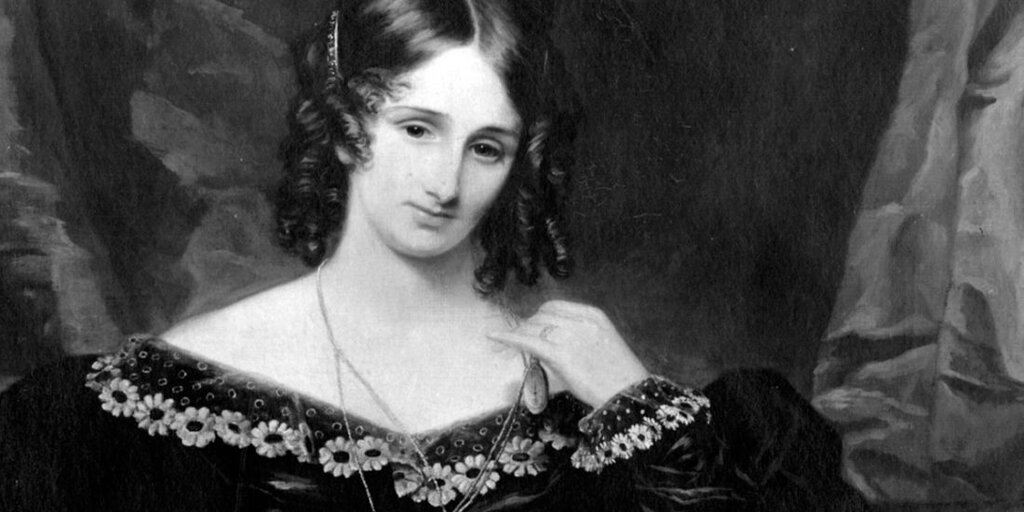
In 1801, Godwin remarried a widow named Mary Jane Clairmont. The new Mrs. Godwin brought her own two children into the household, and the family dynamics grew complicated. Mary had a difficult relationship with her stepmother, who was often described as difficult and manipulative. This tension in the home led Mary to seek solace in her imagination, often retreating to her mother's gravesite in St. Pancras churchyard to read and write.
A Fateful Meeting
When Mary was sixteen, a charismatic young poet named Percy Bysshe Shelley began visiting the Godwin household. He was a fervent admirer of William Godwin's political philosophy and became his disciple. Percy was brilliant, rebellious, and already married.
Mary and Percy were drawn to each other instantly. They connected over their shared love of literature and their unconventional views on society and relationships. They began meeting in secret at Mary Wollstonecraft’s grave, a symbolic place that connected Mary’s past with her unfolding future.
In July 1814, Mary, not yet seventeen, eloped to France with Percy, accompanied by her stepsister, Claire Clairmont. This act marked a definitive break from her father and the end of her childhood. It plunged her into a life of travel, financial hardship, and social scandal, setting the stage for the experiences that would eventually lead her to write her masterpiece, Frankenstein.
Let's check your understanding of Mary Shelley's early years.
Who were Mary Shelley's parents?
How was Mary Shelley educated?
Mary Shelley’s formative years were a whirlwind of intellectual stimulation and personal tragedy, forging a mind that would later challenge the literary and social norms of her time.