The Life and Times of Vardo Karolis
Introduction to Lithuanian History
A Power Emerges
In the early Middle Ages, the lands that would become Lithuania were home to various pagan Baltic tribes. Facing pressure from the Teutonic and Livonian Orders—crusading military states—these tribes began to unite. By the mid-13th century, a leader named Mindaugas had forged them into a single state. In 1253, he was crowned King of Lithuania, marking the birth of the nation.
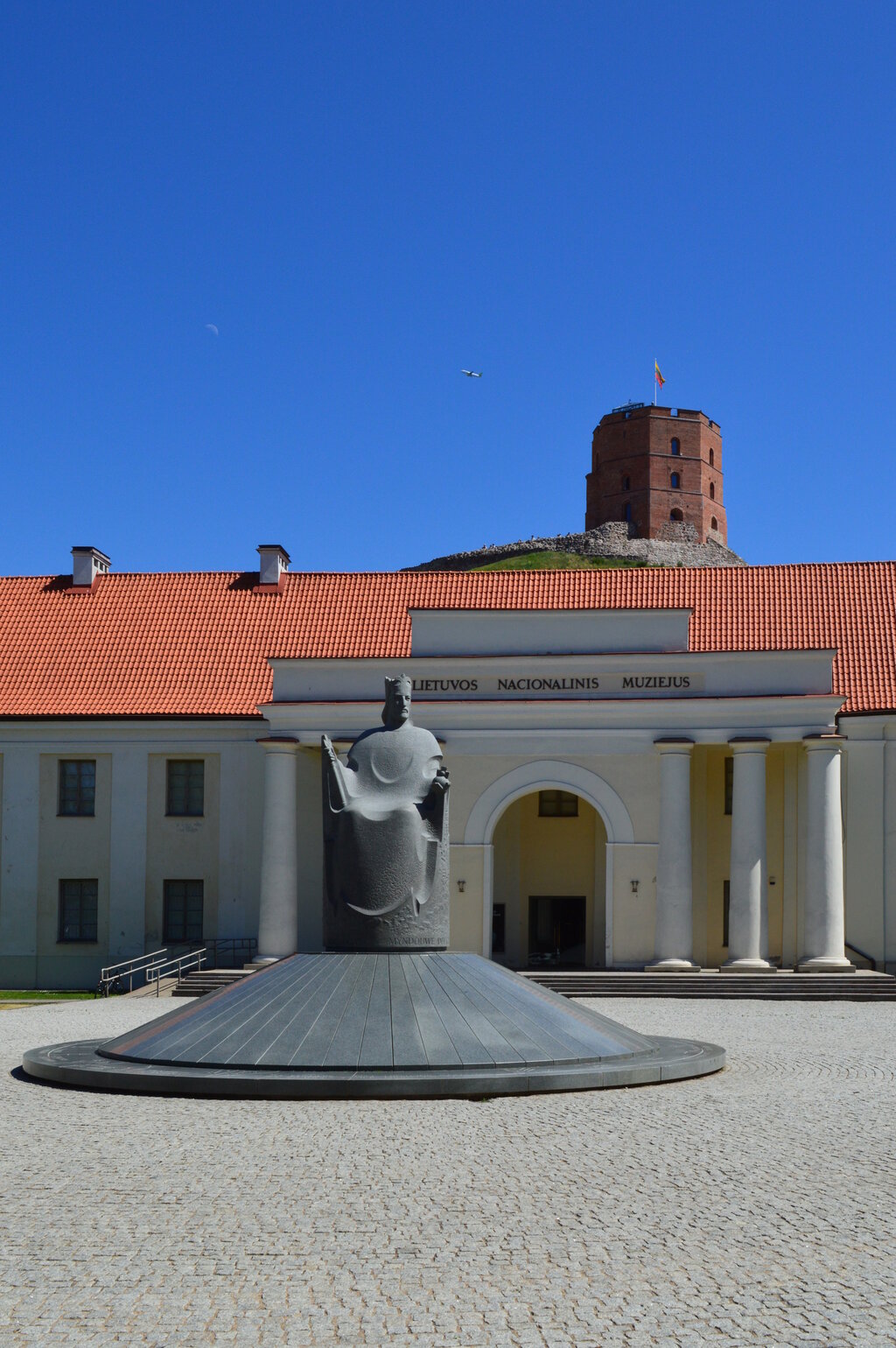
Mindaugas's kingdom evolved into the Grand Duchy of Lithuania. Over the next two centuries, it grew at a remarkable pace. Through a combination of military conquest and strategic alliances, the Grand Duchy expanded eastward, eventually stretching from the Baltic Sea to the Black Sea. It became a major power in Eastern Europe, a vast and diverse state that included large populations of Ruthenians (ancestors of modern Belarusians and Ukrainians).
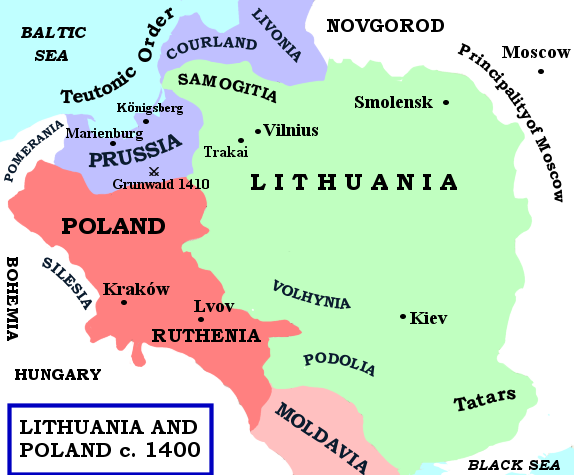
Despite its power, Lithuania remained one of the last pagan states in Europe, a fact that drew continued conflict with its Christian neighbors. This religious and political isolation would soon lead to a pivotal change in its history.
The Commonwealth of Two Nations
Facing the persistent threat of the Teutonic Knights, Grand Duke Jogaila of Lithuania made a strategic move. In 1385, he agreed to marry the young queen of Poland, Jadwiga. This agreement, the Union of Krewo, required Jogaila to convert to Christianity and unite Lithuania with Poland under his rule. This personal union laid the groundwork for a deeper, more lasting alliance.
The partnership culminated in 1569 with the Union of Lublin, which officially created the Polish-Lithuanian Commonwealth. It was one of the largest and most populous countries in 16th- and 17th-century Europe.
The Commonwealth was a unique political entity for its time. It was an elective monarchy, where the nobility (the szlachta) elected the king and enjoyed extensive legal rights and privileges known as the "Golden Liberty." While the Kingdom of Poland and the Grand Duchy of Lithuania were formally equal partners, Polish culture and language gradually became dominant, especially among the upper classes.
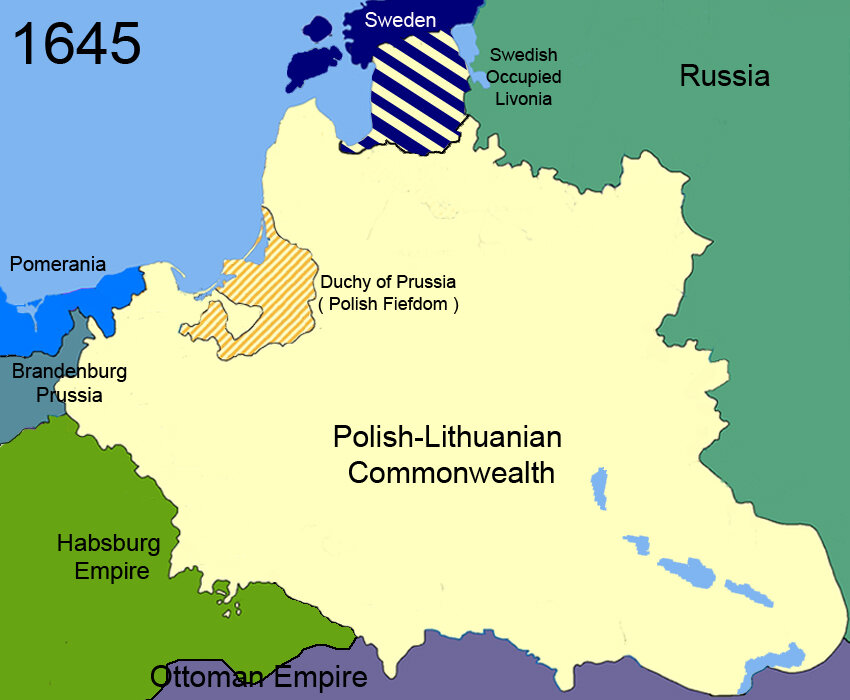
For over two centuries, the Commonwealth was a major cultural and military force. However, internal conflicts, wars with neighboring powers like Sweden, Russia, and the Ottoman Empire, and the weakening of the central monarchy led to its decline. By the late 18th century, the state was unable to defend itself. In a series of three "partitions" in 1772, 1793, and 1795, Russia, Prussia, and Austria carved up and annexed the Commonwealth's entire territory, wiping it off the map of Europe.
Struggle and Rebirth
For more than a century, Lithuania ceased to exist as an independent state. Most of its territory fell under the control of the Russian Empire, which implemented policies of Russification to suppress Lithuanian language and culture. Despite this, a national consciousness grew, culminating in a powerful national revival movement in the late 19th century.
The chaos of World War I provided an opportunity. On February 16, 1918, the Council of Lithuania declared the restoration of an independent state. This marked the beginning of the modern Republic of Lithuania. The interwar period was a time of building state institutions, fostering a national identity, and navigating complex relationships with neighbors, particularly over the disputed Vilnius Region.
This hard-won independence was short-lived. In 1940, as part of a secret pact between Nazi Germany and the Soviet Union, Lithuania was occupied and annexed by the Soviets. A brutal year of Soviet rule was followed by Nazi German occupation from 1941 to 1944. After the war, the Soviet Union reoccupied Lithuania, beginning nearly five decades of rule from Moscow.
Throughout the Soviet era, Lithuanians resisted through armed partisan warfare in the early years and later through cultural and political dissent. In the late 1980s, the reform movement known as Sąjūdis gained momentum, organizing massive peaceful protests.
On March 11, 1990, Lithuania became the first Soviet republic to declare its independence restored. After a tense period and a violent crackdown by Soviet forces, Moscow finally recognized Lithuania's independence in September 1991.
Since then, Lithuania has firmly anchored itself in the West, joining both NATO and the European Union in 2004. This long and often turbulent history has forged a resilient national identity, deeply connected to its language, culture, and enduring quest for freedom.