The Life and Teachings of Apostle Paul
Early Life and Background
A Man of Three Worlds
Before he was Paul the Apostle, a central figure in Christianity, he was Saul of Tarsus. To understand the man he became, you first have to understand the world that shaped him. Saul didn't just have one identity; he had three. He was a devout Jew, a citizen of a bustling Greek city, and a citizen of the Roman Empire.
First and foremost, Saul was Jewish. He came from the tribe of Benjamin, one of the twelve tribes of Israel, and was raised in a family that strictly followed Jewish law and traditions. This heritage was the bedrock of his identity. It shaped his worldview, his moral compass, and his understanding of God.
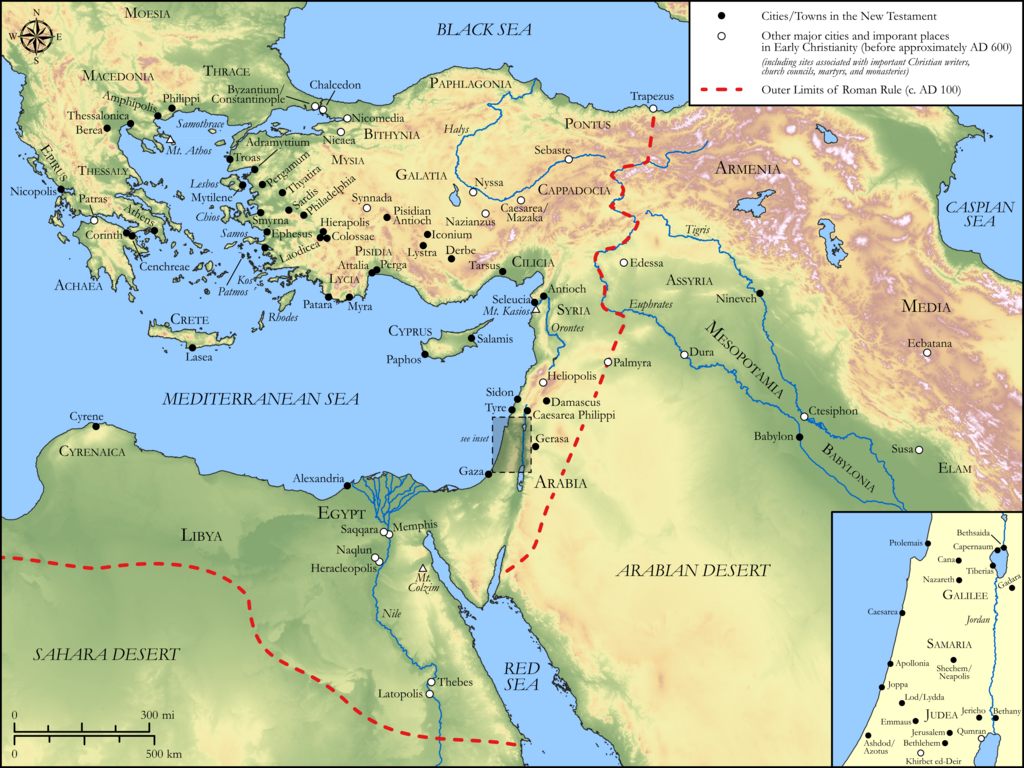
Paul was born in Tarsus in modern day Turkey (of the Tribe of Benjamin) and trained to be a Pharisee under the guidance of Gamaliel.
Saul grew up in Tarsus, the capital of the Roman province of Cilicia (modern-day Turkey). This was no quiet village. Tarsus was a major center for trade, culture, and education, famous for its schools of philosophy. It was a thoroughly Hellenistic, or Greek-influenced, city. Growing up there meant Saul was exposed to Greek language, ideas, and customs from a young age. He was comfortable in the wider Mediterranean world.
On top of this, Saul held a rare and valuable status: Roman citizenship. This wasn't common for Jews in the provinces. It granted him special legal rights and protections throughout the empire, a privilege that would become significant later in his life.
A Scholar and a Zealot
As a young man, Saul's family sent him to Jerusalem to receive the best possible Jewish education. He studied under Gamaliel, one of the most respected rabbis of the time. There, Saul dedicated himself to becoming a Pharisee.
Pharisee
noun
A member of an ancient Jewish sect distinguished by strict observance of the traditional and written law, and commonly held to have pretensions to superior sanctity.
The Pharisees were a group known for their intense devotion to the Torah, the Jewish scriptures. They believed in the resurrection of the dead and meticulously applied ancient laws to everyday life. Saul excelled in this environment. He wasn't just a student; he was a star pupil, driven by a passionate commitment to his faith. He described himself as advancing in Judaism "beyond many of my own age among my people," being "extremely zealous" for the traditions of his ancestors.
Persecutor of The Way
This very zeal is what led Saul to his first encounter with Christianity, which was then a new and controversial Jewish sect often called "The Way."
From Saul's perspective, this new movement was a dangerous threat. The followers of Jesus of Nazareth claimed he was the Messiah and that he had been resurrected from the dead. To a devout Pharisee like Saul, these teachings sounded like blasphemy. He saw it as his religious duty to stamp out this heresy before it could corrupt Judaism.
He didn't just debate or disagree. Saul became an active persecutor of the early church. The Book of Acts introduces him as being present at the stoning of Stephen, the first Christian martyr, giving his approval to the execution. This was just the beginning.
Saul launched a campaign of violence against the new faith, dragging men and women from their homes and throwing them into prison. His goal was to destroy the church completely.
His reputation grew. He obtained letters from the high priest in Jerusalem authorizing him to travel to other cities, like Damascus, to hunt down Christians and bring them back for punishment. It was this intense, educated, and zealous man, a product of Jewish tradition, Greek culture, and Roman law, who set out to eradicate the very faith he would one day champion.
Ready to check your understanding?
Which of the following best describes the three core cultural identities of Saul before his conversion?
In Jerusalem, Saul studied to be a Pharisee under the respected rabbi named ________.