The Libertarian Movement Explained
Origins of Libertarianism
Ancient Roots of Liberty
The core ideas of libertarianism didn't appear out of thin air. They have deep roots stretching back to ancient philosophy. Long before formal political theories, thinkers were already wrestling with the relationship between the individual and the state.
In ancient China, the philosopher Laozi taught the concept of wu wei, which translates roughly to "non-action" or "effortless action." In a political sense, this suggested that the best rulers were those who interfered the least, allowing society to function according to its natural order. This idea of a spontaneous, self-regulating social order is a distant echo of modern libertarian thought.
In the West, the Greek and Roman Stoics developed the idea of natural law. They believed that a rational and purposeful order was built into the universe, and that human laws should align with this higher, natural law. This implies that there are moral principles that exist independently of any government, and that an individual's rights are not just gifts from a king or a legislature. They are inherent.
The Stoic concept of natural law laid the groundwork for the idea that individuals possess rights that no government can legitimately take away.
The Enlightenment and Natural Rights
The real turning point for liberty came during the Enlightenment in the 17th and 18th centuries. This period saw a massive shift in how people thought about government, authority, and individual rights. The central figure in this transformation was the English philosopher John Locke.
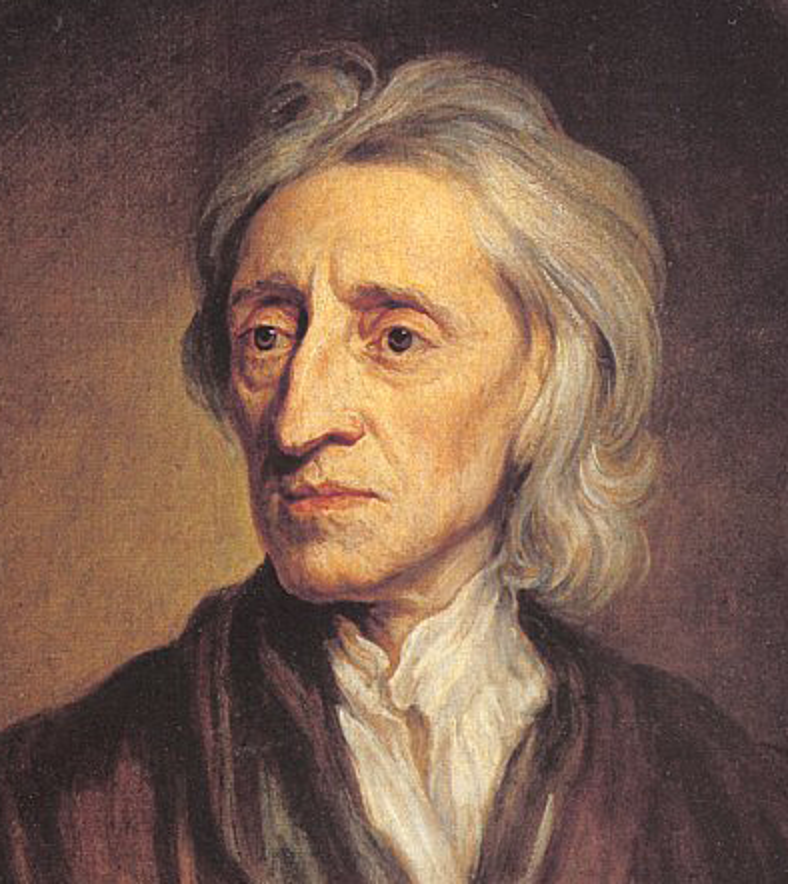
Locke argued against the divine right of kings, the idea that monarchs derived their authority directly from God. Instead, he proposed a radical new theory: governments are formed through a "social contract" among free individuals. People consent to give up a small portion of their freedom to a government in exchange for the protection of their natural rights.
What are these rights? Locke defined them as life, liberty, and property. He believed these rights were not granted by the state, but were inherent to all human beings. Therefore, the sole legitimate purpose of government was to protect these pre-existing rights. If a government overstepped its bounds and violated them, the people had the right to alter or abolish it.
The Enlightenment, also known as the Age of Reason, witnessed philosophers like John Locke and Immanuel Kant emphasizing reason, liberty, and the scientific method.
Locke's ideas were revolutionary. They established the individual, not the state, as the primary unit of society and framed government as a servant to the people, not their master. This way of thinking is the bedrock of classical liberalism, the direct intellectual ancestor of modern libertarianism.
Economic and Political Freedom
Locke's philosophy of political liberty soon found an economic counterpart in the work of Scottish philosopher Adam Smith. In his 1776 masterpiece, The Wealth of Nations, Smith argued for economic freedom, or what he called a "system of natural liberty." He believed that when individuals are free to pursue their own economic interests, an "invisible hand" guides their actions to promote the good of the entire society, even if that isn't their intention.
Smith was critical of the heavy-handed government economic policies of his day, known as mercantilism. He argued that tariffs, monopolies, and other regulations stifled innovation and made everyone poorer. A free market, he contended, would lead to greater prosperity for all.
Adam Smith's "invisible hand" metaphor suggests that voluntary trade in a free market can lead to widespread social benefits.
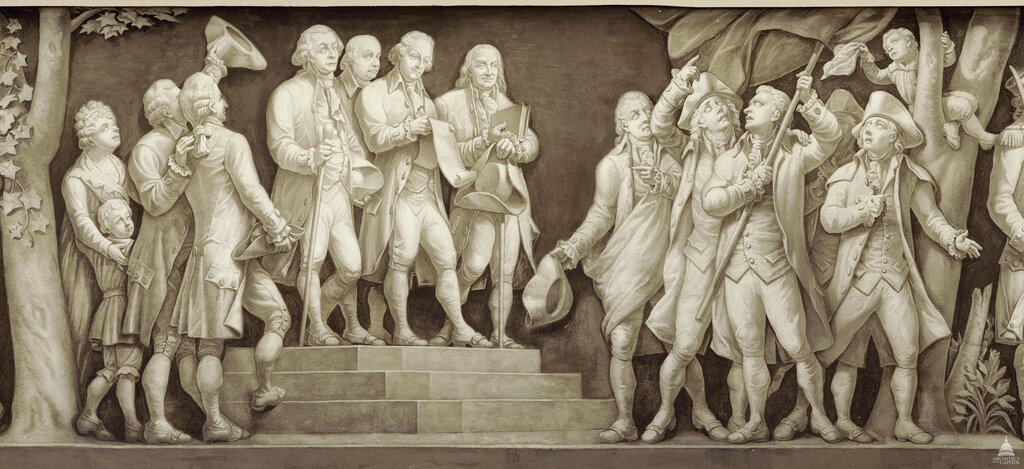
These ideas of political and economic freedom crossed the Atlantic and found fertile ground in the American colonies. Thomas Jefferson, the principal author of the Declaration of Independence, was a devoted student of Locke. The Declaration's famous phrase, "Life, Liberty and the pursuit of Happiness," is a direct adaptation of Locke's natural rights. It framed the American Revolution as a struggle for the universal rights of mankind.
The Evolution in the 19th Century
Throughout the 19th century, these classical liberal ideas continued to evolve. Thinkers like the French economist Frédéric Bastiat became famous for their clear, forceful arguments against government intervention and in favor of free trade. His famous essay, "The Law," is a classic defense of the idea that law's only purpose is to protect life, liberty, and property.
In the United States, a school of thought known as individualist anarchism emerged. Thinkers like Lysander Spooner took Locke's ideas to their logical conclusion, arguing that any government that was not based on the explicit consent of every single individual was illegitimate. While more radical than mainstream classical liberalism, these thinkers pushed the boundaries of what it meant to value individual sovereignty.
At the same time, other arguments for liberty appeared. The English philosopher John Stuart Mill, in his book On Liberty, defended individual freedom not on the basis of natural rights, but on utilitarian grounds. He argued that allowing the greatest possible individual freedom—especially in speech and thought—would lead to the greatest happiness for the greatest number of people in the long run. This introduced a new way to justify a free society.
| Thinker | Core Idea | Primary Justification |
|---|---|---|
| John Locke | Government must protect life, liberty, and property. | Natural Rights |
| Adam Smith | Free markets lead to prosperity. | Economic Efficiency |
| J.S. Mill | Maximum individual liberty should be protected. | Social Utility |
These different threads—natural rights, economic freedom, and utilitarian arguments—all contributed to a rich and varied tradition of thought centered on individual liberty. It was from this classical liberal heritage that the more formally defined libertarian movement would emerge in the 20th century.
Ready to check your understanding of these foundational ideas?
The ancient Chinese concept of wu wei, taught by Laozi, aligns with early libertarian principles by suggesting that...
According to John Locke, what is the sole legitimate purpose of a government formed by a social contract?
By tracing these historical roots, we can see how the core principles of libertarianism developed over centuries of philosophical inquiry and political change.