The Letter R
Origins of R
From Head to Letter
The story of the letter 'R' begins over 3,000 years ago with a Semitic character called 'resh'. In languages like Hebrew and Aramaic, resh meant 'head'. The earliest pictograph for this sound looked like a profile of a human head.
resh
noun
The twentieth letter of the Semitic abjads, including the Phoenician, Aramaic, Hebrew, Syriac, and Arabic alphabets.
The Phoenicians, skilled sailors and traders, adopted this symbol for their alphabet. They simplified the drawing into a more abstract shape: a small triangle on top of a vertical line, still vaguely resembling a head and neck. It looked something like the number 4, but facing left.
Greeks and Romans
When the ancient Greeks adopted the Phoenician alphabet, they borrowed 'resh' but made a few key changes. First, they flipped its direction to match their right-to-left writing style. They also dropped the name 'resh' and called it 'rho' (Ρ). Early versions of rho looked almost identical to the modern capital letter 'P'.
The Greek letter Rho (Ρ ρ) is pronounced like a rolled or trilled “r,” similar to the Spanish “r” in “perro.”
The Romans, in turn, borrowed the Greek alphabet to create their own Latin script. They faced a problem: their letter for the 'p' sound (Pi) looked exactly like the Greek rho. To avoid confusion, they added a small diagonal leg to the rho shape. This small addition created the letter 'R' we know today.
Over centuries, scribes and printers modified the letter's shape. The straight lines of the Roman capital 'R' gave way to more curved forms in handwriting. The lowercase 'r' we use today evolved from these faster, more fluid writing styles during the Middle Ages.
Cultural Footprint
The letter 'R' carries different weights in different languages. In some, like Spanish and Italian, it represents a trilled or rolled sound that requires a distinct vibration of the tongue. This sound connects back to the strong, guttural sound of its Semitic ancestor.
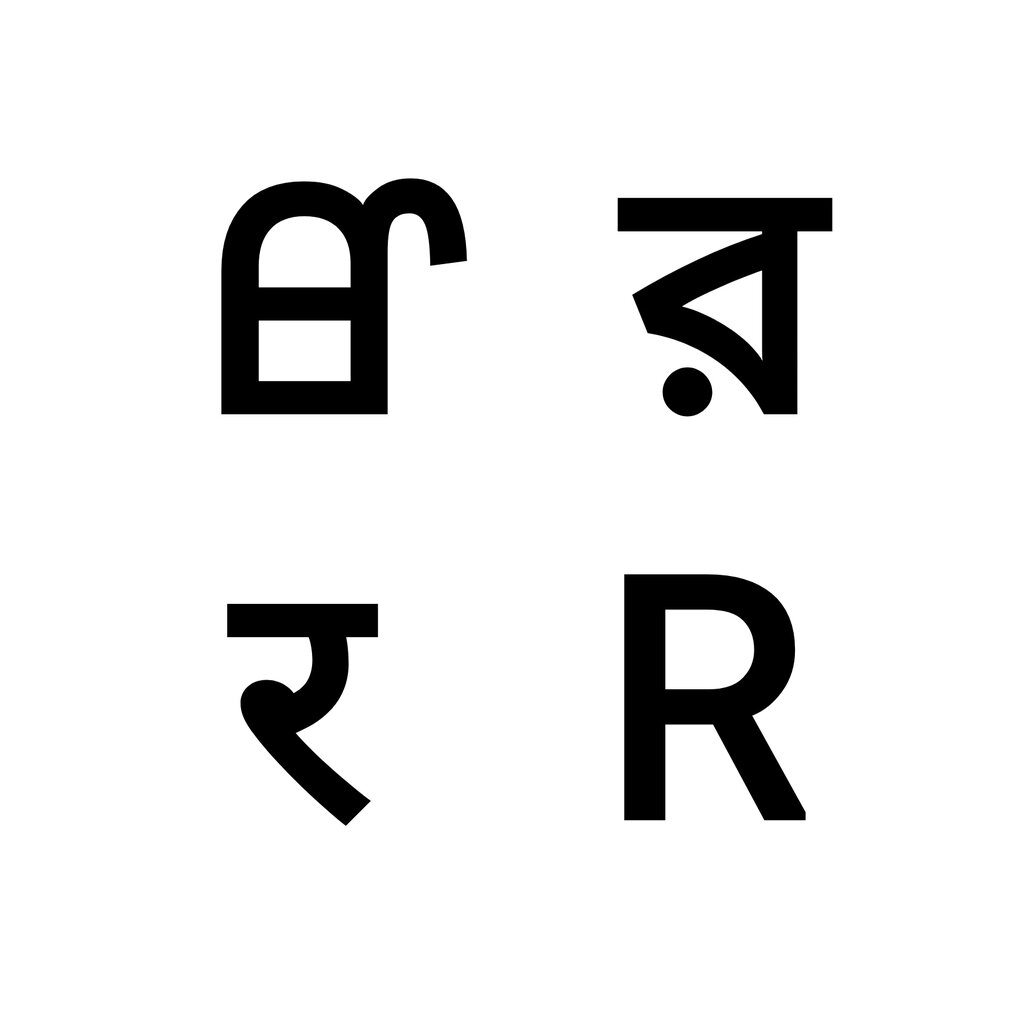
In Roman culture, the letter was sometimes called the littera canina, or the 'canine letter', because its snarling sound was thought to resemble a dog's growl. This simple character, born from the drawing of a head, has traveled through empires and languages to become a fundamental part of how we communicate.
Let's review what we've learned about the long journey of the letter 'R'.
What was the original meaning of 'resh', the Semitic ancestor of the letter 'R'?
Which civilization modified the Greek letter 'rho' (which looked like a 'P') by adding a diagonal leg to create the 'R' we use today?