The Letter A
Introduction to the Letter A
The First Letter
The letter 'A' is more than just the beginning of the alphabet. Its journey to the front of the line is a story stretching back thousands of years. It began not as a letter, but as a picture.
From Ox to Alpha
The earliest ancestor of 'A' was a pictogram of an ox's head, drawn around 1800 BCE. In the ancient Proto-Sinaitic script, this symbol represented the word for ox, which was something like 'alp.
Over centuries, this picture was simplified. The Phoenicians, masters of sea trade, created a more abstract symbol they called 'aleph'. To them, it didn't represent the vowel sound we know. Instead, it stood for a glottal stop, a subtle catch in the throat, like the sound in the middle of "uh-oh."
The Greeks adopted the Phoenician alphabet around 800 BCE. Since the Greek language didn't use the glottal stop, they had a spare symbol. They repurposed 'aleph' to represent the vowel sound /a/, flipped it upright, and called it 'alpha'.
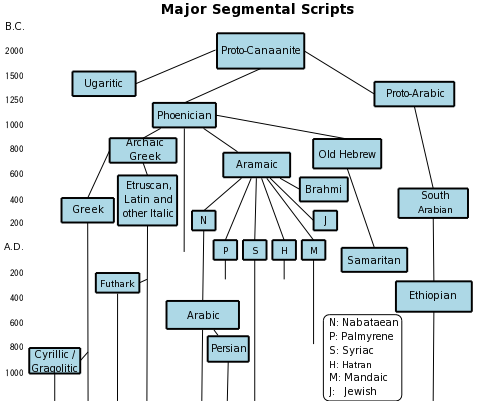
Finally, the Romans adopted the alphabet from the Greeks via the Etruscans. They perfected the letter's form, giving us the clean, symmetrical 'A' that we use today. The basic shape has remained remarkably stable for over two thousand years.
Why Number One?
Why does 'A' come first? Its prime position isn't an accident. The order of the letters was established by the Phoenicians. Their first letter, 'aleph' (the ox), was a fundamentally important concept in their agricultural society. This ordering was practical for cataloging and teaching, and it was so effective that it was preserved when the Greeks, and later the Romans, adapted the script for their own languages.
So, when you see the letter 'A', you're looking at a symbol whose history began with a simple drawing of an animal vital to early civilization.
That's how a picture of an ox head became the first letter of the English alphabet.