The Legacy of Mikoyan-Gurevich MiG Aircraft
Origins and Early Developments
The Beginning of a Partnership
On the eve of World War II, the Soviet Union was scrambling to modernize its air force. The existing fighters were quickly becoming obsolete compared to new German designs. In response, the government sought fresh ideas and new leadership, leading to the creation of several specialized aircraft design teams.
Out of this initiative, on December 8, 1939, a new design bureau was formed at Moscow's Aviation Plant No. 1. It was led by two talented engineers: Artem Mikoyan and Mikhail Gurevich. Mikoyan was a savvy political operator and organizer, while Gurevich was a seasoned aircraft designer with a deep technical background. Together, they formed a balanced and effective team.
It was the abbreviation of the names of two Soviet aircraft designers: Artyom Mikoyan and Mikhail Gurevich, and their partnership ended up changing the face of military aviation — in the Cold War and beyond.
Their new organization was officially known as the Mikoyan-Gurevich Design Bureau. The aircraft they designed would carry the prefix "MiG," a name that would soon become famous worldwide.
First Fighters
The bureau's first assignment was urgent: create a high-altitude fighter-interceptor. The result was the I-200, a prototype that would soon be designated the MiG-1. The design was centered around the powerful Mikulin AM-35A liquid-cooled V-12 engine, which performed best at high altitudes. The goal was to create a plane that could climb quickly to intercept enemy bombers.
The MiG-1 first flew in April 1940. It was fast, achieving speeds over 600 km/h, and had a heavy armament for the time. However, the design was rushed. Pilots found it difficult to handle, with poor stability and tricky landing characteristics. The cockpit was cramped, and the range was limited. While promising, it was clear that major improvements were needed.
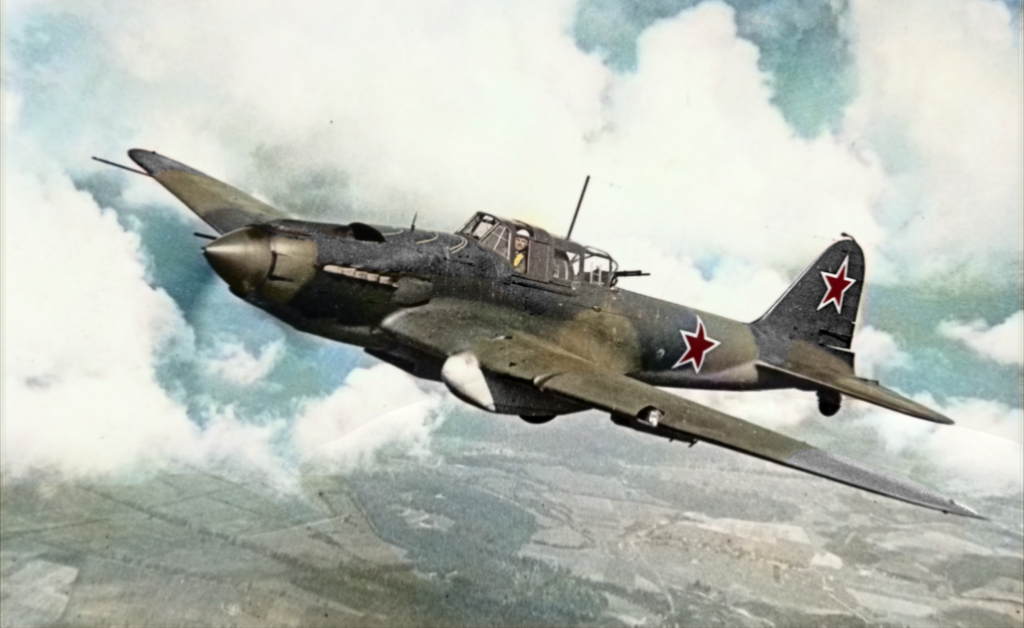
Learning from the shortcomings of the MiG-1, the bureau immediately began work on a refined version. This became the MiG-3. The designers extended the fuselage for better stability, added more fuel capacity to increase its range, and improved the armament. The engine was moved slightly forward to improve the center of gravity, making the plane easier to control.
The MiG-3 entered service in early 1941, just months before the German invasion of the Soviet Union. It retained the MiG-1's excellent high-altitude performance but remained a challenging aircraft to fly, especially for inexperienced pilots.
Impact on the War Effort
When Germany invaded in June 1941, the MiG-3 was one of the most advanced fighters in the Soviet inventory. However, its specialization as a high-altitude interceptor was a poor match for the reality of the Eastern Front. Most air combat took place at low and medium altitudes, where the MiG-3's performance was lackluster compared to its German adversaries like the Bf 109.
Despite this mismatch, Soviet pilots flew the MiG-3 bravely, using it for reconnaissance and ground-attack missions. Over 3,000 were built, and they played a significant role in the desperate defense of Moscow in late 1941. Production of the MiG-3 was eventually canceled in late 1941 to prioritize manufacturing of the more versatile Il-2 ground-attack aircraft, which used the same engine.
Though their wartime service was mixed, the MiG-1 and MiG-3 were crucial first steps. They established the Mikoyan-Gurevich bureau as a serious design house and provided invaluable experience. The lessons learned from these early piston-engine fighters would directly inform the bureau's next-generation designs, paving the way for the jet age.
What was the official designation for the prototype that would become the MiG-1?
The Mikoyan-Gurevich Design Bureau was established in response to what specific strategic need?