The Legacy of Martin Luther King Jr.
Early Life and Education
The Preacher's Son
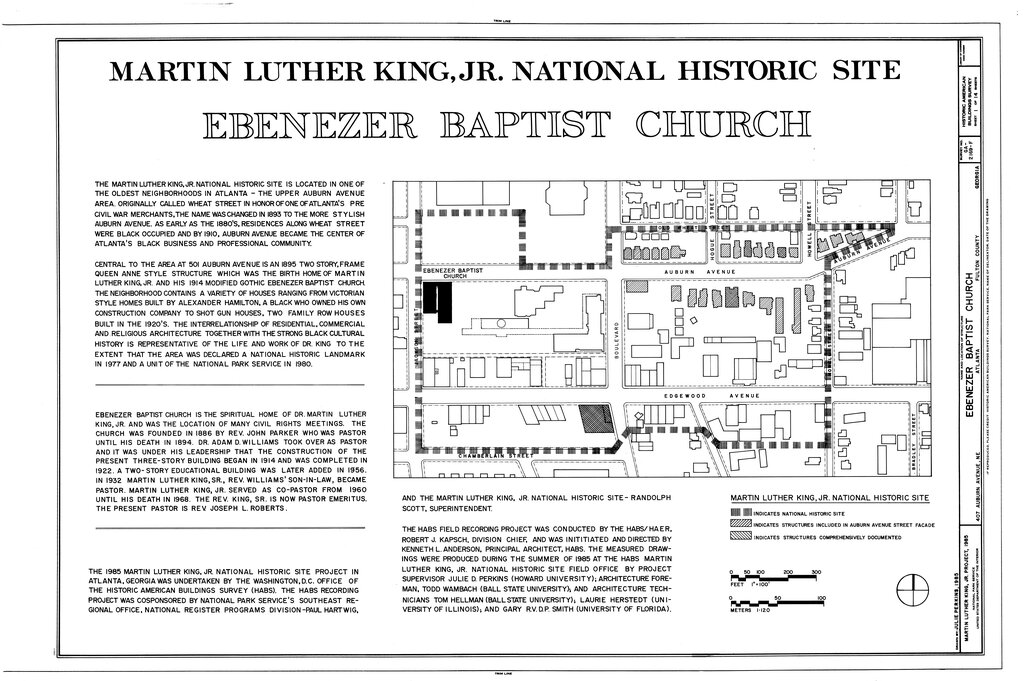
Martin Luther King Jr. was born Michael King Jr. on January 15, 1929, in Atlanta, Georgia. His father, Michael King Sr., was the pastor of the Ebenezer Baptist Church, a prominent Black congregation. The family lived on Auburn Avenue, the bustling heart of Atlanta's African American community. Life revolved around the church, family, and a tight-knit neighborhood that insulated them, to a degree, from the harsh realities of the segregated South.
Both his father and maternal grandfather were preachers, deeply respected figures in the community. His father, who later changed his own name and his son's to Martin Luther King, was a strong and outspoken leader. He fought against racial discrimination from the pulpit and in his daily life, providing a powerful example for his son. From his mother, Alberta Williams King, a former schoolteacher, Martin learned compassion and a quiet strength.
Despite the relative comfort of his middle-class upbringing, the sting of racism was unavoidable. King later recalled a childhood incident where the parents of his white friend suddenly forbade them from playing together. When he asked his own parents why, they explained the history of slavery and segregation. It was one of his first personal encounters with the system he would later dedicate his life to dismantling.
segregation
noun
The enforced separation of different racial groups in a country, community, or establishment.
A Scholar's Path
King was a gifted student, so much so that he skipped two grades in high school. He entered Morehouse College, a distinguished historically Black college in Atlanta, at the young age of 15. At Morehouse, his worldview expanded significantly. He was mentored by the college's president, Dr. Benjamin E. Mays, a theologian and outspoken advocate for racial equality. Mays's intellectual and spiritual guidance profoundly influenced King's thinking.
Initially, King was uncertain about following his father into the ministry, considering careers in medicine or law. But his experiences at Morehouse, combined with his desire to effect social change, led him to embrace the calling. He graduated in 1948 with a bachelor's degree in sociology.
King's education was a quest not just for knowledge, but for a philosophy that could challenge injustice.
He then moved north to attend Crozer Theological Seminary in Chester, Pennsylvania. For the first time, King was in an integrated educational setting. He excelled, becoming valedictorian of his class in 1951. At Crozer, he began a serious study of theology and philosophy, immersing himself in the works of thinkers who would shape his own ideology. It was here that he first encountered the teachings of Mahatma Gandhi and became convinced that nonviolent resistance was the most powerful weapon for oppressed people.
King's academic journey culminated at Boston University, where he earned his Ph.D. in systematic theology in 1955. His formal education was complete, but his real-world education in leading a movement was just about to begin. The foundation built in the churches of Atlanta and the halls of academia had prepared him for the monumental task ahead.