The Kurgan Hypothesis Explained
Introduction to Proto-Indo-European Studies
The Great-Great-Grandmother of Languages
Have you ever noticed that the word for “mother” sounds similar in many languages? In Spanish, it’s madre. In French, it’s mère. In German, Mutter. In Russian, mat'. Even in Sanskrit, an ancient language of India, it's mātár.
This isn't a coincidence. These words, and thousands of others, all trace back to a common ancestor: a language spoken roughly 6,000 years ago. Linguists call this prehistoric tongue Proto-Indo-European, or PIE for short.
PIE was never written down. It vanished long before the invention of writing. Yet, we know a surprising amount about it. It’s the ancestor of a massive language family, including English, Spanish, Hindi, Russian, and Persian. Today, about half the world's population speaks a language that descended from PIE.
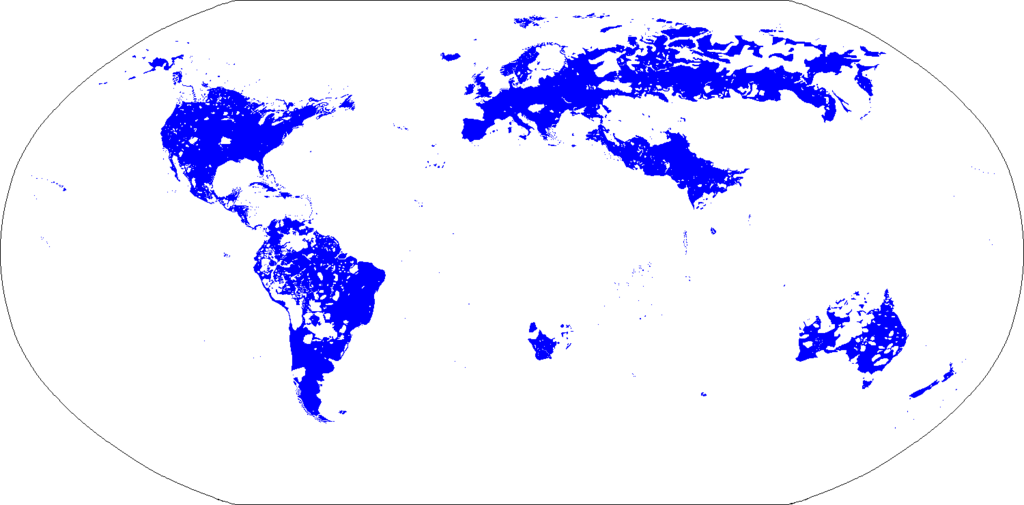
The study of PIE is like linguistic archaeology. Scholars sift through modern and ancient languages, looking for clues to piece together this long-lost mother tongue. By understanding PIE, we can trace the history of peoples, their migrations, and the spread of ideas across continents.
Rebuilding a Lost Language
So how do you reconstruct a language no one has heard for millennia? The main tool is the comparative method. Linguists line up words with similar meanings from different Indo-European languages and look for systematic patterns in their sounds.
These related words are called cognates. They are words in different languages that both derive from the same ancestral word. By comparing cognates, we can see how sounds changed over time and work backward to figure out the original form.
cognate
noun
A word that has the same linguistic derivation as another word; in other words, they descend from the same ancestral word.
Think of it like genetics. By comparing the DNA of siblings and cousins, biologists can infer things about their shared grandparents. Linguists do the same with words.
Let’s look at the word for “ten.”
| Language | Word for 'Ten' |
|---|---|
| Sanskrit | dáśa |
| Latin | decem |
| Gothic | taíhun |
| English | ten |
By analyzing the predictable ways sounds shifted—for example, how a sound in the parent language became a sound in Germanic languages like English and Gothic—linguists can reconstruct the PIE word. In this case, they've reconstructed it as $deḱm̥.
The asterisk indicates that the word is a reconstruction and not an attested form found in any text.
Clues to an Ancient Culture
Language is more than just sounds and grammar; it’s a window into a culture. The vocabulary of PIE gives us hints about the lives of its speakers. This field is sometimes called linguistic paleontology.
For example, the reconstructed PIE language has words for domesticated animals like cows (gʷṓws), sheep (h₂ówis), and horses (h₁éḱwos). It also has words for the wheel (kʷékʷlos), wagons, and plows. This vocabulary suggests the PIE speakers were a pastoral and agricultural society that used wheeled vehicles.
Conversely, there's no widely accepted PIE word for “sea.” This suggests their original homeland was likely an inland region, away from large oceans.
Reconstructed words for family (father, mother, brother, son, daughter), social structure (king), and religion (sky-god) paint a picture of their society.
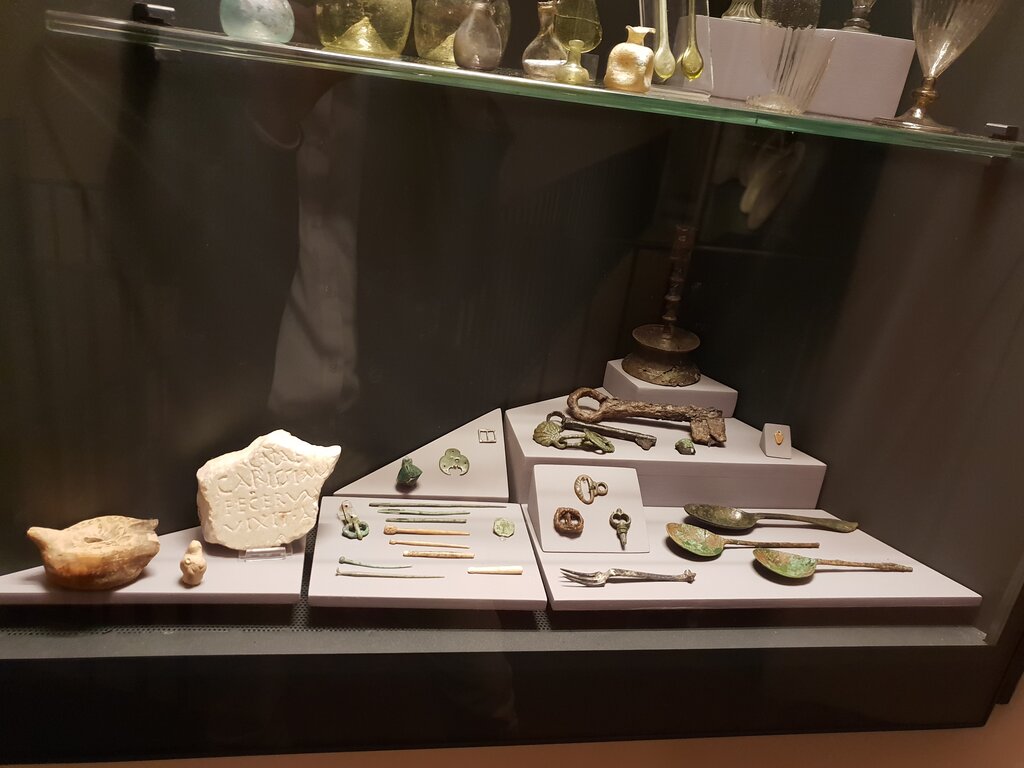
Archaeology provides another layer of evidence. Researchers look for ancient cultures whose material remains—like pottery, tools, and burial sites—match the lifestyle suggested by the language. By combining linguistic and archaeological evidence, we get a fuller picture of who the Proto-Indo-Europeans were and where they might have lived.
A Family of Languages
Over thousands of years, the original PIE-speaking population split into different groups that migrated across Europe and Asia. As they settled in new lands and lost contact with each other, their dialects slowly evolved into distinct languages. This process created the vast Indo-European language family tree.
The family has several major branches, each containing many individual languages.
Some of the main branches include:
- Indo-Iranian: The largest branch, including Hindi-Urdu, Bengali, Persian, and Pashto.
- Hellenic: The branch that contains Greek.
- Italic: This branch includes Latin and all its modern descendants, the Romance languages (Spanish, French, Italian, Portuguese, Romanian).
- Germanic: Home to English, German, Dutch, Swedish, and Norwegian.
- Balto-Slavic: This branch includes Russian, Polish, Czech, Lithuanian, and Latvian.
- Celtic: This includes Irish, Scottish Gaelic, and Welsh.
Studying this family tree helps us understand not just our own language, but our deep connection to millions of people across the globe.
What is Proto-Indo-European (PIE)?
How do linguists primarily reconstruct PIE words, given that it was never written down?