The Krebs Cycle Explained
Cellular Respiration Overview
From Food to Fuel
Every living cell needs energy to function, from muscle cells contracting to brain cells firing. This energy comes from the food we eat, but our cells can't use a sandwich or an apple directly. First, the food must be broken down into simpler molecules, like glucose. Then, through a process called cellular respiration, cells convert the chemical energy stored in glucose into a usable form called adenosine triphosphate, or ATP.
Cellular respiration is the process by which our cells break down glucose or other food molecules, with the aim of producing ATP, a useable form of energy for our cells.
Think of ATP as the energy currency of the cell. When a cell needs to perform a task, it "spends" ATP molecules. Cellular respiration is the power plant that generates this currency, ensuring the cell has a constant supply. This process unfolds in a series of carefully controlled steps, maximizing the amount of energy captured from each glucose molecule.
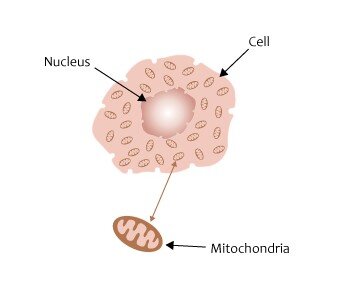
The entire operation is divided into three main stages. Each stage passes its products on to the next, like an assembly line, with the final product being a large amount of ATP.
The Three Stages
Cellular respiration isn't a single event but a metabolic pathway with three key parts: Glycolysis, the Krebs Cycle, and Oxidative Phosphorylation.
1. Glycolysis: This is the starting point. The word literally means “sugar splitting.” It happens in the cell's cytoplasm, not the mitochondria. In this stage, one molecule of glucose (a 6-carbon sugar) is broken in half to form two smaller molecules called pyruvate (3-carbon compounds). Glycolysis doesn't require oxygen and produces a small amount of ATP on its own. It's the universal first step for both aerobic (with oxygen) and anaerobic (without oxygen) respiration.
Glycolysis takes one glucose molecule and turns it into two pyruvate molecules, creating a little ATP in the process.
2. The Krebs Cycle: After glycolysis, the pyruvate molecules move into the mitochondria, the cell's power plants. Here, they are converted into a molecule called acetyl-CoA, which then enters the Krebs cycle (also known as the citric acid cycle). This cycle is a series of eight chemical reactions that strip high-energy electrons from the acetyl-CoA. These electrons are loaded onto special carrier molecules, NADH and FADH₂. The Krebs cycle itself generates only a tiny amount of ATP, but its main job is to produce a large supply of these electron carriers for the final stage.
3. Oxidative Phosphorylation: This is the grand finale and where the vast majority of ATP is made. It takes place on the inner membrane of the mitochondria. The electron carriers (NADH and FADH₂) from the Krebs cycle drop off their high-energy electrons to a series of proteins called the electron transport chain. As electrons are passed down this chain, energy is released and used to pump protons across the membrane, creating a gradient. Finally, these protons flow back across the membrane through an enzyme called ATP synthase, which uses the flow of protons to generate massive amounts of ATP. Oxygen is the final electron acceptor at the end of the chain, which is why we need it to breathe.
Putting It All Together
The three stages of cellular respiration are deeply interconnected. Glycolysis provides the pyruvate fuel for the Krebs cycle. The Krebs cycle, in turn, supplies the electron carriers needed to power the electron transport chain in oxidative phosphorylation. It acts as the critical link between the initial breakdown of glucose and the main event of ATP production.
By breaking down the process into these stages, the cell can efficiently and safely extract the maximum amount of energy from a single molecule of glucose. It's a fundamental process that powers nearly all life on Earth.
What is the primary purpose of cellular respiration?
In which part of the cell does glycolysis occur?