The Krebs Cycle Explained
Cellular Respiration Overview
Energy for Life
Every action you take, from blinking to running a marathon, requires energy. Your cells are constantly working, and just like a car needs fuel, your cells need energy to perform their jobs. This energy comes from the food you eat, which your body breaks down into a simple sugar called glucose.
But glucose itself isn't the direct power source for most cellular activities. The cell needs to convert the energy stored in glucose into a more usable form. This is where cellular respiration comes in. It's the process cells use to harvest chemical energy from nutrients and convert it into a special molecule that acts like a tiny, rechargeable battery.
ATP
noun
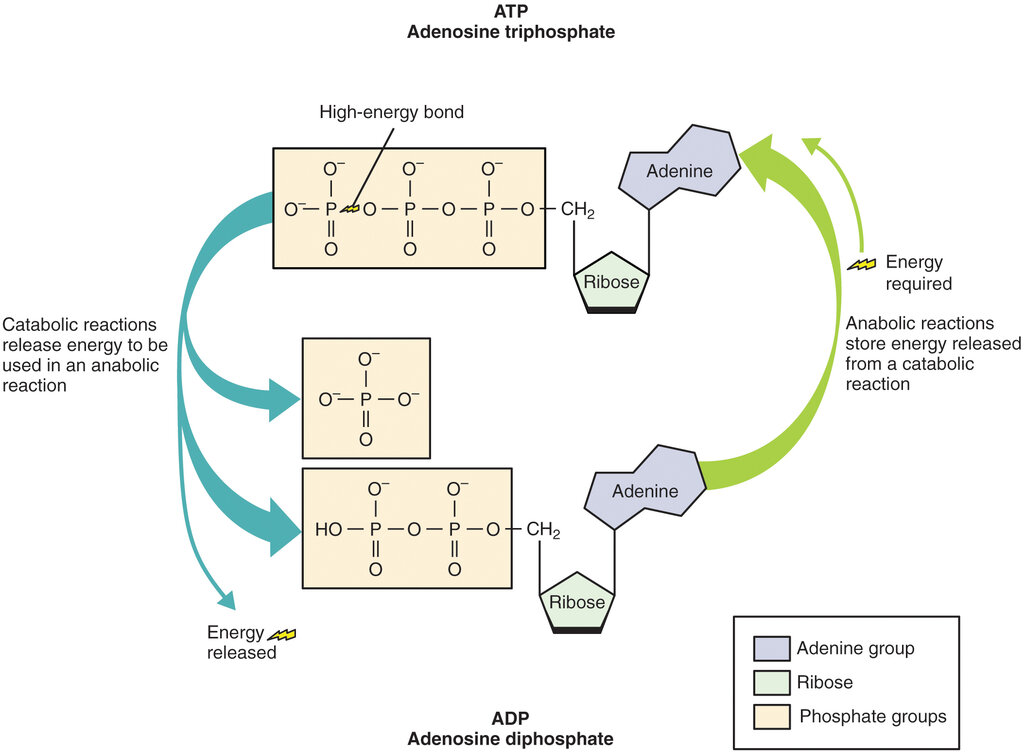
Stands for Adenosine Triphosphate. It is the main energy-carrying molecule used to power the vast majority of cellular work.
The entire point of cellular respiration is to produce ATP. Think of it as the cell's currency. When a cell needs to build a protein, contract a muscle, or transport materials, it pays for the job with ATP molecules. The overall chemical reaction for this process is:
This equation shows that glucose () reacts with oxygen () to produce carbon dioxide (), water (), and the energy our cells need to live.
A Three-Stage Process
Cellular respiration isn't a single event. It's a metabolic pathway that unfolds in three main stages, like an assembly line for energy production. Each stage breaks down the glucose molecule a little more, harvesting energy along the way.
The three stages of cellular respiration are Glycolysis, the Krebs Cycle, and Oxidative Phosphorylation.
Let's look at how they connect. The process starts in the cell's cytoplasm and finishes inside a specialized organelle called the mitochondrion, often called the cell's "powerhouse."
Stage 1: Glycolysis This first stage means "sugar splitting." It takes place in the cytoplasm of the cell and doesn't require oxygen. During glycolysis, a single six-carbon molecule of glucose is broken in half to form two three-carbon molecules called pyruvate. This initial split releases a small amount of energy, producing just two net ATP molecules.
Stage 2: The Krebs Cycle Also known as the citric acid cycle, this stage occurs inside the mitochondria. Before the cycle begins, the two pyruvate molecules from glycolysis are processed into a different molecule called acetyl-CoA. This molecule then enters the Krebs cycle, where it is further broken down. The carbon atoms from the original glucose are released as carbon dioxide. The Krebs cycle generates another two ATP molecules, but more importantly, it loads up energy-carrying molecules (NADH and FADH₂) for the final stage.
Stage 3: Oxidative Phosphorylation This is the main event where the vast majority of ATP is made. It takes place on the inner membrane of the mitochondria and requires oxygen. The energy-carrying molecules from the first two stages drop off their high-energy electrons to a series of proteins called the electron transport chain. As electrons are passed down the chain, energy is released and used to pump protons, creating a gradient. This gradient powers an enzyme called ATP synthase, which acts like a tiny turbine to produce around 28-34 ATP molecules. Oxygen is the final electron acceptor at the end of the chain, combining with electrons and protons to form water.
Together, these three interconnected stages efficiently extract the energy stored in a single molecule of glucose, converting it into a form your cells can use to power everything they do.
What is the primary function of cellular respiration?
Which stage of cellular respiration occurs in the cytoplasm and does not require oxygen?