The Korean War Explained
Korean Peninsula Division
A Line on a Map
When World War II ended in August 1945, 35 years of Japanese rule in Korea came to an abrupt end. The Korean people celebrated their liberation, but a new challenge immediately appeared. The Allied powers, primarily the United States and the Soviet Union, had to decide the future of the peninsula. With Soviet troops already entering the northern part of Korea, American officials needed a plan, and fast.
In a late-night session, two young U.S. army officers, Dean Rusk and Charles Bonesteel, were given 30 minutes to propose a dividing line. Looking at a map, they chose the 38th parallel north. This latitude cut the country roughly in half. The idea was simple and purely practical: Soviet forces would accept the surrender of Japanese troops north of this line, and American forces would do the same to the south. It was never intended to be a permanent political border.
But the temporary solution soon became a fixed reality. The Cold War was beginning to chill relations between the U.S. and the USSR. Both superpowers had competing visions for Korea's future. The Americans wanted a capitalist democracy, while the Soviets sought a communist state. Negotiations to form a single, unified government repeatedly failed. The administrative line began to harden into an ideological frontier.
Two Koreas Emerge
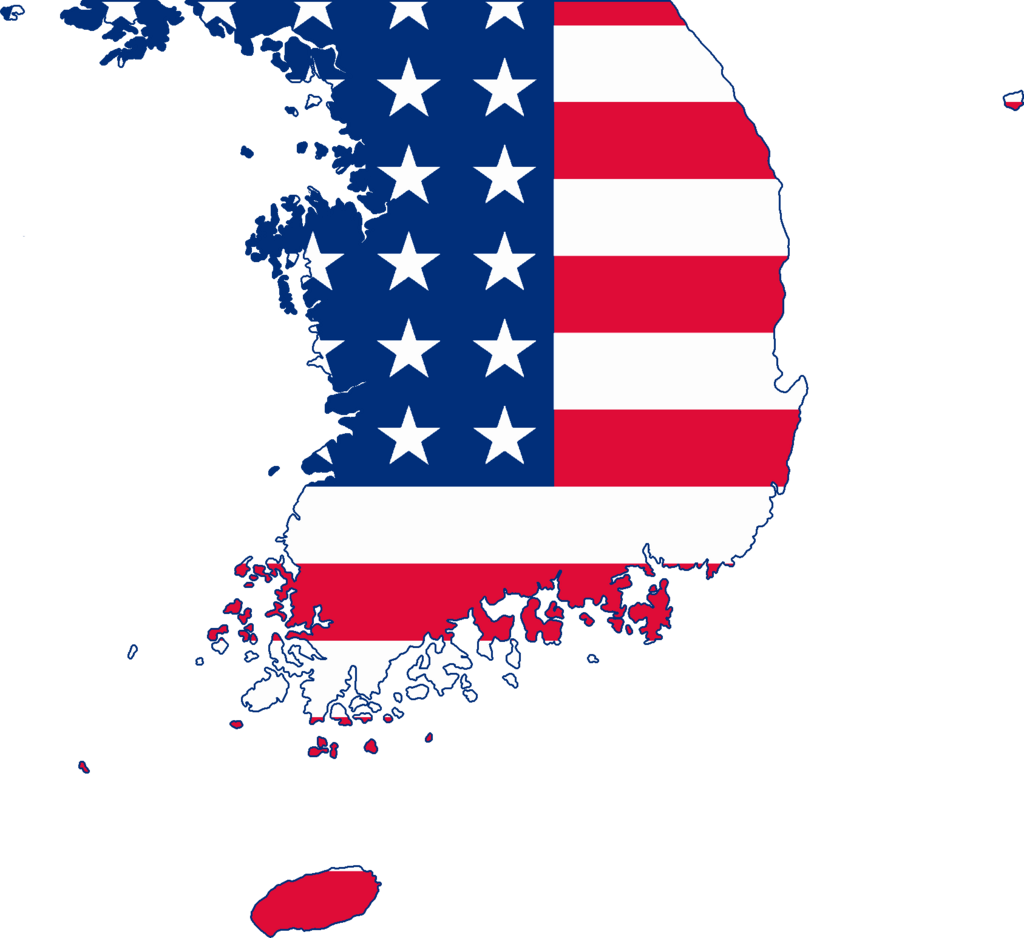
With no agreement in sight, the two zones developed into separate states. In the south, the U.S. oversaw elections that led to the creation of the Republic of Korea (ROK) in August 1948. Its leader was Syngman Rhee, a staunch anti-communist.
Just a few weeks later, in September 1948, the north established the Democratic People's Republic of Korea (DPRK). The Soviet Union installed Kim Il Sung, a former anti-Japanese guerrilla fighter, as its leader. Two separate governments now claimed to be the legitimate ruler of all of Korea.
| North Korea | South Korea | |
|---|---|---|
| Official Name | Democratic People's Republic of Korea (DPRK) | Republic of Korea (ROK) |
| Leader | Kim Il Sung | Syngman Rhee |
| Ideology | Communist | Capitalist / Anti-Communist |
| Main Ally | Soviet Union | United States |
The ideological rift was profound. North Korea, under Kim Il Sung, began to build a centralized, socialist state. The government took control of all industry and agriculture, and political dissent was suppressed. In South Korea, Syngman Rhee's government, while officially a democracy, also used authoritarian tactics to crush its political opponents, particularly suspected communists.
What began as a temporary military solution had created two hostile states where one nation had existed for centuries.
This division wasn't just political; it split a people with a shared language, culture, and history. Families were separated, and the economies of the industrial north and agricultural south, which had once complemented each other, were now cut off. The stage was set for a devastating conflict, as both sides aimed to reunify the peninsula under their own system.