The Journey of Artificial Intelligence
Origins of AI
The Dream of Thinking Machines
The idea of artificial intelligence isn't new. Long before we had computers, people dreamed of creating artificial beings. Ancient Greek myths tell stories of Hephaestus, the god of invention, who crafted mechanical servants from gold. Another legend speaks of Talos, a giant automaton made of bronze, built to protect the island of Crete.
These stories show a deep, timeless fascination with non-human intelligence. They were early explorations of a powerful question: could we create something that thinks and acts like us?
Logic and Calculation
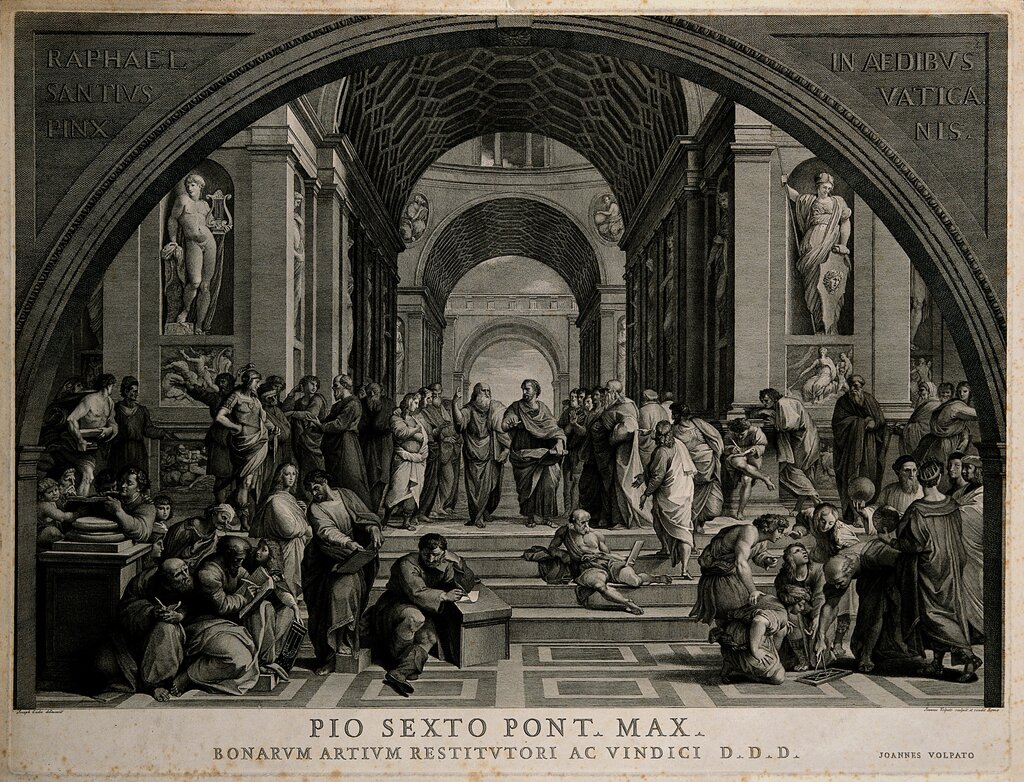
Moving from myth to reality required a huge conceptual leap. For a machine to reason, we first needed to understand reasoning itself as a system. Philosophers like Aristotle began to formalize logic, breaking down arguments into structured, repeatable steps. This was a crucial start.
Centuries later, thinkers like Gottfried Wilhelm Leibniz dreamed of a universal language of reason that could resolve arguments through calculation. In the 19th century, George Boole took this further, creating an algebraic system for logic. Boolean algebra turned concepts like "true" and "false" into mathematical operators. This was revolutionary. It meant that logical reasoning could be processed much like an arithmetic problem.
Before a machine could think, thought itself had to be translated into a form of calculation.
Alan Turing's Blueprint
The theoretical pieces came together in the 20th century with the work of Alan Turing, a brilliant British mathematician. In 1936, long before electronic computers existed, Turing imagined a device called a "universal computing machine." We now call it a Turing machine.
It wasn't a physical object, but a powerful idea. He described a simple machine that could read symbols from a tape, follow a set of instructions, and write new symbols. By changing the instructions, this one machine could theoretically solve any problem that was computable. It could do arithmetic, play chess, or analyze text. This concept of a single, programmable machine laid the foundation for every computer that followed.
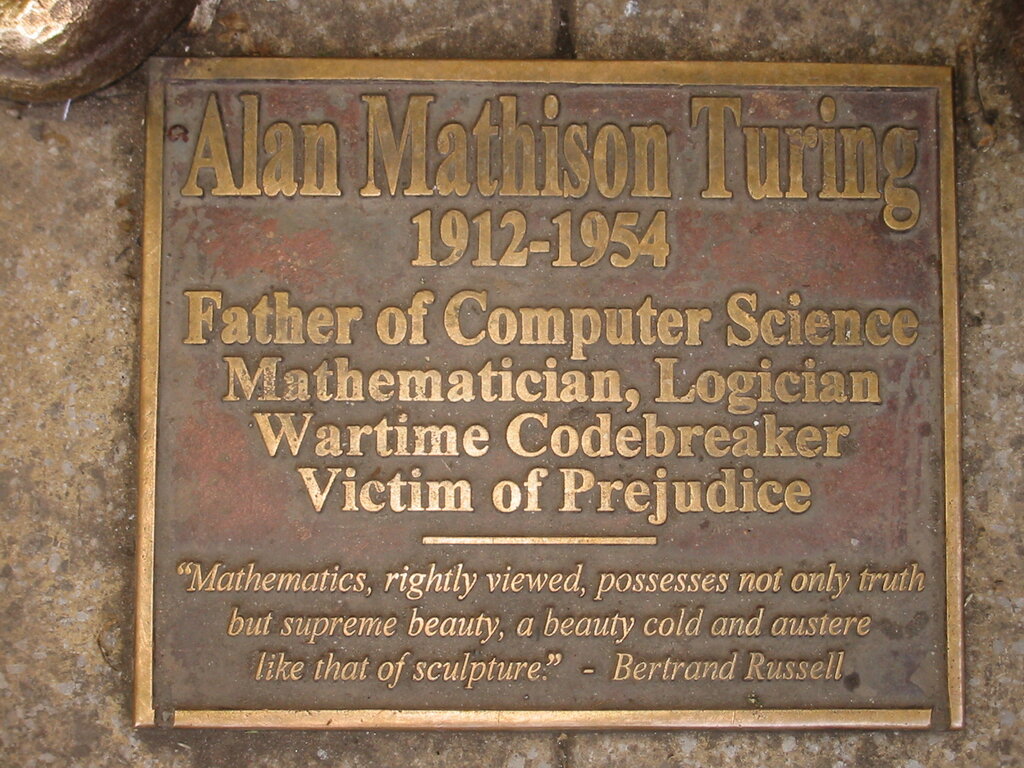
Turing didn't just give us the blueprint for the modern computer; he also forced us to consider what it would mean for such a machine to be intelligent.
The Imitation Game
In a 1950 paper, Turing posed a now-famous question: "Can machines think?" He found the question too vague and proposed a practical test instead, which he called the "Imitation Game." We know it today as the Turing Test.
The setup is simple. A human judge communicates with two unseen players via text. One player is a human, and the other is a machine. The judge's job is to figure out which is which. If the judge can't reliably tell the machine apart from the human, the machine is said to have passed the test.
The Turing Test shifted the focus from defining "thinking" to observing intelligent behavior.
The test wasn't about consciousness or understanding. It was a pragmatic measure of a machine's ability to exhibit human-like intelligence. This idea set a clear, if controversial, goal for the new field of artificial intelligence. It sparked a quest that continues to this day: to build a machine that can successfully imitate us.
Turing's work provided both the theoretical tool—the universal machine—and the philosophical challenge—the Imitation Game. The stage was set for others to begin the practical work of building the first thinking machines.
What do ancient Greek myths like the story of Talos demonstrate about the concept of AI?
What was the key contribution of George Boole's Boolean algebra to the future of computing?