The Invention of Zero
Early Numerical Systems
Counting Before Zero
Long before we had the number zero, people still needed to count. Ancient civilizations developed clever ways to track everything from harvests to armies. They built their number systems around tangible things, often using groups of 10, likely because we have ten fingers. But some cultures took different paths, creating systems that look unusual to us today.
One of the earliest and most influential systems came from ancient Mesopotamia. The Sumerians, and later the Babylonians, built a powerful civilization based on agriculture, trade, and astronomy. To manage their complex society, they needed a sophisticated way with numbers.
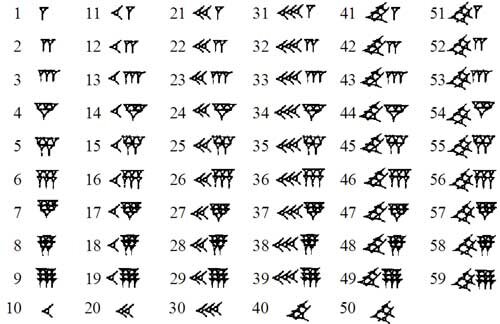
The Babylonian Base 60 System
Instead of counting in groups of 10, the Babylonians used a base-60, or sexagesimal, system. We still see echoes of this today. A minute has 60 seconds, an hour has 60 minutes, and a circle has 360 degrees. This system was positional, meaning the value of a symbol depended on its location, just like the '1' in 10 and 100 mean different things in our system.
They used two basic cuneiform symbols pressed into clay tablets: a wedge for 1 () and a sideways wedge for 10 (𒌋). They would combine these to write any number up to 59. For numbers larger than 59, they used columns. The rightmost column was for units (1-59), the next column to the left was for multiples of 60, the next for multiples of $60^2$ (3600), and so on.
| Number | Babylonian Representation (Symbols) | Calculation |
|---|---|---|
| 2 | 𒐖 | |
| 12 | 𒌋 | |
| 62 | 𒐕 | |
| 130 | 𒌋 |
This system had a big problem. How would you write the number 3602? In base 60, that's one group of 3600, zero groups of 60, and two units. Without a symbol for zero, how could they show that the middle column was empty?
Initially, they just left a larger space. A scribe would write the symbol for 1, leave a gap, and then write the symbol for 2. But this was ambiguous. Was it a deliberate space for an empty position, or just sloppy handwriting? Later, they introduced a placeholder symbol—two small, slanted wedges—to mark an empty column. It wasn't a number you could add or multiply, but it made their system much clearer. It was a sign for 'nothing here'.
The Mayan Number System
Halfway across the world, the Maya civilization in Mesoamerica developed its own sophisticated number system. They used a base-20, or vigesimal, system, possibly based on counting both fingers and toes. It was also a positional system, but unlike the Babylonians who wrote horizontally, the Maya stacked their numbers vertically.
Their system was elegant, using only three symbols: a dot for 1, a bar for 5, and a special symbol, often a shell glyph, for a placeholder. Numbers from 1 to 19 were made by combining dots and bars. For numbers larger than 19, they stacked them. The bottom level represented units (1-19), the level above it represented multiples of 20, the next level multiples of 400 (), and so on.
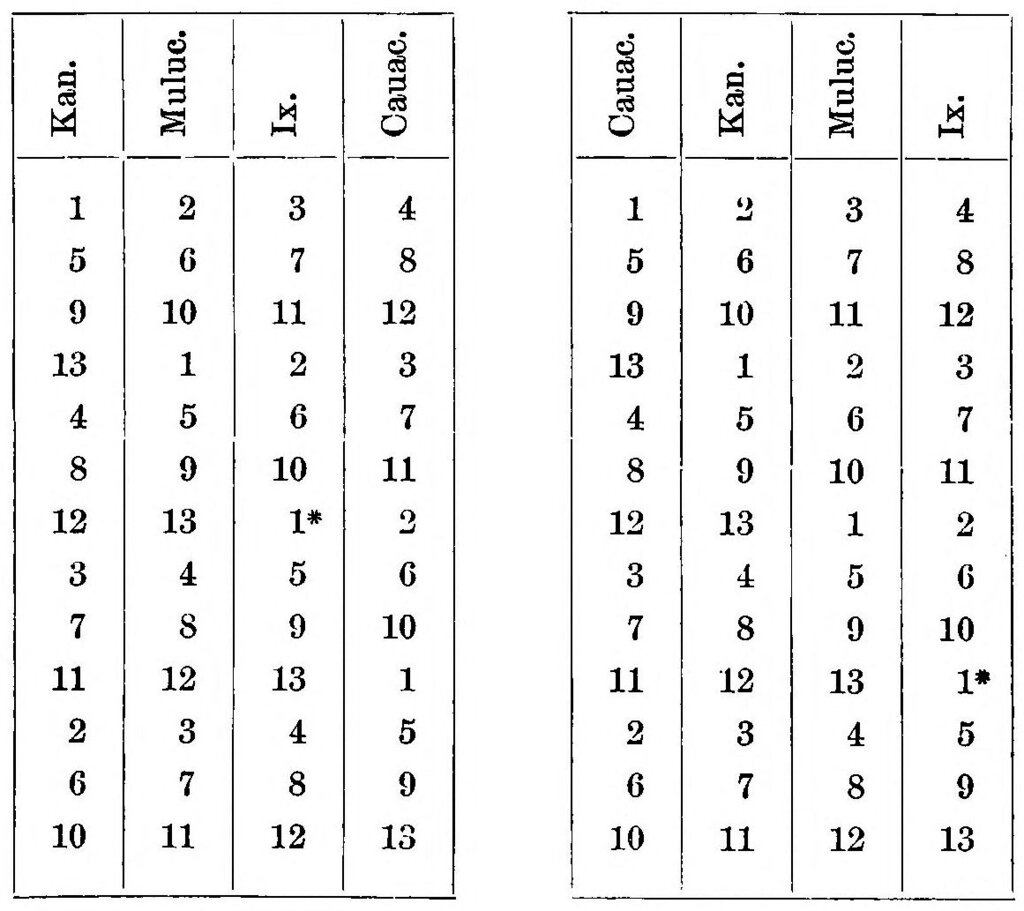
For example, to write the number 25, a Mayan scribe would place a single dot (representing 1) on the upper level () and a single bar (representing 5) on the bottom level ().
Like the Babylonians, the Maya needed a way to signify an empty position. Their shell glyph served as a true placeholder. If they wanted to write the number 400, they would place a dot in the third level up (), and then a shell glyph in both the second (twenties) and first (units) levels to show they were empty. This was a much more concrete and unambiguous solution than the Babylonian space.
These ancient systems show us that the concept of 'nothing' as a placeholder was a crucial step in developing mathematics. While not yet the number zero we use today, these placeholders paved the way for more advanced calculations and abstract thought. They were an ingenious solution to a problem that every culture with a positional number system had to solve.
The Babylonian number system was based on which number?
In the Mayan number system, what did a single bar symbol represent?